It’s Tuesday night. You open the fridge and find a sad bag of salad, some beans, and a bottle of olive oil. You think, “Is that dinner?” It might be. That’s a lot like how the Mediterranean diet works.
This guide keeps it simple. You’ll learn what the plan is, what to eat often, what to eat less, and what the research says. I won’t promise weight loss or name any products. Facts from official sources are marked. The rest is my own view.This is general information, not medical advice.
What the Mediterranean diet is
This is an eating habit using food from the countries around the Mediterranean region. This is not a strict diet program that has points and rules, but rather just how to fill your plate.
MedlinePlus is a health site from the National Library of Medicine. Its page on the diet says the plan has “fewer meats and carbohydrates than a typical American diet.” That’s the short version. More plants, less meat.
What to eat often on the Mediterranean diet
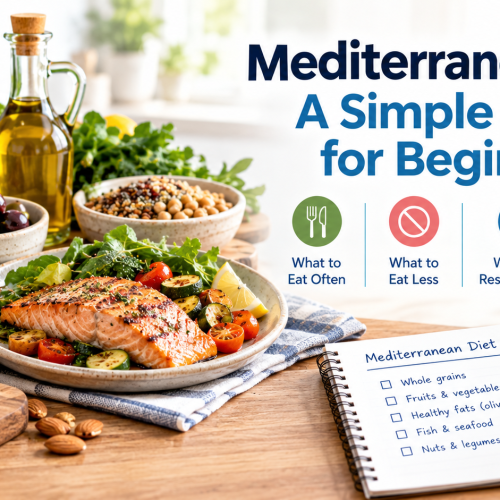
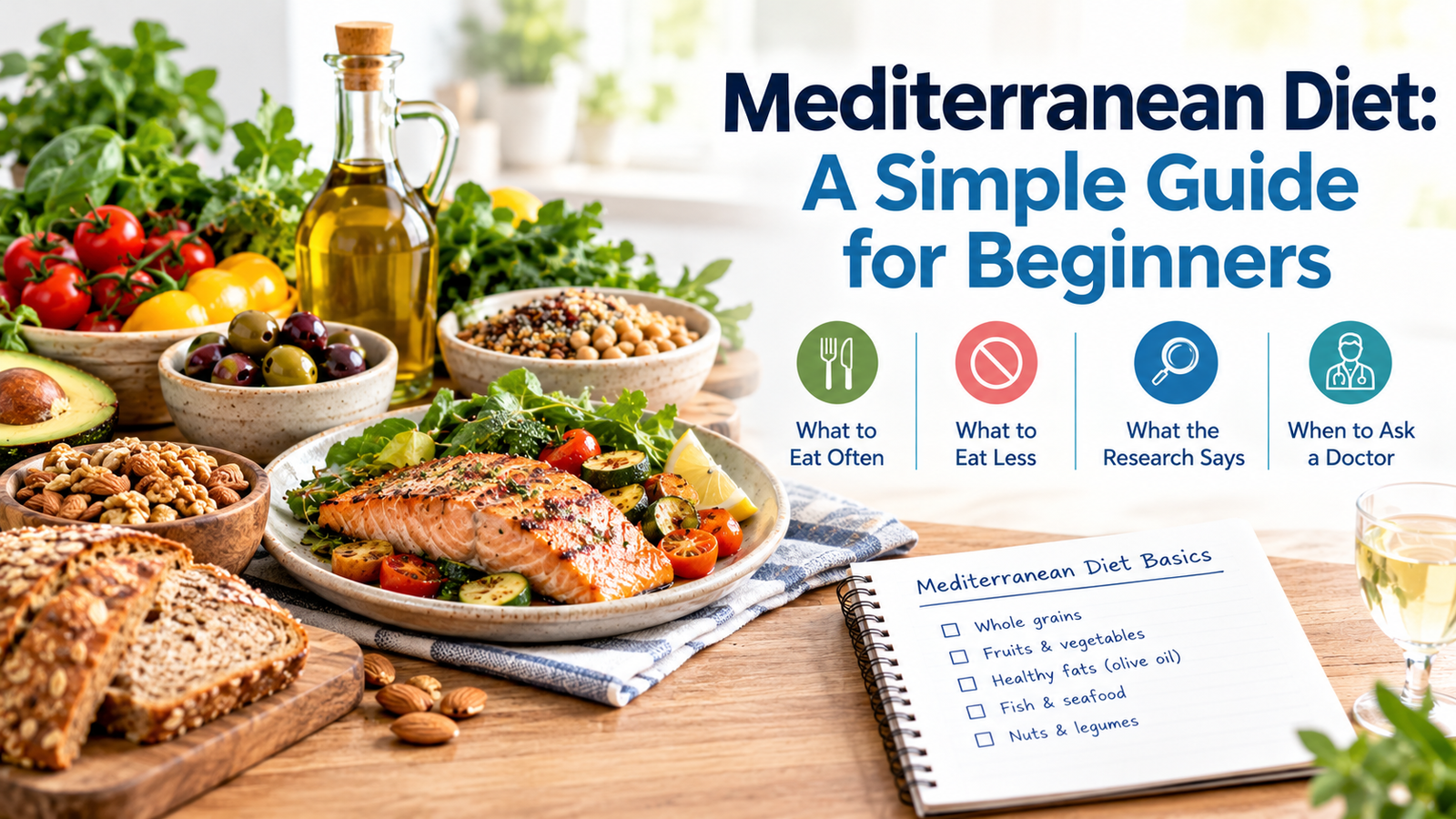
MedlinePlus lists these as the base of the plan:
- Whole grains
- Fruits and vegetables that are fresh
- Nuts
- Legumes such as beans and lentils
- Lots of fish and other sea food
- Vegetarian diet, but some small amount of lean meat and chicken
It also says olive oil is the main source of fat for cooking. The page calls it “a healthy, monounsaturated fat.”Here’s what that might look like. Oatmeal with berries for breakfast. A bean and vegetable soup at lunch. Baked fish with greens and brown rice at dinner. A handful of nuts as a snack.
What to eat less of on the Mediterranean diet
The same page names foods that aren’t part of the plan or are eaten in small amounts:
- Red meats
- Sweets and other desserts
- Eggs
- Butter
Notice the word “small.” It doesn’t say never. A bit of lean chicken is fine. So is a small piece of fish with every meal. A big steak every night isn’t how it works.
What about wine?
MedlinePlus says wine is a common part of this eating style. But it adds that some people shouldn’t drink alcohol. That includes people who are pregnant, people who tend to overuse alcohol, and people with conditions that alcohol could worsen.
So wine is optional. If you don’t drink, don’t start. Ask your doctor if you aren’t sure.
What the research says
Let’s look at one example from a federal health agency.
In June 2024, NHLBI published a study on its news section, which involved observing around 25,000 middle-aged subjects for a duration of 25 years. Those women who adhered mostly to the Mediterranean diet scored at the least risk at the death from any cause in comparison to those who did not follow it that closely.
The researchers also looked at why. They found that body weight, blood sugar control, and less inflammation had the strongest links to the lower risk.
Here are two honest notes. First, this shows a link, not proof that food caused the result. Second, the study looked at women only, so it can’t speak for everyone. The page doesn’t give a percentage, so I won’t either.MedlinePlus also says the plan may lead to more stable blood sugar and lower cholesterol and triglycerides. It also ties the diet to better heart health.If you want to compare it with a plan built for blood pressure, see our DASH diet guide.
How to start the Mediterranean diet
There is no need for you to change all at once. Consider the Mediterranean diet as a process of exchanges rather than something that can be failed. Here is what you could do:
- Exchange your cooking fat. Switch from butter to olive oil.
- Add one plant meal. Beans on a Monday is an easy start. Add a salad, and dinner is done.
- Eat fish. Try it a couple of times a week. Canned fish counts. Tuna, sardines, and salmon all work, and they keep for months in the pantry.
- Switch your grains. Choose whole grain bread, brown rice, or oats.
- Snack on nuts and fruit. Skip the sweets drawer.
- Make meat a side. Use a small portion, not the center of the plate.
These steps follow the MedlinePlus list. The order and the examples are my own.
A simple day on the Mediterranean diet
This is a made-up example. Yours will differ.
- Breakfast: Oatmeal with berries and some nuts.
- Lunch: A large salad that consists of chickpeas, tomatoes, cucumbers, and olive oil.
- Snack: An apple.
- Dinner: Grilled salmon, roasted veggies, and whole grain pasta.
I haven’t mentioned calorie or serving quantities as they vary according to personal fact and doctor’s recommendations.
Who should talk to a doctor before the Mediterranean diet?
Consult a doctor or dietitian before you make any changes to your food intake if you have:
- Diabetes, kidney disease or some other chronic condition
- Take medicine that food can affect.
- Are pregnant or nursing
- Have a food allergy, such as nuts or fish
- Have had an eating disorder
Common mistakes with the Mediterranean diet
- The naming of pizza and pasta Mediterranean cuisine by themselves. The entire diet is plant-based, fish, and whole grains.
- Pouring on olive oil. It’s healthy, but it still adds up.
- Skipping the beans. Legumes are a core food on the MedlinePlus list.
- Going all at once. Small changes last longer.
Your next step
Pick one dinner this week. Construct your own by using whole grains, lots of vegetables, legumes or fish and olive oil. Record your feelings and the expenses. Do it again the following week. This is the Mediterranean diet in action – little-by-little and delicious!
To see more straightforward descriptions of diets, take a look at the Diet Types articles here on our website. The Mediterranean diet is not an immediate solution; it is a long-term approach to food.
FAQ
What is the Mediterranean diet?
It’s a way of eating that revolves around whole grains, fruits, vegetables, nuts, legumes, and fish; olive oil is the primary source of fat used. Meat is sparingly eaten.
Can I eat meat on it?
Yes, in small amounts. MedlinePlus lists lean meat and chicken in small portions and red meat as a food to limit.
Do I have to drink wine?
No. MedlinePlus says wine is common in this eating style, but some people should avoid alcohol. It’s optional.
Is it good for your heart?
MedlinePlus ties it to better heart health. The NHLBI study found a link to lower death risk in women. These are links, not guarantees. Ask your doctor what’s right for you.