10 a.m. Breakfast consisted of a bagel. It’s already gone, because your stomach is a critic. Some person somewhere in the hallway is munching on a granola bar, and you can hear it all.
Does it sound like an ordinary Tuesday? A protein-forward diet is one possible solution. It is a big name for a tiny concept. You will find out more below: what it implies, how much protein it suggests, and whose permission is necessary before that.
What is a protein-forward diet?
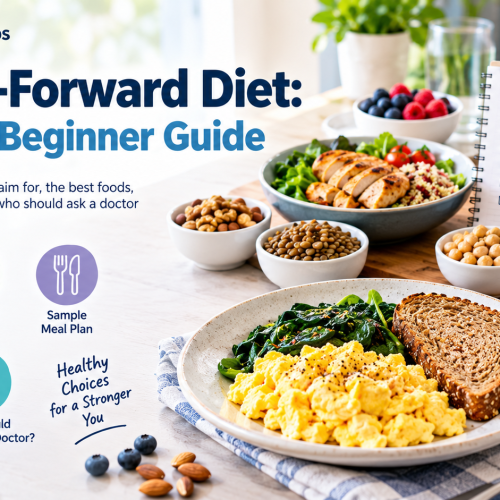
Since no official has ever defined the term, take my definition. First decide on the protein portion you wish to have for your meal and then build around that.
Why this order? Because whatever comes onto the plate first usually dominates the other ingredients that follow. Start off with a large heap of pasta, and there is no space left for vegetables. Start off with chicken or lentils, and things turn out differently. Tiny shift. Nothing dramatic.No foods are banned, which may be why people stick with it. Some say they feel full longer. Maybe you will, maybe you won’t, and I’m not going to promise anything.
How much protein should you eat?
The American Family Physician publication states in a summary of the Dietary Guidelines for 2025-2030 that daily protein intake should be approximately from 1.2 grams to 1.6 grams of protein per kilogram of body weight. It further urges to consume protein as the first component in every meal.
Without an example, such figures are not worth much. Let’s say, for instance, that a person weighs 154 pounds, which equals 70 kilograms. Multiply it by 1.2 for an intake of 84 grams. Another option is multiplying by 1.6 for an intake of 112 grams. Hence, an estimated daily intake lies between 84 and 112 grams. What does the conversion to kilograms entail? Divide pounds by 2.2.This is more or less an approximation, depending on the person’s age, health, and exercise level. But that’s just a summary; I hope you’ll look up the actual guidelines yourself.
Which foods fit a protein-forward diet?
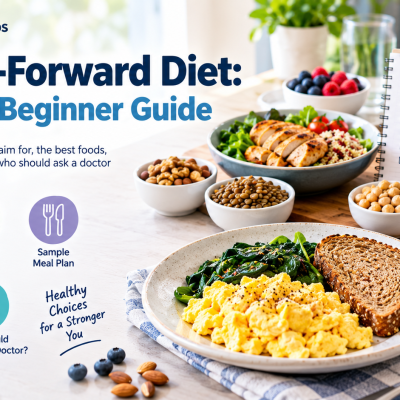
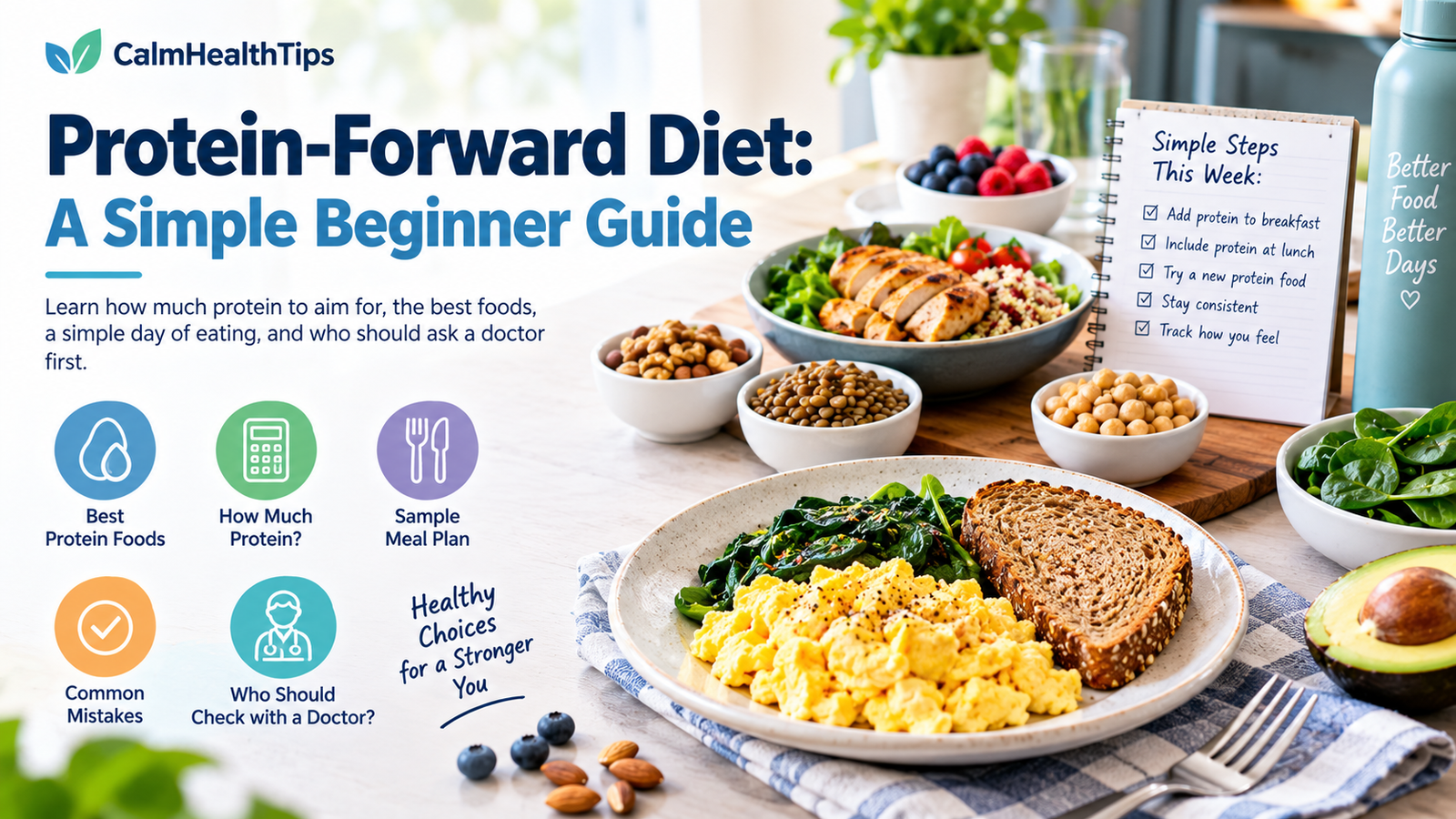
Plenty are listed there: eggs, poultry, seafood, and red meats. Plant sources, on the other hand, include beans, legumes, nuts, seeds, and soy products.Make sure to mix and match them; otherwise, it’ll be so boring that boredom can kill all diets-which certainly could be much worse than hunger. Eggs Monday. Lentil soup Tuesday. Fish on Friday, if that’s your thing.
Watch what rides along with the protein, though. According to the guidelines, saturated fat is supposed to be no more than 10% of one’s daily intake. It is mentioned that saturated fat tends to be found in foods that are heavily processed. Both a grilled chicken salad and a bacon cheeseburger contain proteins. Different meals, obviously. If you’re hunting for between-meal ideas, we’ve got a list of high-protein snacks.
A day on a protein-forward diet
Here’s a plain one. Scrambled eggs with spinach and a slice of whole grain toast. Lentil soup and a side salad at lunch (or a chicken wrap, whatever’s around). A handful of nuts about 3 p.m. Baked fish with roasted vegetables and rice at night.
Don’t like fish? Swap in tofu or chicken. Is that a perfect menu? Not really. It’s a rough sketch, and yours will look different, which is the point. The pattern matters more than the menu.
And if the stove isn’t happening tonight, canned beans, canned fish, and pre-cooked chicken will cover you. Cheap, too. Eggs, beans, and lentils last a long time in the cupboard, so a protein-forward diet doesn’t need a fat grocery budget.
Where people trip
Mostly small stuff. The big one is saving all your protein for dinner. One giant steak at 8 p.m. isn’t the same as spreading it out, and the advice is about every meal.Another is forgetting the rest of the plate. Fiber, fruit, and vegetables still count. A plate that’s only meat gets old quick.
Then the labels. A bar that screams “HIGH PROTEIN” on the front might have a back panel full of words you can’t pronounce. Flip it over.Skipping meals to save protein for later rarely goes well, either. You’ll just be cranky by 4 p.m.Oh, and don’t track every gram like it’s homework. People burn out. A couple of decent habits beat a flawless spreadsheet nobody keeps up.
Who should check with a doctor first?
Moreover, a protein-forward diet is not suitable to all individuals. This is particularly true for those suffering from kidney disease condition. The National Institute of Diabetes and Digestive and Kidney Diseases indicates on its website on healthy eating while suffering from chronic kidney disease that different people have different protein needs. Taking GLP-1 medication? Discuss this here with your health care providers. It’s one phone call.
Starting this week
Skip the big overhaul on Monday. It does not last.Monday lunch can be tofu and beans, Tuesday eggs, and Wednesday chicken. A lot of people follow this diet routine without preparing any special dish.
In the next week, start with adding protein to a second meal. You need to keep track of how you are doing by week three. You should have already started your protein-led diet without it causing any problems. It is the best time for jotting down your experience and your feelings about it.
That tells you more than any chart. Picture a brutal work week. Tuesday fails, and it is crackers at the kitchen sink for supper. It happens. Boil some eggs on Sunday, keep a can of beans handy, and begin again at the next meal. One day that does not go well will not spoil a good habit. Giving up will.
Browse our nutrition articles. Go slow, stay curious, and give your protein-forward diet a few weeks before deciding.
FAQ
To put it simply, what is a protein-based diet?
This is a type of diet in which you begin each of your meals with protein. This type of diet does not have restrictions and does not prohibit any of the food groups.
How much protein do I need daily?
As per the new federal guidelines concerning the appropriate nutrition, 1.2-1.6 grams of protein per kilogram of body weight per day can be seen as a daily norm for consumption of proteins. However, in case of any questions regarding individual rate, one should consult a doctor.
What are the best resources of proteins?
Examples of protein sources may include eggs, chicken, fish, and beans, lentils, and tofu.
Is this diet healthy for all people?
This diet is not healthy for all people, especially for those who suffer from some diseases, like kidney disease.
Do I need protein in each of my meals?
According to the guidance, you should start your meals with protein. Moreover, it is better to distribute the intake rather than eat one large portion of it at dinner.