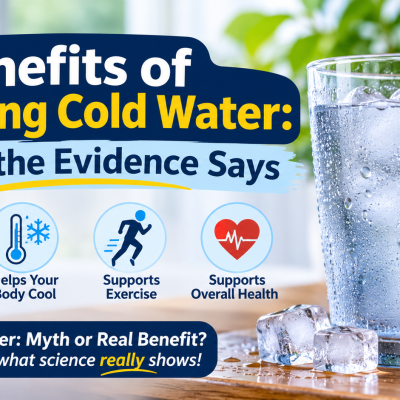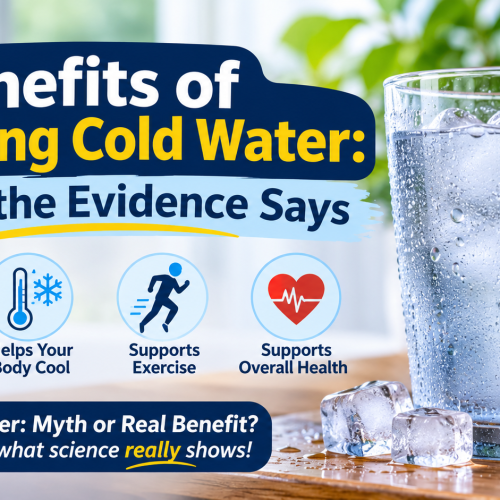
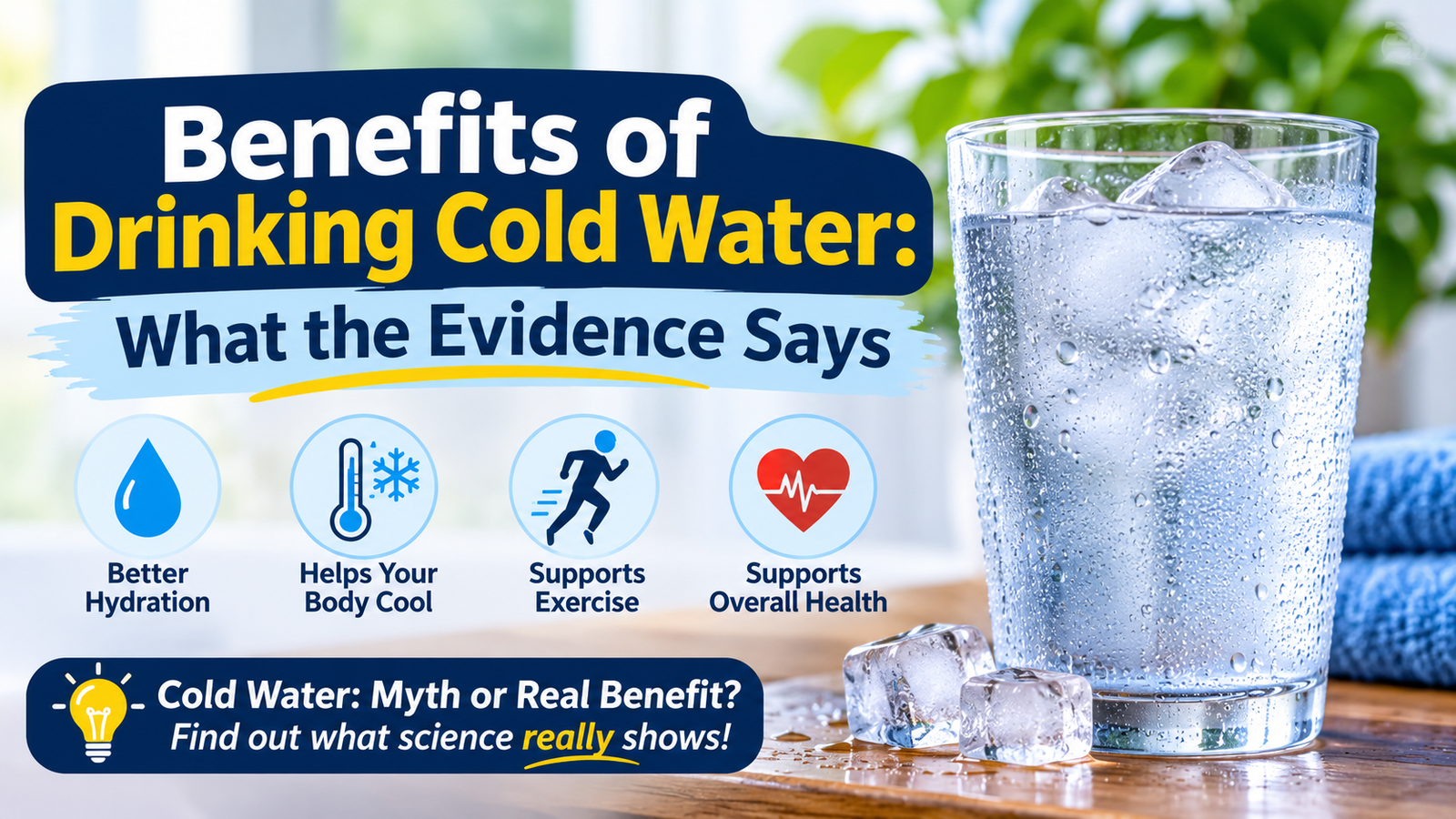
It is an unusually warm day, and you walk over to the refrigerator to get yourself some drinks. You take out a glass of water so cold that even the glass becomes foggy. That first sip feels like a minor miracle to you, until someone asks you if that cold water does anything at all for you, or it just tastes good.
This is a very reasonable question to ask. The truth is, both are correct. This guide explores the benefits of drinking cold water, as well as scientific research behind them.
Start with water itself.
We will get into the matter of cold later on, but first, let us look at water itself. According to the CDC page dedicated to water and healthy beverages dated March 5, 2026, water plays a role in maintaining proper body temperature, acting as a lubricant and shock absorber for your joints, protecting your spine and sensitive tissues, and helping eliminate waste products from the body through urination, sweating, and defecation.
Take note, however, that none of these functions rely on the temperature of the water consumed – whether cold, cool, or just at room temperature, water does all of these things. There is no single recommended daily allowance mentioned in the CDC guide either; it only states that needs depend on age, gender, pregnancy, activity levels, and being breastfed, and that foods with high water content (such as most fruits and vegetables) are a part of your consumption.
What research says about cold water
Here’s where the benefits of drinking cold water get interesting, though also a little thin. An article by Mark P. Kelly, Ph.D., in ACE Certified News from April 2013, summarized several studies on cold fluids and exercise. It’s from a fitness education group, and it’s more than a decade old, so treat it as a starting point, not the last word. You can read the original ACE hydration article.
In a study of 45 men, the article says cold-water drinkers “were able to delay their increase in core body temperature for at least 30 minutes.” In a study of seven male cyclists, the article reports that body temperature was lower before starting and for the first few minutes of activity for those who drank cold water, and the cold-water drinkers cycled farther with greater average power than warm-water drinkers. The same article says that bench press performance “actually went down a bit” in the larger study, which it called statistically significant but a small effect, and that jump and endurance gains weren’t significant.
The seven-cyclist study is tiny. The results are mixed. So I wouldn’t say cold water makes you perform better. I’d say it may help some people stay cooler during hard exercise in the heat, and the evidence I found is limited.
Cold water may help you drink more.
This might be the most practical of the benefits of drinking cold water. The ACE article cites a review that found people preferred cold or cool fluids to warm ones. It says participants “would consume about 50 percent more fluid during exercise when given cold or cool fluids.” That’s from exercise settings, so it may not apply to your desk or your couch. But the idea makes sense to me.. In case you prefer water that is cold, then it is likely that you will end up drinking more of it.
This is in accordance with the advice mentioned on the CDC website, which includes freezing water in bottles that can go into the freezer so that you have ice-cold water all day long. The other suggestions include carrying a reusable bottle and preferring water to sugar-filled beverages.
Claims I couldn’t back up
You’ll see a lot of other claimed benefits of drinking cold water online. I looked, and I didn’t find solid support from the sources I read for any of these, so I won’t repeat them as fact. One claim is that cold water burns noticeably more calories. Another is that it melts belly fat. A third is that it detoxes your body. A fourth is that it clears your skin overnight. Plenty of pages repeat them, but repeating isn’t proof. If a site promises dramatic results from a glass of ice water, be skeptical.
Moreover, I cannot state that cold water is harmful to health either. The questions on whether it leads to the development of common cold, influences digestion process or is damaging for the throat remained unanswered in any source of information that I came across during my research. If there are some diseases connected with swallowing and digestion, consult your physician.
Who might want room temperature instead?
This part is general knowledge, not from a study.There are people who may not feel comfortable with extremely cold beverages. Those sensitive teeth may sting, while drinking cold can give someone a head or throat ache. For people like these, drinking room temperature or slightly chilled water is equally as effective as hydration. Best water is the one people will actually drink.
It is also not good to follow any trend and drink way too much water, especially if one drinks it too fast.
Easy ways to enjoy cold water
Simple ways to reap the benefits of drinking cold water, all based on everyday experiences. Keep a pitcher of water in the refrigerator for a readily available cold drink. Opt for a reusable bottle, preferably insulated, to make sure it stays cold for a long time. Try adding a slice of lemon, lime, or cucumber to it if you find water boring.Put a glass next to your bed or on your desk as a reminder. And have a glass with each meal, which is another tip from the CDC.
When exercising in the heat, one may have to drink cold water after every certain interval of time. According to the article by ACE, cold fluids should be drunk after every 15 to 20 minutes during workouts, but this is just a tip for fitness clients.
Common mistakes
The most common mistake regarding the advantages of consuming cold water is to expect miracles. Other mistakes include believing in claims of weight loss, drinking ice-cold water against your will, neglecting thirst, and forgetting about all other sources of liquid intake.
When to check in with a doctor
If you suffer from symptoms such as frequent thirst, dizziness, confusion, or dark-colored urine or if you have any health conditions which impact your fluid intake, like heart and kidney diseases, you should consult a physician.Some people are told to limit fluids. This article can’t tell you how much is right for you.
Your next step
For tomorrow, choose one small step that allows you to experience the advantages of drinking cold water. It may be the one by your bed, on the countertop, or even in your lunch. Observe whether you are drinking more if the water is cold. If yes, that’s fantastic. Otherwise, room temperature is perfectly okay.
For more everyday wellness tips, visit our Calm Health Tips site. The real benefits of drinking cold water come mostly from drinking enough of it, and cold is simply one way to make that easier.
FAQ
What are the benefits of drinking cold water?
Water in general helps with temperature, joints, and waste removal, per the CDC.Cold water may help you hydrate better and maintain your body’s temperature while exercising in hot weather, although there is little evidence to support this.
Can cold water help burn more calories?
Since there are no reliable sources on that matter, I can’t verify the statement; use skepticism about such bold claims.
Is cold water harmful?
As far as my research goes, there are no sources supporting this, although some may find it unpleasant; if it irritates you, go with the room temperature one.
How many liters of water should I drink a day?
It differs depending on various factors. The CDC recommends taking into account age, gender, pregnancy status, activity level, and whether a woman breastfeeds.
Is cold water better during exercise?
It may help some people feel cooler and drink more, according to one older fitness article. Studies were small and mixed, so it isn’t a rule.