
Truthfully, weight loss information can be a complete jumble. While one source will tell you to give up carbohydrates, another will recommend eating during the midday period of noon to 8PM. The other one will recommend lemon water as the key to the process.
At its core, no matter what successful plan you use, it boils down to the same thing – a calorie deficit.It’s not necessarily exciting, which might explain why it gets overlooked. However, once you get the hang of it, the rest becomes much clearer..
What Is a Calorie Deficit?
Think of your body as a checking account. Calories are the money. Every day you make deposits (food) and withdrawals (breathing, walking, digesting, and fidgeting in meetings). Most days the two come out about even, and your weight stays put.
A calorie deficit is a day when the withdrawals win. Say you burn 2,000 calories and eat 1,800. You’re 200 short, and your body covers it with savings, which in this case means stored fat. A few of those days won’t change much. A few hundred will.
The Mayo Clinic puts it more simply: weight loss boils down to taking in fewer calories than the body burns. So, it really doesn’t matter what diet you choose; choose one that you can stick to.And the reason you will also hear that a pound of fat equals 3,500 calories.Close enough for planning. Don’t expect your body to follow it to the decimal.
How Big Should Your Calorie Deficit Be?
Smaller than you want it to be, probably.if you cut 500 calories per day, you will be at a deficit of 3,500 calories after a week, which is roughly equal to a pound. It has been observed that losing weight at one or two pounds a week is healthy, as advised by the CDC.
I get the temptation to double it. Who wouldn’t want faster? But a 1,000 calorie gap usually means being hungry all day, dragging through workouts, and losing muscle you’d rather keep. And if you’re petite or don’t move much, there may be barely any food left in the plan.Start gentle. Tightening things later is easy. Digging yourself out of a rough first month, when you’ve already decided you hate this, is not.
Finding Your Calorie Deficit Number
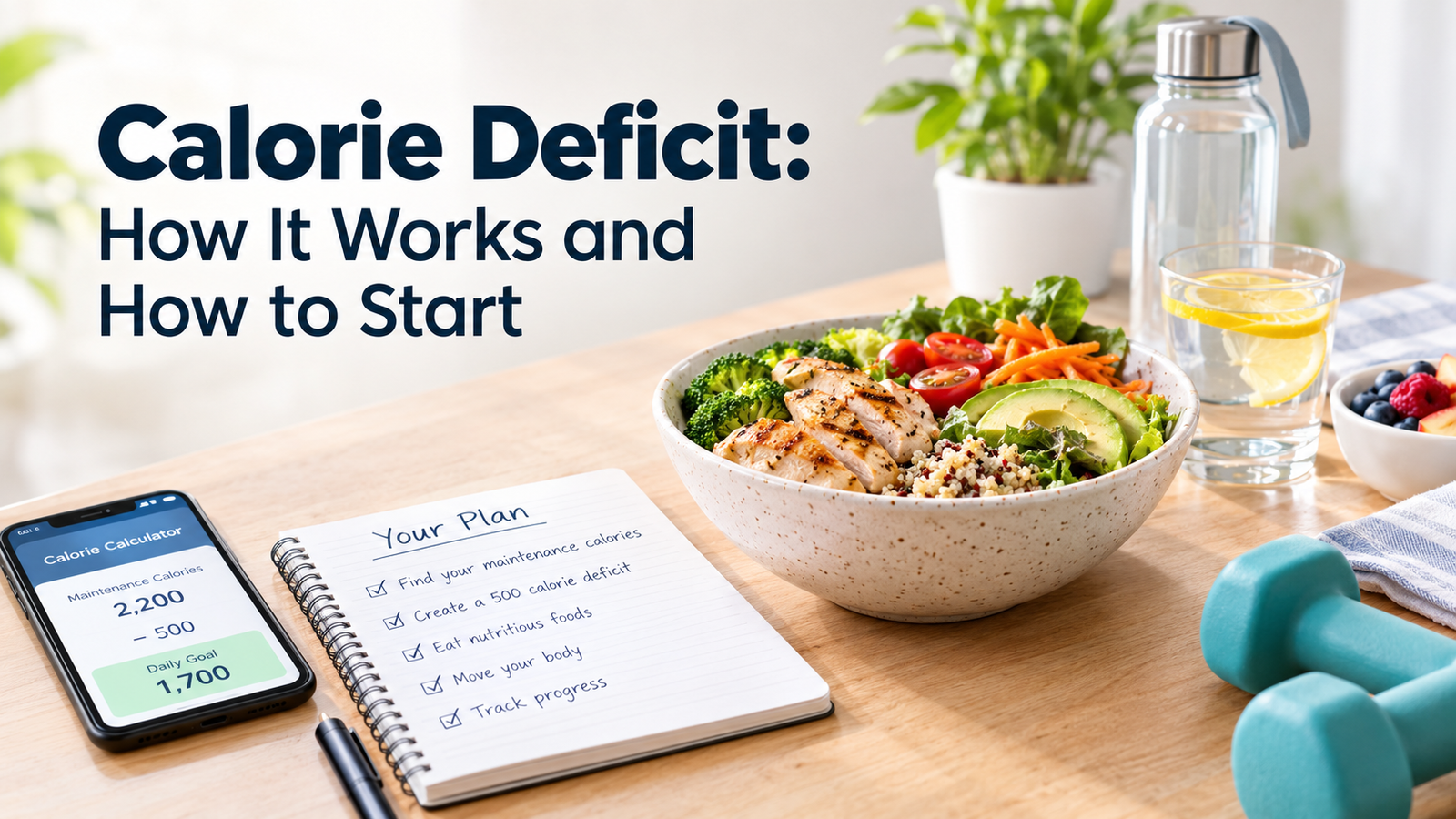
First, you need your maintenance calories. That’s how much you could consume without gaining weight. There are free calculators available online to estimate this based on your age, height, weight, gender, and activity level. It’s just an estimate, and they assume you’re more active than you actually are.Subtract 500 from that number. If your maintenance is 2,200 calories, you should be aiming for around 1,700.Picture someone named Dana doing exactly that. Nothing fancy.
Now comes the hard part, which is waiting. Two or three weeks before you pass judgment. Weight swings by pounds from one day to the next, and a salty takeout dinner can add a couple of pounds of water overnight that have nothing to do with fat. Losing about a pound a week? Great, leave it alone. No change at all? Cut a little more food, or walk a little more.One at a time.
Have you got to count everything you eat? No. Some people count their food using an app for several weeks just to know what a serving size really is. While some other people don’t count but cut out the sodas and downsize the plate.Both work. If tracking makes you tense, skip it.
We also cover the calorie deficit for weight loss in our diet guide if you’re still choosing a style of eating.
Easy Ways to Build a Calorie Deficit Without Feeling Starved
Begin with liquid calories. A regular 12-oz cola contains 140 calories; an elaborate cappuccino more, and nothing of it will make you feel full. Exchange two such beverages with water, and half of the job will be done before lunch.
When speaking of food, stick to proteins and fibers. Eggs, beans, chicken meat, plain yogurt, oats, apples, and broccoli. These foods will keep you fuller. Chips disappear in ten minutes, leaving you hungry as ever.
Your day could include breakfast consisting of oatmeal with some fruit, large chicken salad, yogurt in the evening (around 3 PM), and less rice during the dinner time. This menu might seem boring to you, but it is completely achievable. And read the labels; a small package usually means two or even three servings.
Exercise more too. According to the Center for Disease Control, an adult person should have at least 150 minutes of physical activity a week, and a walk after dinner will do just fine. Don’t forget about strength exercises at least two times a week.
Mistakes That Stall a Calorie Deficit
The big one is going too hard, too fast. You eat next to nothing for three days, raid the pantry at 10 p.m., feel awful, and start over on Monday. Round and round.
Then there are the little extras nobody counts. A handful of almonds. Creamer. A few bites off your kid’s plate.Each one may not seem like very much, but when put together they can silently counteract your calorie deficit by the end of the day.Weighing yourself each morning can be misleading too. It will fluctuate from sleep, salt, hormones, and water, so just look at the week-long average instead.
Finally, the plan starts getting old. Your reduced weight means that fewer calories are being burned, so a good plan while weighing 200 lbs could start to fail at 185 lbs. The Mayo Clinic warns you may have to reduce further. If you have been stagnant for some time, recalculate your maintenance based on your current weight.
Who Should Check With a Doctor First?
Not everyone should jump in alone.Before reducing your calorie intake, talk to your doctor or dietitian if you’re pregnant, breastfeeding, younger than 18, or have a condition such diabetes. Also, if you’ve gone through an eating disorder or a calorie count causes anxiety or guilt after eating, stop and seek help before proceeding. No matter the weight loss goals, it is important to make sure that your calorie deficit is manageable and not fear-inducing.
Where to Go From Here
Choose one change this week. The soda swap and the evening walk are both solid places to begin. Add a second next week. In a couple of months you’ll have a routine rather than a diet, and routines are what last. For more plain advice, there are more calorie deficit tips at Calm Health Tips.
FAQ
How many calories should be reduced in order to lose weight?
A lot of individuals adopt a daily deficit of 500 calories as they try to lose weight. In a week, this can help them lose approximately one pound as this seems to be a safe approach according to the CDC. If you are not sure, you can seek the help of a health professional.
Is it possible to lose weight by engaging in physical activity only?
Yes. As burning calories takes place through engaging in different physical activities. However, the process of dietary changes usually guarantees better results compared to exercising. This is due to the fact that just one dessert can require quite a lot of time of physical activity in order to burn off the calories.
What can cause failure to lose weight despite calories reduction?
Most of the time it happens due to wrong portions, drinks consumption and loss of excess water.