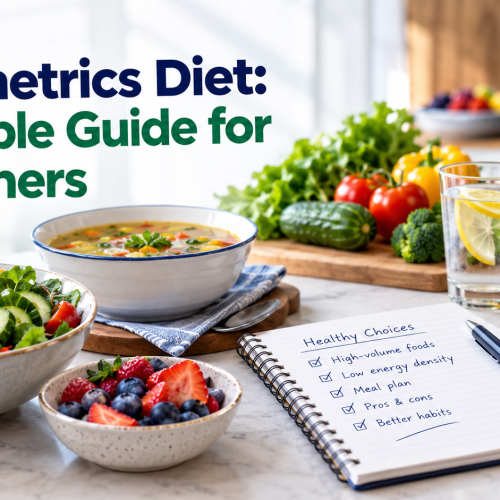
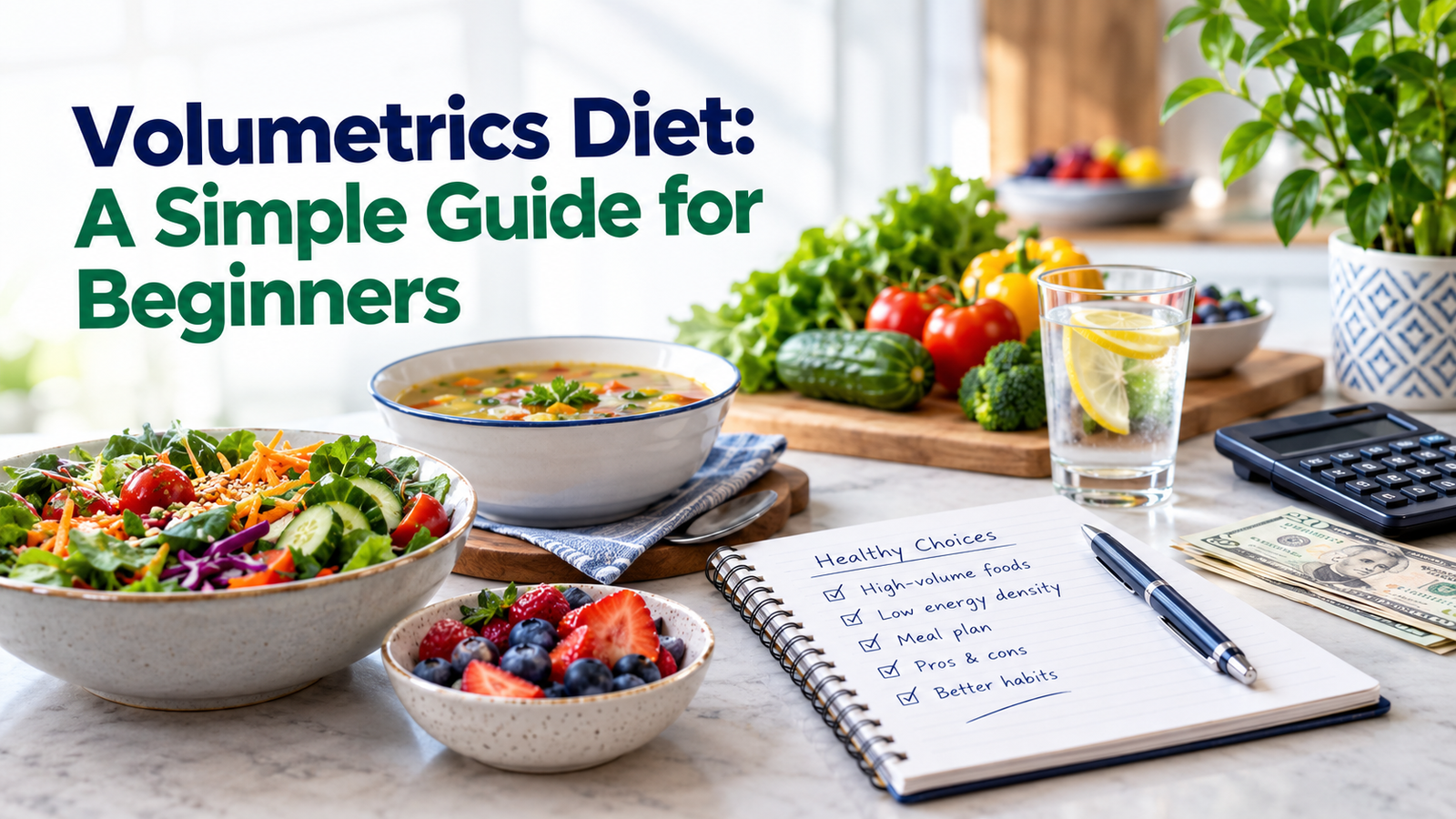
Which fills you up more, a bowl of soup or a handful of chips?Soup. Even though the chips have way more calories. That odd little fact is the whole idea behind the Volumetrics diet, and honestly it’s the reason I like it. Same stomach, fewer calories.
What is the Volumetrics diet?
Barbara Rolls, a nutrition researcher at Penn State, came up with it. Cleveland Clinic says it isn’t a fad diet. There’s no giant calorie cut, no banned food groups, and no guilt trip.
You eat more of some foods and less of others. Nothing is off the table.
Energy density, minus the jargon
Water contains no calories; therefore, watery and high-fiber foods score low. Fats are highly caloric and are scored high as they contain many calories in very little volume. Cucumber is low. Butter is high.
An excellent case for me is grapes and raisins. Raisins are dried grapes. One cup of grapes has almost the same number of calories as a small handful of raisins, yet grapes fill up a whole bowl while raisins just take up your palm.
Researchers say people tend to eat about the same weight of food each day. So if the weight stays the same and the calories drop, you don’t feel cheated. That’s the engine of the Volumetrics diet, and it’s why low energy density foods get so much attention.
The four groups: a volumetrics diet food list
Rolls sorts every food into one of four groups.
- Food Group 1, less than 0.6 calories/gram: non-starchy fruits & vegetables, nonfat milk, broth soup
- Food Group 2, 0.6 to 1.5: starchy fruits & vegetables, whole grain, cereal, beans, lean meats, casseroles low in fat
- Food Group 3, 1.5 to 4: meat, cheese, pizza, French fries, bread, ice cream, cake
- Food Group 4, more than 4: crackers, potato chips, candy bars, nuts, butter, oils
Cleveland Clinic recommends that “Most of the foods you eat need to come from Groups 1 & 2 with a little from Groups 3 & 4 now and then.”
What a day could look like: a Volumetrics diet meal plan
Calories were not included deliberately.
For breakfast, there are oats cooked in low-fat milk with fruits. Lunch will include a large portion of vegetable soup with lots of vegetables and a little bit of dressing, an apple and salad. For snacks – carrots or pear. For dinner – grilled chicken, veggies and potatoes. For dessert – just one square of dark chocolate.
Boring? Maybe. But boring is easy to repeat.
Does the Volumetrics diet work for weight loss?
Possibly. A research brief from the CDC says that swapping high-energy-density foods for lower ones, like fruits and vegetables, can help with managing weight. So the idea isn’t made up.
But I’m not going to make a commitment about numbers, because no one truthful would do that. After all, your success will depend on your actual food intake, time frame, and activity level.
Volumetrics diet pros and cons
The good:
- Nothing is banned.
- You end up eating lots of fruits and vegetables.
- Meals look big and feel filling
- Cleveland Clinic says it’s built to be healthy for the long run.
The not so good:
- It’s based on energy density math, so calorie counting comes along for the ride, and that takes time
- It doesn’t play well with microwave meals, since it favors cooking.
- Nuts and olive oil land in group 4, the “limit” group, even though they bring good nutrients.
That last one trips people up. Low energy density isn’t automatically healthy, and high isn’t automatically bad. Remember that and you’ll dodge the biggest confusion.
Want more volumetrics diet ideas? Calm Health Tips has a few.
Easy ways to start
Skip the math at first and just swap things.
To check a food, read the label and divide the calories by the grams in one serving. Under 1.5 is a good sign. Over 4 is a small extra, not a staple.
Begin your dinner with soup or a large salad. Scientific studies demonstrate that consuming a large serving of food that is low in calories might help in lowering consumption during the meal. Increase the quantity of vegetables in pasta dishes, rice dishes, and casseroles. Use whole fruit instead of fruit juices.
Serve dessert in small portions. Take a walk after dinner. None of this needs a special store or a fancy gadget, just a bit of planning on Sunday.
Common slip-ups
A salad isn’t always a group 1 meal. Add cheese, croutons, and creamy dressing and the energy density jumps. Soup works the same way: broth-based is great; cream-based, not so much. And if you shrink every portion until you’re starving, you’ll quit by Thursday. The point is to feel full. Watch your drinks too. Juice and soda add calories without filling you up much, so plain water, coffee, or tea usually works better.
A basic grocery list for Volumetrics diet
In case your fridge is stocked with first and second categories of foods, preparing dinner will not be much of a problem. When it is not the case, no plan survives Tuesday that took place late in the day.
Start with vegetables: cucumbers, tomatoes, zucchini, leafy vegetables, berries, apples, oranges. They are basically cheap and are full of water. Frozen vegetables count as well—no mushiness occurs in the crisper during a disastrous week of mine.
Then come the staples: oats, brown rice and beans, lentils and potatoes. For protein, think about chicken breast, eggs, fish and plain non-fat yogurt. Canned beans and broth-based soup save a lot of time but do look carefully at the amount of salt stated on the list.
Set aside a small space for groups two and three. You can put a little cheese there, a few nuts, and a bar of dark chocolate. Do not completely avoid them total deprivation will make you want them more.
Conclusion: start with soup.
If you try one thing this week, have a bowl of soup before dinner and see how you feel. The Volumetrics diet is mostly small habits like that, adding up over time. For more simple ideas, visit Calm Health Tips and go at your own pace.
Frequently asked questions
What is the Volumetrics diet in simple words?
It is a diet which revolves around low-calorie foods in relation to their weight, such as fruits, vegetables, and soups. Such food will keep your stomach full.
Can you eat bread, cheese, or nuts on the Volumetrics diet?
Yes, in smaller amounts. They sit in the higher groups, so the plan says to limit them rather than cut them out.
Do I have to count calories?
The full plan uses energy density math. Plenty of people skip that and just use the four groups as a guide, filling most of the plate from groups 1 and 2.
Is the Volumetrics diet good for weight loss?
It is useful because it highlights the idea of eating low-calorie food that will keep you satisfied. There may be variance in the results of different individuals, therefore consult someone knowledgeable for more details.