Okay, quick confession. Most protein tubs look the same to me. Big letters, a dude with giant arms, and a flavor called “cookie dough.” Then you squint at the fine print, and one of them says “whey protein isolate.” Dymatize and Isopure, for example, sell whole lines of it.
Is it better? Kind of. Worth the money? That depends on you, and I’ll walk through how to decide.
What Is Whey Protein Isolate?
Begin with cheese since it is from here that everything starts. When milk is separated, there are solid particles known as curds and a liquid. The curds are transformed into cheese while the liquid is known as whey, which contains protein although it consists mainly of water. Many dairy farms have been known to regard whey as waste material, but now they sell it.
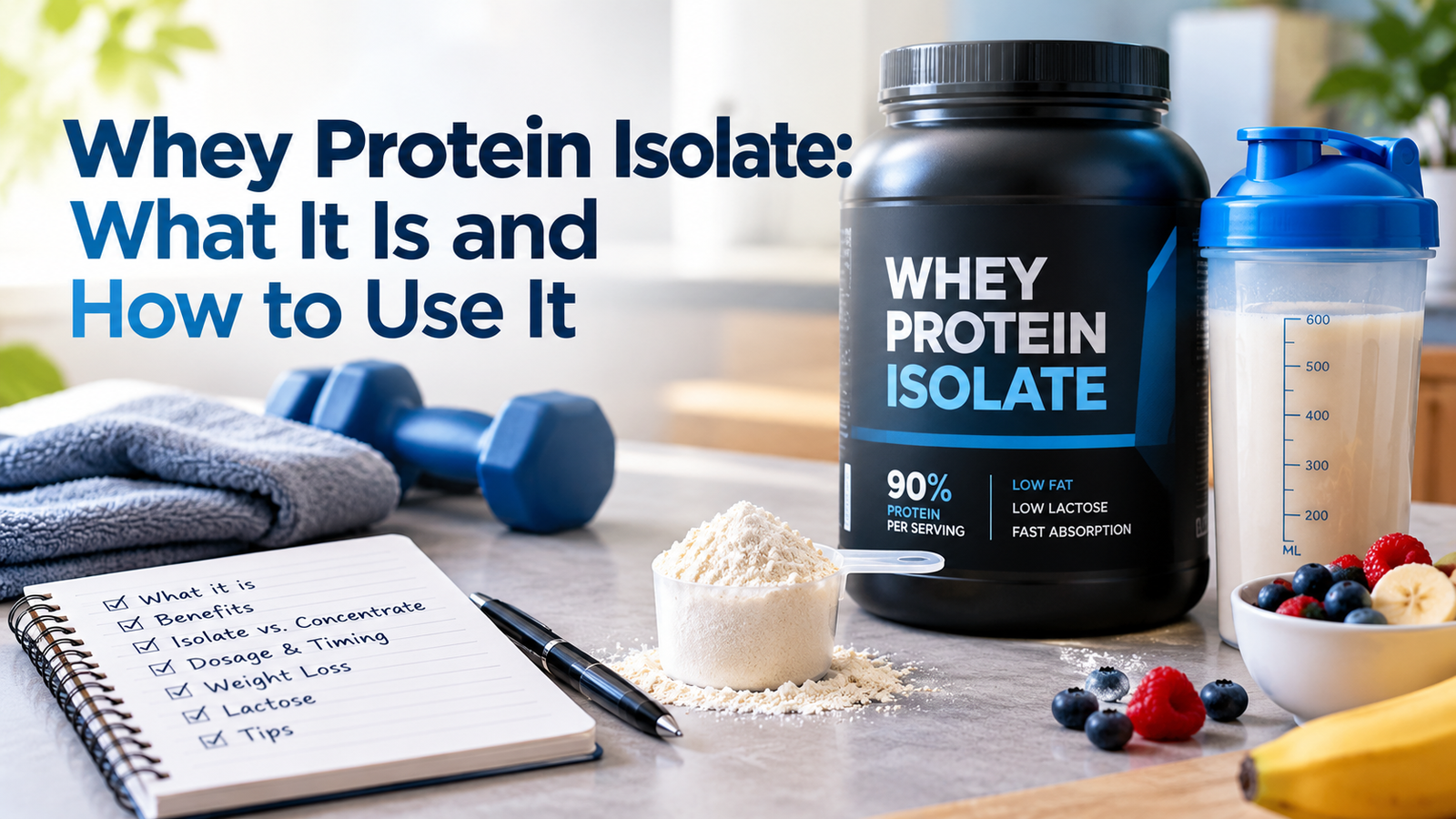
Filter this liquid using heavy filters, and what will result is whey protein isolate. There is no fat left. Most of the lactose too. The American Dairy Products Institute sets the bar at 90% protein for the dried powder. You’ll see it shortened to WPI, which always sounds like a government agency to me.
How Is Whey Protein Isolate Made?
Filters, mostly. Imagine a strainer so fine that water and milk sugar slip right through while the protein gets stuck. Some makers go with ion exchange instead, which sorts protein by electric charge (my eyes glaze over at this part, sorry). A lot of brands do both and then dry everything into powder.
Labels love the words “cold-processed” and “ultra-filtered.” I roll my eyes a little. Those words only describe how the whey was handled, and every brand uses them differently. Look at the protein per scoop instead. That number is hard to fake.
Whey Protein Isolate vs. Concentrate
Same way, different amount of filtering. Concentrate gets less, so a bit of fat and lactose hangs around, and each scoop carries a smaller share of protein. Isolate gets the full treatment. More protein per scoop, less of the rest, and a higher price tag, naturally.
My take? If dairy sits fine with you and cash is tight, buy concentrate and don’t feel bad about it. Lots of people do great on it. But if milk ever makes your stomach complain, or you’re watching calories closely, whey protein isolate is usually worth the extra few dollars.
Whey Protein Isolate Benefits
Muscles rebuild with protein, and that part’s simple. Whey is a complete source of all the nine essential amino acids (those that your body cannot produce by itself), and it is highly digestible.
Take a look at any whey protein isolate tub, and you will see that one serving contains about 20 to 25 grams of protein.Now the part brands won’t shout about: you don’t need it. A chicken breast does the same job, and so do eggs and Greek yogurt. Powder wins on speed, that’s all. Late for work with an empty stomach? Shake, drink, go. And rinse the shaker bottle. A forgotten one in a gym bag is basically a crime scene.)
Is Whey Protein Isolate Good for Weight Loss?
A little, yeah. Protein fills you up, and isolate doesn’t add many calories, so a shake might be what keeps you out of the pantry at 3 p.m.
It won’t burn fat on its own, though. Nothing in a tub does. You still need to eat fewer calories than you burn. If I had to pick one good use, it’d be trading a sugary snack for a shake, which beats most of the “fat burner” stuff out there.
Whey Protein Isolate and Lactose
Lactose is milk sugar, and plenty of people can’t handle much of it. Gas. Bloating. A stomach that sounds like a washing machine.
Isolate has far less than concentrate, so some people with mild trouble do okay with it. Less, though. Not one. If you’re curious about the basics, MedlinePlus has a clear page on lactose intolerance.A milk allergy is another thing entirely. Since whey is an extract of milk, when you are allergic to milk, you shouldn’t take whey. Also, if you don’t know if you are allergic or lactose intolerant, consult a physician before purchasing a large quantity of whey.
How Much Whey Protein Isolate Per Day?
There is no magic number that can be provided to you. However, there is a place to start from. As per the United States Recommended Dietary Allowance, an individual should have 0.8 grams of protein per kg of body weight, per day.
Most of that should come from meals, with powder filling in whatever’s left over. One scoop a day covers plenty of people. Heavy trainers may want more, and a dietitian is worth paying for at that point.
Kidney trouble? Check with your doctor first. Extra protein makes your kidneys work harder.
Best Time to Take Whey Protein Isolate
Whenever you’ll actually remember to drink it. After the gym is fine, and so is breakfast.
Your total protein across the whole day counts more than the clock. If breakfast is mostly toast, a morning shake can even things out. If dinner is your big protein meal, you can probably skip the evening one.
How to Pick a Good Product
Not all whey protein isolate is equal, and some tubs are mostly marketing. Flip it around and read the back. Protein per serving, sugar, and ingredients. If the list looks like a chemistry quiz, I’d pass.
NSF Certified for Sport is one seal worth looking for, since it means an outside group tested the product. And if the front of the tub screams “melts fat,” put it back on the shelf.Start with a small tub. Taste matters more than people admit, and some folks find isolate a bit thinner than concentrate. Some also get mild bloating early on. If that’s you, use less, or stop and talk to your doctor.
Small mixing tip. Pour the liquid first and then the powder or else you will waste a minute chasing the lumps through your bottle. You can use cold water or even milk and a banana in your blender.One more habit worth stealing: divide the tub’s price by the number of servings. Those cheap tubs with tiny scoops get you.
Final Thoughts
So, isolation isn’t magic. It’s whey with more protein and fewer extras, and I’d call it a backup plan for days when real food isn’t happening. Try one scoop, see how your body takes it, and adjust. If you want more simple nutrition advice, our whey protein isolate tips are over at Calm Health Tips.
FAQ
Is isolate better than regular whey?
Kind of, but only in some ways. Isolate has more protein per scoop and less fat and lactose, so people with touchy stomachs like it. You’ll pay more, though, and concentrate works fine for plenty of people.
Can I drink it every day?
In general, healthy adults can tolerate a scoop or two each day, as long as the bulk of their nourishment is coming from healthy foods. If you have kidney issues or any other health concerns, consult your doctor.
Is it lactose-free?
Not really. It has much less than milk, but there is still some present. Consult a doctor before use if you have severe lactose intolerance or a milk allergy.
Does it build muscle?
It supplies the protein your muscles need to repair and grow. But you still have to lift something and eat enough overall. The powder can’t do your reps for you.