Picture the grocery store aisle. Bread on one side, cereal on the other, and a friend saying, “I cut all of that out. I’m doing the paleo diet now. “You nod. Then you wonder what you would eat for lunch.
If that sounds like you, you’re in the right place. This guide explains the paleo diet in plain words. You’ll see which foods are in, which are out, what the research says, and what to watch for. I won’t promise weight loss or name any products. Facts from official sources are marked. The rest is my own view.
This is general information, not medical advice.
What the paleo diet is
The idea is to eat like our far-off ancestors. “Paleo” comes from the Paleolithic era, a time long before farming.The basic concept is that we should eat as our distant ancestors did. “Paleo” derives from the Paleolithic period, an era before agriculture.
According to an article in StatPearls from the National Library of Medicine, “it is the current version of how our hunter-gatherer ancestors’ presumed eating habits were.” It is important to notice the word “presumed” as we do not know for sure how they ate.
You may also hear it called the caveman diet. It’s the same idea.
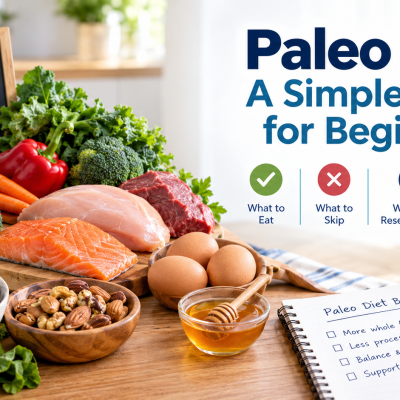
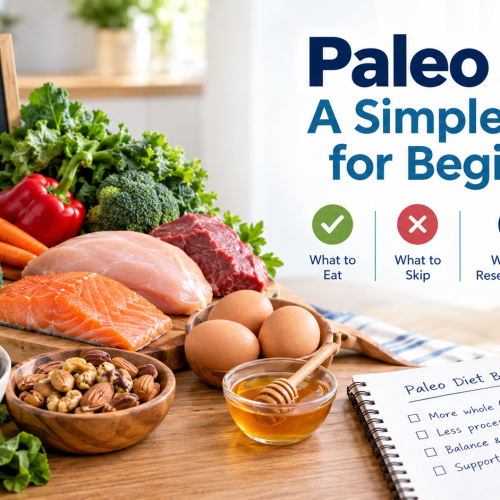
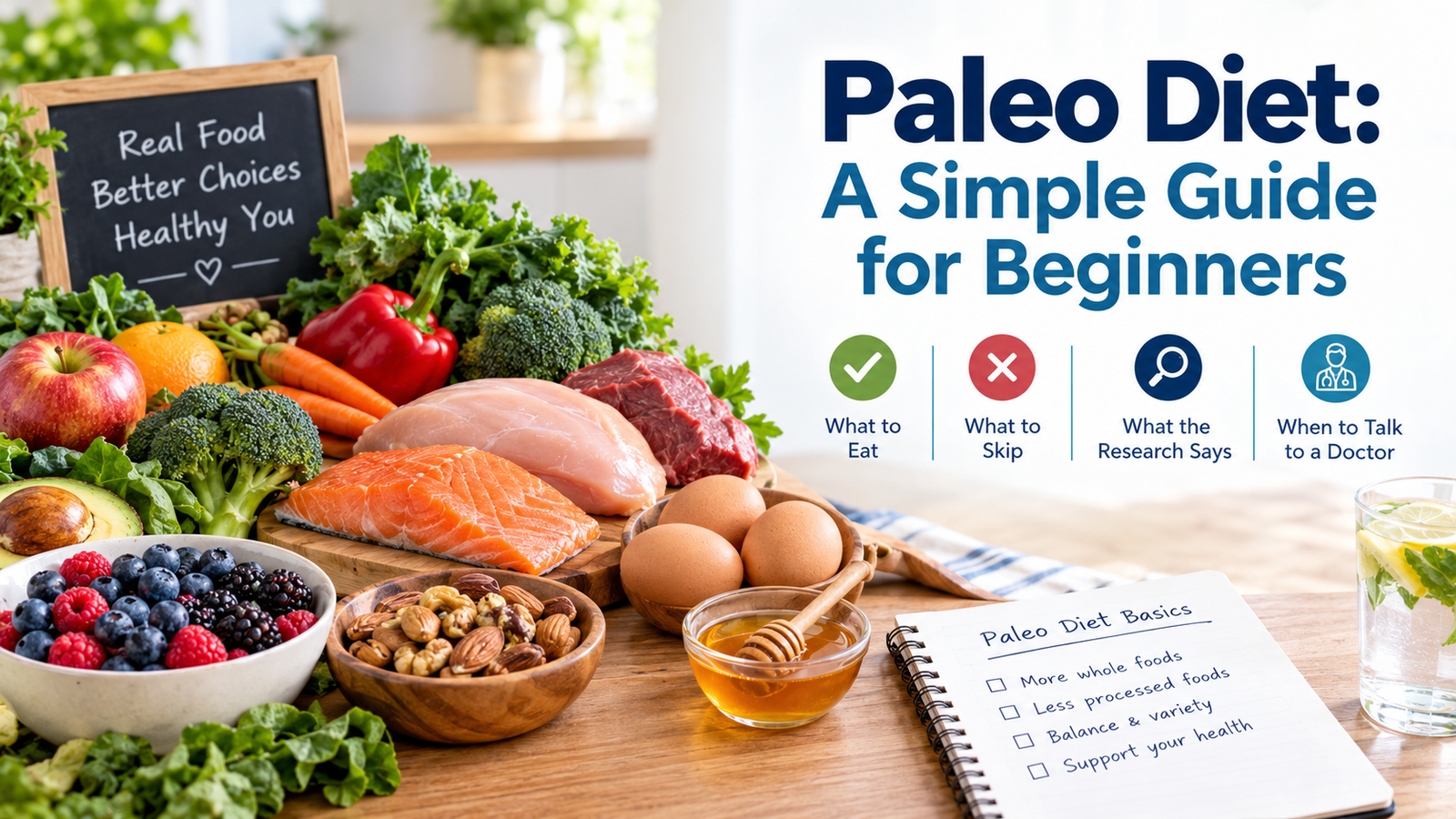
Foods you eat on the paleo diet
This very article goes on to say that the program emphasizes whole foods. Below is its list, followed by some of mine:
- Vegetables and fruit. Consider lettuce, carrots, blueberries, and apples.
- Meat and fish. Chicken, turkey, beef, and salmon.
- Eggs.
- Nuts.
- Honey, in small amounts.
Foods you skip
This is where most people feel the change. It says the plan leaves out:
- Grains, like wheat, rice, and oats
- Dairy
- Legumes, like beans and lentils
- Added and refined sugar
- Processed foods and most packaged foods
- Vegetable oils
The page adds that modern potatoes are often left out too. Strict adherents do not consume alcohol either.This could include grilled fish, cooked vegetables, and a fruit side dish. No bread, cheese, or rice.
What the research says
Here’s the honest part. Some studies look good. Others are thin.
The StatPearls page says some studies of people on the plan found better numbers for metabolic health. These included smaller waist size, lower triglycerides, lower blood pressure, and lower fasting blood sugar. It also notes that some studies saw better insulin sensitivity.
But it adds an important line. The evidence behind the plan is “less robust than other well-studied approaches.” It names two other plans, Mediterranean and DASH, as better supported. It also says the proof for preventing obesity, diabetes, and heart disease is “not well-established.”
So the fair summary is this. The paleo diet may help some numbers, but nobody has proved it beats other healthy plans.If you want a plan with deeper research behind it, our guide to the DASH diet is a good next read.
What to watch for
Cutting whole food groups can leave gaps. The StatPearls page points out a few.
Calcium and vitamin D. It says dropping dairy may sharply lower both. It also notes the plan excludes fortified plant milks that some people use to fill the gap..
Products that contain a high source of calcium are defined as “dairy” products, including milk, yogurt and cheese. However, if you’re on a paleo diet, finding alternatives on the list of canned salmon, sardines with bones, kale, broccoli and bok choy will require effort.
Those fit the plan. Be sure to read labels on fortified items.
Fiber. According to the StatPearls page, the plan can have low fiber content (from whole grains and legumes). These feed useful bacteria to the gut. It treats this as a possible link, not a proven one.
Heavy meat. The page says some people on the plan eat large amounts of meat, which may hurt heart health. A potential increase in a blood marker called TMAO that is associated with the risk of heart disease is noted as well. Moderation is key. Load up on vegetables most of the time.
Cost and inconvenience. It is my opinion. It may cost more to buy fresh meat, fish, and vegetables than pasta or rice. Meal planning does take time too.
Who should talk to a doctor first?
- See a doctor or a registered dietitian before starting if you have:
- Heart, kidney, or bone disease
- Diabetes or blood sugar medicines
- Pregnancy or nursing
- Have had an eating disorder
- Take any daily medicine.
That list is my general caution, not from the pages above. A professional can look at your own health and tell you what fits.
The StatPearls page says doctors don’t need to push or oppose the plan. It says they should understand it. It also notes that the American Heart Association does not officially endorse it. Both groups lean toward plans heavy on unrefined plants.
How to start the paleo diet in a simple way
Simple guide to start the paleo diet
- No need to change everything all at once. Here’s how:
- Take a look at your current meals and draw circles around the grains, dairy, and pre-packed foods.
- Start by modifying one meal. Breakfast is recommended. Choose eggs and fruits.
- Have simple-to-keep foods at home. Vegetables, canned fish, eggs, and nuts are good.
- Check food labels. Sugar is often added in sauces and snacks.
- Plan your calcium. Write down which foods will cover it.
- Check in after a few weeks on the paleo diet. Ask how you feel, and talk to your doctor.
Common mistakes
- Going too strict, too fast. The paleo diet is hard to keep up that way.
- Eating mostly meat. Vegetables should take up room too.
- Forgetting calcium. Dairy is gone, so you must replace it on purpose.
- Trusting the label “paleo” on a package. Check the ingredients. Treats can still be sugary.
- Expecting a cure. The research doesn’t support big promises.
Your next step
Choose one dinner from the week and try cooking it according to the paleo style. Protein, two veggies, and fruits to top off the meal. Pay attention to how you feel and how much it cost. Finally, choose whether paleo works for you.
For more plain guides, browse our Diet Types posts. The paleo diet can work as one way to eat more whole food. It just isn’t the only way, and it’s best chosen with your doctor.
FAQ
What is the paleo diet?
The diet is grounded in the principles underlying the food eaten by early hunter-gatherers. This diet emphasizes the consumption of fruit, vegetables, fish, meat, nuts, and eggs, while eliminating grains, legumes, dairy products, and processed food from the diet.
Can you eat dairy on a paleo diet?
Not on the standard paleo diet. StatPearls lists dairy among the foods left out. If you skip it, plan other calcium sources.
Is it healthy?
It may help some health numbers, according to some studies. However, there is less evidence to support its use than the other two mentioned above. You may discuss this diet with your doctor if it is right for you.
Is paleo the same as keto?
No. Keto follows a diet that is very low in carbs. This diet includes fruits and honey and is based on food groups. While some people combine both diets, they are different concepts.