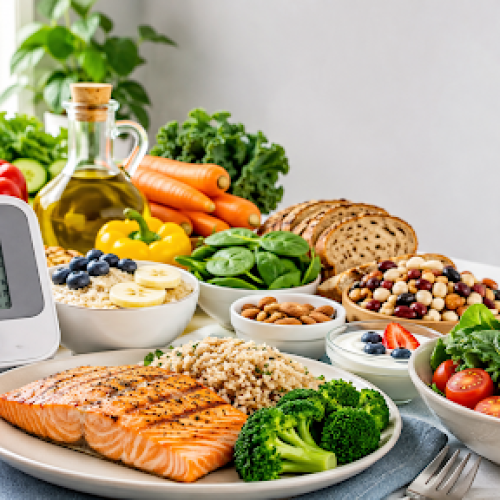
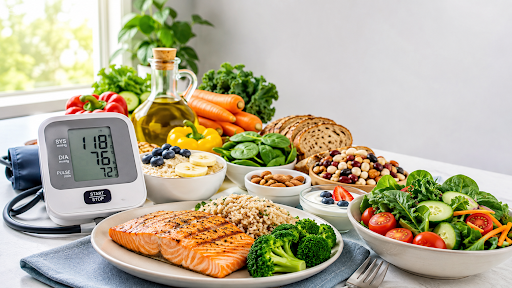
Your doctor says the number’s too high. You leave with a printout about salt and potassium, and honestly? No idea where to start.That’s usually how this goes. Nobody wakes up wanting a new diet. A blood pressure cuff does it for them. The DASH diet actually stands for Dietary Approaches to Stop Hypertension or, try saying that three times fast. Most people just refer to it as DASH, for obvious reasons.No celebrity invented it, no book launched it, and nobody’s selling a supplement line to go with it. Researchers at the National Heart, Lung, and Blood Institute put it together back in the early 1990s because they wanted to lower blood pressure with food instead of a pill bottle. Three decades later, it’s still sitting near the top of pretty much every “best diet” ranking out there. What the DASH Diet Actually Is No points to count. No fasting window to watch the clock for. You’re not throwing out half your pantry on day one. I think that’s exactly why it works for people when other diets don’t. No special store, no box showing up with a subscription fee attached. Same grocery store you already go to, just filling the cart a bit differently. If you want a walkthrough of what that actually looks like on a shelf-by-shelf level, we broke down a beginner’s DASH grocery list here. The strategy is based on four things that the organism employs in order to control its blood pressure: potassium, calcium, magnesium, and fiber. Plant sources are the origin of all of them. They are not artificial. The DASH Diet Food List: What to Eat More Of A typical diet may consist of four to five servings of veggies, four to five servings of fruits, six to eight servings of whole grain food items (such as brown rice, oatmeal, etc.), two or three servings of dairy products with low fat content, up to six servings of fish or meat products, and some nuts and legumes. None of that’s as big as it sounds. One apple. Half a cup of rice. A slice of bread. If you’re picturing tonight’s dinner plate right now, DASH basically means one more vegetable and a slightly smaller piece of chicken. That’s the whole shift. Foods to Avoid on the DASH Diet Nothing’s fully banned, and that’s probably why people actually stick with it longer than most diets. A few things just shrink. Sodium’s the big one. The CDC estimates most Americans eat well over that without realizing it. Red meat and fatty cuts aren’t off the table; they just stop being the star of dinner every night. Added sugar gets the same treatment. Allowed, not a daily habit. Swap full-fat dairy for low-fat when it’s easy to. Here’s the part that trips people up, and it tripped me up too the first time I actually read a nutrition label: most sodium isn’t coming from the salt shaker. It’s in the bread. The canned soup. The deli turkey. The frozen dinner you microwave on a Tuesday when you’re tired of cooking. If the rest of your pantry is causing the problem, then you’ll only be making a small dent on the salt shaker scale if you don’t use it. Want recipes already built around these limits so you’re not doing sodium math at 6pm on a weeknight? Try out some of the DASH friendly recipes here. How the DASH Diet and Blood Pressure Are Connected The participants in the original study experienced a reduction in blood pressure in two weeks. Two weeks. For some of them, that drop was close to what you’d expect from actual medication, which is a strange thing to say out loud about lettuce and oatmeal, but there it is. The less salt, the less water your body will retain and the less pressure on the walls of your blood vessels. The opposite of sodium, potassium helps relax those walls, too. Put the two together and you get more than either one manages alone. Almost half of adults in the U.S. have high blood pressure. That’s not some far-off statistic—that’s probably someone at your dinner table, whether they’ve said anything about it or not. It’s a big part of why cardiologists keep pointing patients toward DASH before reaching for a prescription pad. Can the DASH Diet Help With Weight Loss? It wasn’t built for that. Weight loss wasn’t the goal. But plenty of people lose weight on it anyway, mostly because fiber fills you up in a way a bag of chips never will. You’re just not as hungry an hour later. If weight loss is actually what you’re after, pair DASH with a modest calorie cut, and keep it modest. Cut too fast on any plan and you end up hungry, tired, and reaching for the exact thing you cut by week three. Slow beats fast here, same as it usually does. For a closer look at pairing the two without overdoing it, here’s how we approach DASH diet weight loss without the crash-and-burn part. A Simple DASH Diet Meal Plan for Beginners You don’t need to rebuild every meal on day one. Start here: Breakfast: Oatmeal topped with banana slices and some walnuts. Lunch: Grilled chicken salad made from leafy greens and tomato wedges with an olive oil dressing. Snack: Unflavored yogurt and some berries. Dinner: Baked salmon with steamed broccoli and a small portion of brown rice. Feel free to change the meals depending on what you dislike. The important thing is to have a proper structure with more veggies, less salt, and a little bit less meat than you usually eat. Looking for a week-long meal plan for the DASH diet that will save your time instead of thinking about new dinner options each night? Check out our DASH diet plan. Frequently Asked Questions Does the DASH diet sound like a lot of work? Not really. No special food to find, no rulebook to learn. You are primarily making some
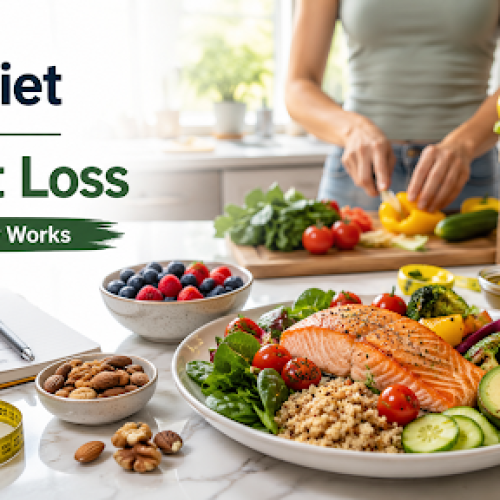
Best Diet for Weight Loss: What Actually Works
You’ve probably tried at least one of these. Keto, intermittent fasting, counting macros that one where you drink lemon water for a week and call it a cleanse. Maybe more than one. Honestly, maybe all of them, at different points, with varying levels of commitment and regret. Here’s the part nobody really wants to hear: there isn’t one best diet for weight loss that beats all the others. Researchers have tested this over and over. Atkins against Zone, low-carb against low-fat, and Ornish against pretty much everything, and the results keep landing in roughly the same spot. Different diets, similar outcomes, as long as people actually stick with them. That last part is doing most of the work. Why There’s No Single Best Diet A comparative study of protein-based diet, carbohydrate-based diet and fat-based diet did not yield any result that could demonstrate superiority of one diet over the other. The energy deficit was the key and it didn’t matter which macro-nutrient was being blamed that year.Not an easy thing to swallow, right? It’s easier to buy into the concept of carbohydrates being the enemy and the concept of fats making people fat than to accept that losing weight is about eating fewer calories than your body uses for an extended period of time. Boring. Also true. None of this means every diet is equal in every way. Some do a better job on cholesterol. Others are easier to stick with simply because they don’t ban entire food groups outright. The “best” one really is just whichever one you won’t quit on by week three, which is a far less exciting sentence than any diet book would ever print on its cover. Best Diet for Weight Loss for Beginners Avoid everything that calls for unique shakes or exclusion of an entire group of foods from your diet. This may sound very professional, but it won’t last long into the middle of your first week. It seems to be a good idea to begin with the Mediterranean diet. Lots of vegetables, beans, fish, and olive oil; not so much red meat and processed foods. Nothing feels forbidden, and that matters a lot when you’re new to this, because every “no” starts to feel like a countdown to giving up entirely. Want to see what a beginner week actually looks like on a plate, not just in theory? Here’s our simple starter guide. It doesn’t assume you already own a food scale. The Best Diet Plan to Lose Weight Fast, and Why That’s Usually the Wrong Question Fast weight loss plans exist, sure, and some of them do work, at least for a few weeks. Week four comes along, your weight stops moving on the scale, and here you are, faced with a refrigerator filled with foods you promised yourself you’d give up on a month ago. The ones that manage to slim down by losing 1 to 2 pounds a week manage to maintain their weight loss for much longer.Not thrilling advice. Nobody’s writing a bestseller called “Slowly, Over Several Months, With No Dramatic Before and After Photo.” But it holds up, which is more than most fast-diet promises can say for themselves. If you genuinely need faster results for a medical reason, take that to your doctor. This is not the diet you saw online at 11pm at night, half asleep while scrolling through a Reddit forum page. Mediterranean Diet vs. DASH Diet for Weight Loss These two diets are always appearing in top ten lists of best diets and for good reason, despite being designed for very different purposes initially.. DASH was designed to lower blood pressure. Weight loss just tags along as a side effect for a lot of people, mostly because the diet naturally cuts sodium and processed food without you having to think about it too hard. It’s structured too, with actual serving counts by food group. Some people love that kind of structure; others find it a bit rigid after a while. The Mediterranean diet is looser. More of a general pattern than a rulebook, which makes it easier to bend around whatever you already like eating. If you want the calorie-cutting benefit of DASH but hate being told exactly how many servings of grains you’re allowed, Mediterranean’s probably your better fit. We compared both diets side by side here if you want the longer version. Best Diet for Sustainable Weight Loss “Sustainable” is really just a fancier word for “you can actually keep doing this for years, not weeks.” A few things tend to separate the diets that last from the ones that quietly fall apart around March.They don’t wipe out entire food groups. They leave room for a cookie without turning that cookie into a moral failure. They fit your actual schedule, not the schedule of someone with three free hours a day for meal prep, because most of us don’t have that kind of time lying around. According to Harvard Health, the best diet really is the one you’ll stick to, not the one with the most dramatic before- and after-photos attached to it. Honestly, that tracks with what I’ve noticed too. The diets that actually work long-term are almost never the ones people bring up at parties. They’re the boring, repeatable ones nobody’s posting about. Calorie Deficit for Weight Loss, Explained Simply Underneath every diet that actually works, there’s the same mechanism running quietly in the background.You’re eating fewer calories than your body burns. Low-carb diets tend to be effective because the reduction in carbs automatically results in a reduction of calories. One reason for the success of high protein diets is that proteins keep you full, which means you don’t have to force it through the afternoon. It isn’t necessary to count all calories for life to make this happen. Smaller plates, more veggies, less liquid sugar, and a little more protein at meals. That’s a recipe for a deficit, typically without a spreadsheet in sight..If you’re looking for