My cousin’s four months old now. She’s landed on about six meals she rotates through without really thinking about it anymore, which is honestly the whole goal here. Not a rigid plan with rules attached. Just a handful of meals that cover protein and fiber without demanding a decision every time hunger shows up.She began taking Ozempic in the spring. After about two weeks she got on the phone with me. She didn’t have a problem per se, yet it seemed to her there wasn’t anyone who could explain to her what she should be eating now. In fact, she had no appetite at all, but it became clear she wasn’t told what to do with it. The drug included a dosage regime, but not a GLP-1 friendly diet.
GLP-1 agonists, including Ozempic, Wegovy, and Zepbound, slow down digestion and make your appetite decrease dramatically. Period. It does not mean that you can now eat whatever you like in small portions. This is what most people tend to do within the first weeks of use.In any case, you eat significantly less now.
Why food choices matter more now
Drop your appetite this much and it gets easy to accidentally skip nutrients your body still needs. Research shows that up to 40 percent of the total weight lost from GLP-1 treatments can come from fat-free mass, including muscle, not fat. This is the one thing that should cause some hesitations. Instead of losing fats, lose muscles, and find yourself getting weaker because your metabolism will be slower even when the fats are all gone.
The solution to the problem is mostly in the proteins. Dieticians usually recommend that people using GLP-1 have 20 to 30 grams of protein in each meal, which may seem like a lot at first but then one thinks of chicken breasts or Greek yogurt.
Fiber matters too, more than most people expect going in. The USDA’s recommended fiber intake works out to around 14 grams for every 1,000 calories eaten, and hitting that number tends to help with the side effect nobody wants to talk about at dinner parties: constipation. It’s common on these medications. Fiber genuinely helps.
What to eat on a GLP-1 medication
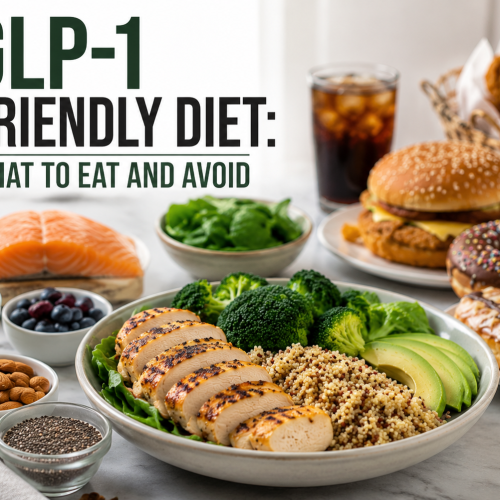
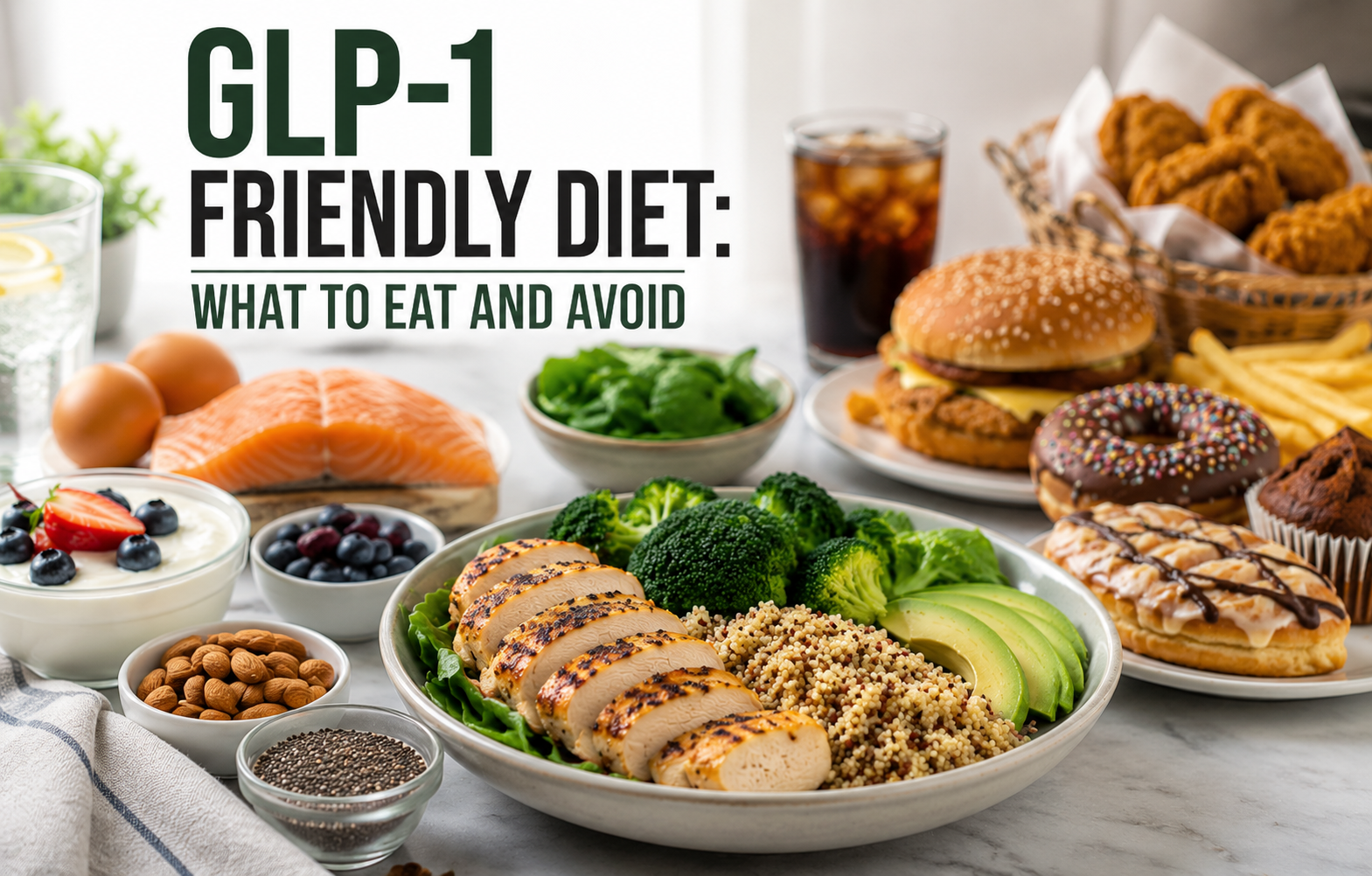
Chicken, turkey, fish, eggs, and tofu for protein.It’s not complicated at all and nothing unusual. It’s food most people already know how to cook. What changes is being deliberate about it, since a smaller appetite leaves a lot less room for meals that don’t actually do anything nutritionally.
Foods to avoid on GLP-1
There is no hard and fast list of foods to avoid completely, but there are some foods that will almost certainly exacerbate the problem. Fatty or fried foods sit heavily in an already slow digestive system and are sure to trigger nausea for many individuals. Sugary foods or drinks, particularly those that consist mainly of refined carbohydrates such as white bread, provide little nutritional benefit.That math matters more now that you’re only eating about half of what you used to.
Carbonated drinks deserve a mention too. The bubbles seem to make bloating worse across the board, right at a time when the stomach is already adjusting to less food overall.
A sample GLP-1 meal plan
Breakfast: Greek yoghurt, some berries, and a few chia seeds. Lunch: grilled chicken on top of lots of salad and olive oil dressing. Should you feel hungry again, then a few almonds should do just fine. Dinner usually consists of baked salmon, roasted broccoli, and some quinoa.
This way all portions remain small, which is the whole point.Nobody’s finishing a normal-sized plate here. The goal is protein and fiber in whatever amount actually feels comfortable.
The hard part is usually the first few weeks.
Eating slowly helps more than it sounds like it should. Since GLP-1s can make you feel full faster, eating slowly may prevent overeating and that uncomfortable stuffed feeling that shows up when someone eats at their old pace out of habit, before their body catches up to the new normal.
Hydration gets missed constantly, and it’s an easy one to overlook. These medications can dull thirst signals right along with hunger signals, so dehydration sneaks up without much warning. Water should carry most of the load, though citrus, berries, or mint make it easier to actually get enough down through the day.
Our full breakdown of building meals around specific side effects lives at calmhealthtips.com, organized week by week if you want more detail than a single post can cover. And if you’re still weighing which GLP-1 medication makes sense for your situation, the FDA’s page on approved weight loss treatments is worth reading before that conversation with your doctor.
Getting protein and fiber targets right
Most people don’t need to count every gram. A rough target still helps. Protein at every meal beats one giant serving at dinner, and 90 to 100 grams a day spread across three or four meals is a lot more realistic than trying to cram it all into one sitting when appetite is already limited to begin with.
Fiber works the same way. Add something with color to every plate, berries or greens or beans, whatever’s around, and it adds up faster than expected. This is pretty much the whole plan in dealing with constipation that messes up a lot of people during the first few weeks.
The tracking might just be too much for a few people and that’s okay. Eating protein and veggies for every meal will get you there most of the time anyway.
When it’s worth calling in a dietitian
A registered dietitian earns their appointment fee in the first few months, especially. They can set protein targets around your actual body composition instead of a generic number pulled from an average, and they’ll catch nutrient gaps before those gaps turn into real deficiencies. The CDC’s guidance on healthy weight loss is a decent starting point too, for general nutrition context while you figure out what your own body actually needs.
For meal ideas built around specific side effects, nausea flare-ups especially, our full guide at calmhealthtips.com covers how to adjust meals as appetite keeps shifting over the first several months.
FAQ
Is there an official GLP-1 diet?
No single approved plan exists. In summary, the basic notion involves eating more proteins and fibers while reducing intake of foods which are either fatty or sugary since they may worsen the adverse effects of the drug.
How much protein intake per meal when taking GLP-1 drugs?
Generally, 20-30 grams of proteins per meal are recommended or about 1.2 grams of protein per kilogram of body weight per day.
Why does fiber matter more now?
Mostly to keep constipation at bay, one of the more common side effects people run into. It also helps you feel fuller on smaller portions, which pairs well with how the medication already works.
What makes GLP-1 side effects worse?
Fried and greasy food usually tops the list, along with heavily sugared foods and anything carbonated. None of it’s banned. Just worth going easy on.
Can you actually lose muscle on a GLP-1 medication?
Yes, and it’s a real risk when protein intake stays too low. That’s the whole reason protein gets so much attention in any GLP-1-friendly diet.