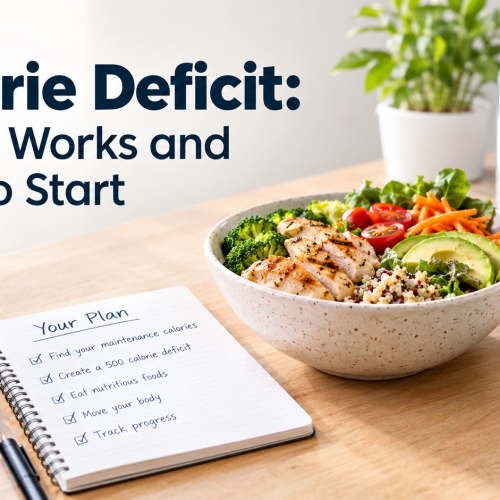
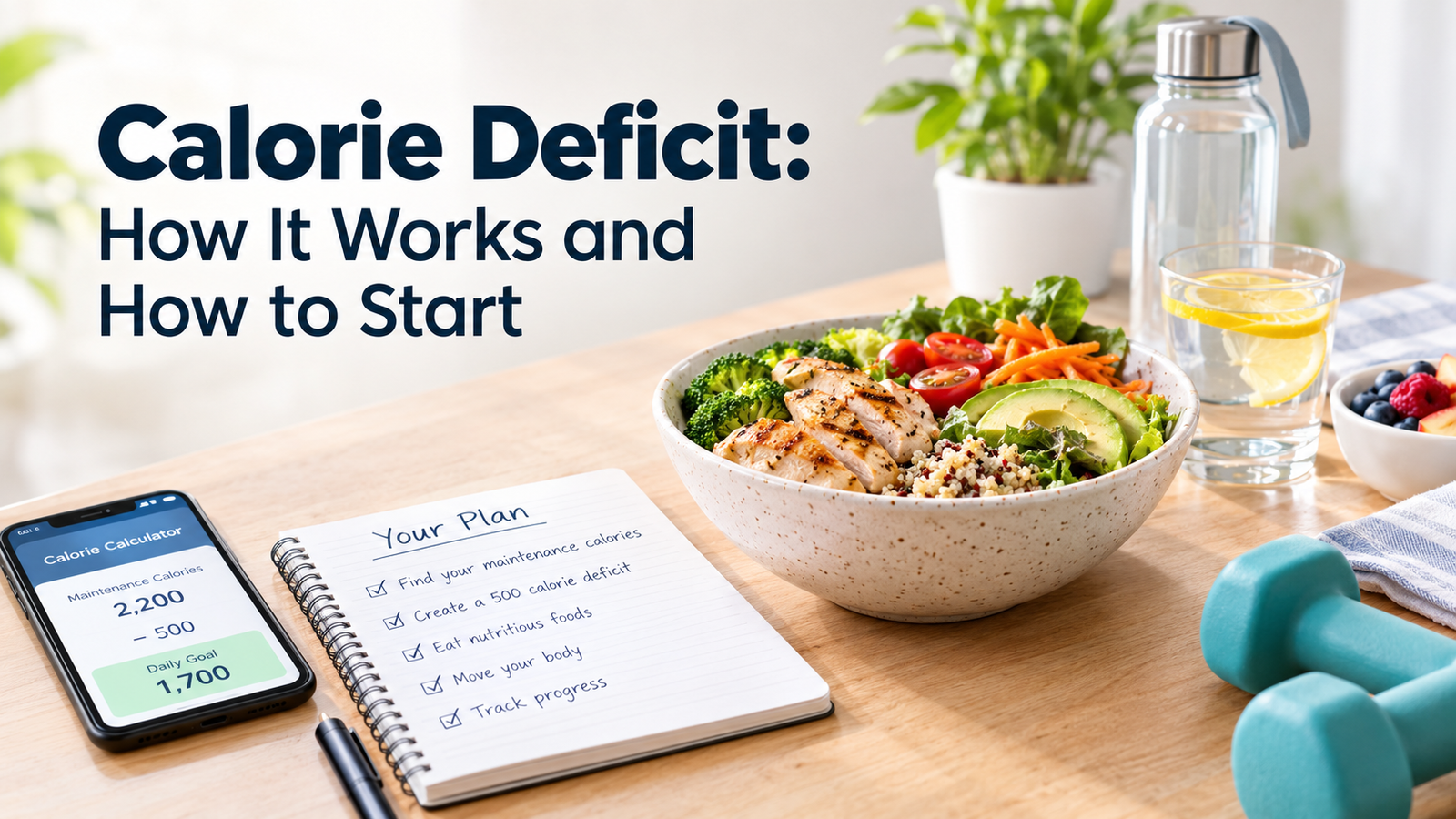
Truthfully, weight loss information can be a complete jumble. While one source will tell you to give up carbohydrates, another will recommend eating during the midday period of noon to 8PM. The other one will recommend lemon water as the key to the process. At its core, no matter what successful plan you use, it boils down to the same thing – a calorie deficit.It’s not necessarily exciting, which might explain why it gets overlooked. However, once you get the hang of it, the rest becomes much clearer.. What Is a Calorie Deficit? Think of your body as a checking account. Calories are the money. Every day you make deposits (food) and withdrawals (breathing, walking, digesting, and fidgeting in meetings). Most days the two come out about even, and your weight stays put. A calorie deficit is a day when the withdrawals win. Say you burn 2,000 calories and eat 1,800. You’re 200 short, and your body covers it with savings, which in this case means stored fat. A few of those days won’t change much. A few hundred will. The Mayo Clinic puts it more simply: weight loss boils down to taking in fewer calories than the body burns. So, it really doesn’t matter what diet you choose; choose one that you can stick to.And the reason you will also hear that a pound of fat equals 3,500 calories.Close enough for planning. Don’t expect your body to follow it to the decimal. How Big Should Your Calorie Deficit Be? Smaller than you want it to be, probably.if you cut 500 calories per day, you will be at a deficit of 3,500 calories after a week, which is roughly equal to a pound. It has been observed that losing weight at one or two pounds a week is healthy, as advised by the CDC. I get the temptation to double it. Who wouldn’t want faster? But a 1,000 calorie gap usually means being hungry all day, dragging through workouts, and losing muscle you’d rather keep. And if you’re petite or don’t move much, there may be barely any food left in the plan.Start gentle. Tightening things later is easy. Digging yourself out of a rough first month, when you’ve already decided you hate this, is not. Finding Your Calorie Deficit Number First, you need your maintenance calories. That’s how much you could consume without gaining weight. There are free calculators available online to estimate this based on your age, height, weight, gender, and activity level. It’s just an estimate, and they assume you’re more active than you actually are.Subtract 500 from that number. If your maintenance is 2,200 calories, you should be aiming for around 1,700.Picture someone named Dana doing exactly that. Nothing fancy. Now comes the hard part, which is waiting. Two or three weeks before you pass judgment. Weight swings by pounds from one day to the next, and a salty takeout dinner can add a couple of pounds of water overnight that have nothing to do with fat. Losing about a pound a week? Great, leave it alone. No change at all? Cut a little more food, or walk a little more.One at a time. Have you got to count everything you eat? No. Some people count their food using an app for several weeks just to know what a serving size really is. While some other people don’t count but cut out the sodas and downsize the plate.Both work. If tracking makes you tense, skip it. We also cover the calorie deficit for weight loss in our diet guide if you’re still choosing a style of eating. Easy Ways to Build a Calorie Deficit Without Feeling Starved Begin with liquid calories. A regular 12-oz cola contains 140 calories; an elaborate cappuccino more, and nothing of it will make you feel full. Exchange two such beverages with water, and half of the job will be done before lunch. When speaking of food, stick to proteins and fibers. Eggs, beans, chicken meat, plain yogurt, oats, apples, and broccoli. These foods will keep you fuller. Chips disappear in ten minutes, leaving you hungry as ever. Your day could include breakfast consisting of oatmeal with some fruit, large chicken salad, yogurt in the evening (around 3 PM), and less rice during the dinner time. This menu might seem boring to you, but it is completely achievable. And read the labels; a small package usually means two or even three servings. Exercise more too. According to the Center for Disease Control, an adult person should have at least 150 minutes of physical activity a week, and a walk after dinner will do just fine. Don’t forget about strength exercises at least two times a week. Mistakes That Stall a Calorie Deficit The big one is going too hard, too fast. You eat next to nothing for three days, raid the pantry at 10 p.m., feel awful, and start over on Monday. Round and round. Then there are the little extras nobody counts. A handful of almonds. Creamer. A few bites off your kid’s plate.Each one may not seem like very much, but when put together they can silently counteract your calorie deficit by the end of the day.Weighing yourself each morning can be misleading too. It will fluctuate from sleep, salt, hormones, and water, so just look at the week-long average instead. Finally, the plan starts getting old. Your reduced weight means that fewer calories are being burned, so a good plan while weighing 200 lbs could start to fail at 185 lbs. The Mayo Clinic warns you may have to reduce further. If you have been stagnant for some time, recalculate your maintenance based on your current weight. Who Should Check With a Doctor First? Not everyone should jump in alone.Before reducing your calorie intake, talk to your doctor or dietitian if you’re pregnant, breastfeeding, younger than 18, or have a condition such diabetes. Also, if you’ve gone through an eating disorder or a calorie count causes anxiety or
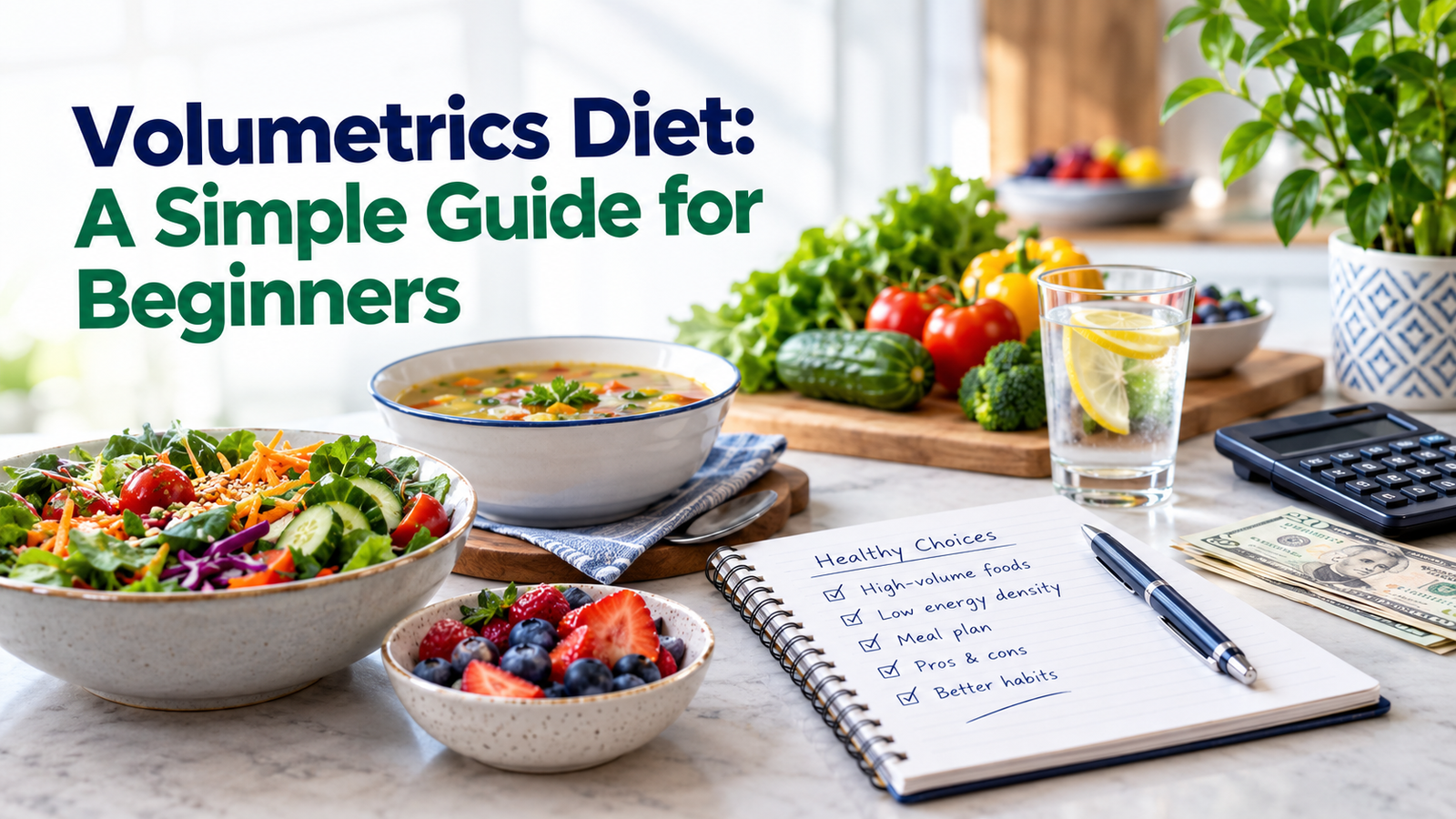
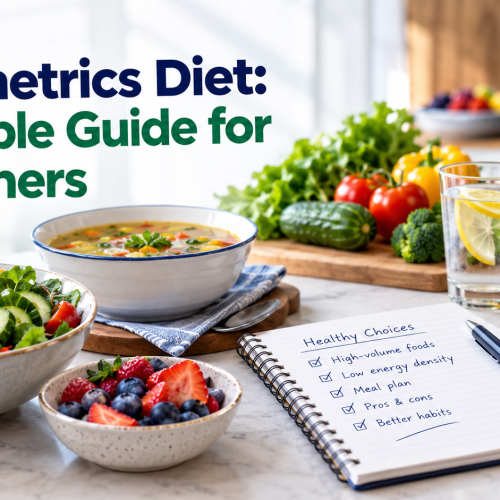
Volumetrics Diet: A Simple Guide for Beginners
Which fills you up more, a bowl of soup or a handful of chips?Soup. Even though the chips have way more calories. That odd little fact is the whole idea behind the Volumetrics diet, and honestly it’s the reason I like it. Same stomach, fewer calories. What is the Volumetrics diet? Barbara Rolls, a nutrition researcher at Penn State, came up with it. Cleveland Clinic says it isn’t a fad diet. There’s no giant calorie cut, no banned food groups, and no guilt trip. You eat more of some foods and less of others. Nothing is off the table. Energy density, minus the jargon Water contains no calories; therefore, watery and high-fiber foods score low. Fats are highly caloric and are scored high as they contain many calories in very little volume. Cucumber is low. Butter is high. An excellent case for me is grapes and raisins. Raisins are dried grapes. One cup of grapes has almost the same number of calories as a small handful of raisins, yet grapes fill up a whole bowl while raisins just take up your palm. Researchers say people tend to eat about the same weight of food each day. So if the weight stays the same and the calories drop, you don’t feel cheated. That’s the engine of the Volumetrics diet, and it’s why low energy density foods get so much attention. The four groups: a volumetrics diet food list Rolls sorts every food into one of four groups. Cleveland Clinic recommends that “Most of the foods you eat need to come from Groups 1 & 2 with a little from Groups 3 & 4 now and then.” What a day could look like: a Volumetrics diet meal plan Calories were not included deliberately. For breakfast, there are oats cooked in low-fat milk with fruits. Lunch will include a large portion of vegetable soup with lots of vegetables and a little bit of dressing, an apple and salad. For snacks – carrots or pear. For dinner – grilled chicken, veggies and potatoes. For dessert – just one square of dark chocolate. Boring? Maybe. But boring is easy to repeat. Does the Volumetrics diet work for weight loss? Possibly. A research brief from the CDC says that swapping high-energy-density foods for lower ones, like fruits and vegetables, can help with managing weight. So the idea isn’t made up. But I’m not going to make a commitment about numbers, because no one truthful would do that. After all, your success will depend on your actual food intake, time frame, and activity level. Volumetrics diet pros and cons The good: The not so good: That last one trips people up. Low energy density isn’t automatically healthy, and high isn’t automatically bad. Remember that and you’ll dodge the biggest confusion. Want more volumetrics diet ideas? Calm Health Tips has a few. Easy ways to start Skip the math at first and just swap things. To check a food, read the label and divide the calories by the grams in one serving. Under 1.5 is a good sign. Over 4 is a small extra, not a staple. Begin your dinner with soup or a large salad. Scientific studies demonstrate that consuming a large serving of food that is low in calories might help in lowering consumption during the meal. Increase the quantity of vegetables in pasta dishes, rice dishes, and casseroles. Use whole fruit instead of fruit juices. Serve dessert in small portions. Take a walk after dinner. None of this needs a special store or a fancy gadget, just a bit of planning on Sunday. Common slip-ups A salad isn’t always a group 1 meal. Add cheese, croutons, and creamy dressing and the energy density jumps. Soup works the same way: broth-based is great; cream-based, not so much. And if you shrink every portion until you’re starving, you’ll quit by Thursday. The point is to feel full. Watch your drinks too. Juice and soda add calories without filling you up much, so plain water, coffee, or tea usually works better. A basic grocery list for Volumetrics diet In case your fridge is stocked with first and second categories of foods, preparing dinner will not be much of a problem. When it is not the case, no plan survives Tuesday that took place late in the day. Start with vegetables: cucumbers, tomatoes, zucchini, leafy vegetables, berries, apples, oranges. They are basically cheap and are full of water. Frozen vegetables count as well—no mushiness occurs in the crisper during a disastrous week of mine. Then come the staples: oats, brown rice and beans, lentils and potatoes. For protein, think about chicken breast, eggs, fish and plain non-fat yogurt. Canned beans and broth-based soup save a lot of time but do look carefully at the amount of salt stated on the list. Set aside a small space for groups two and three. You can put a little cheese there, a few nuts, and a bar of dark chocolate. Do not completely avoid them total deprivation will make you want them more. Conclusion: start with soup. If you try one thing this week, have a bowl of soup before dinner and see how you feel. The Volumetrics diet is mostly small habits like that, adding up over time. For more simple ideas, visit Calm Health Tips and go at your own pace. Frequently asked questions What is the Volumetrics diet in simple words? It is a diet which revolves around low-calorie foods in relation to their weight, such as fruits, vegetables, and soups. Such food will keep your stomach full. Can you eat bread, cheese, or nuts on the Volumetrics diet? Yes, in smaller amounts. They sit in the higher groups, so the plan says to limit them rather than cut them out. Do I have to count calories? The full plan uses energy density math. Plenty of people skip that and just use the four groups as a guide, filling most of the plate from groups 1 and 2.
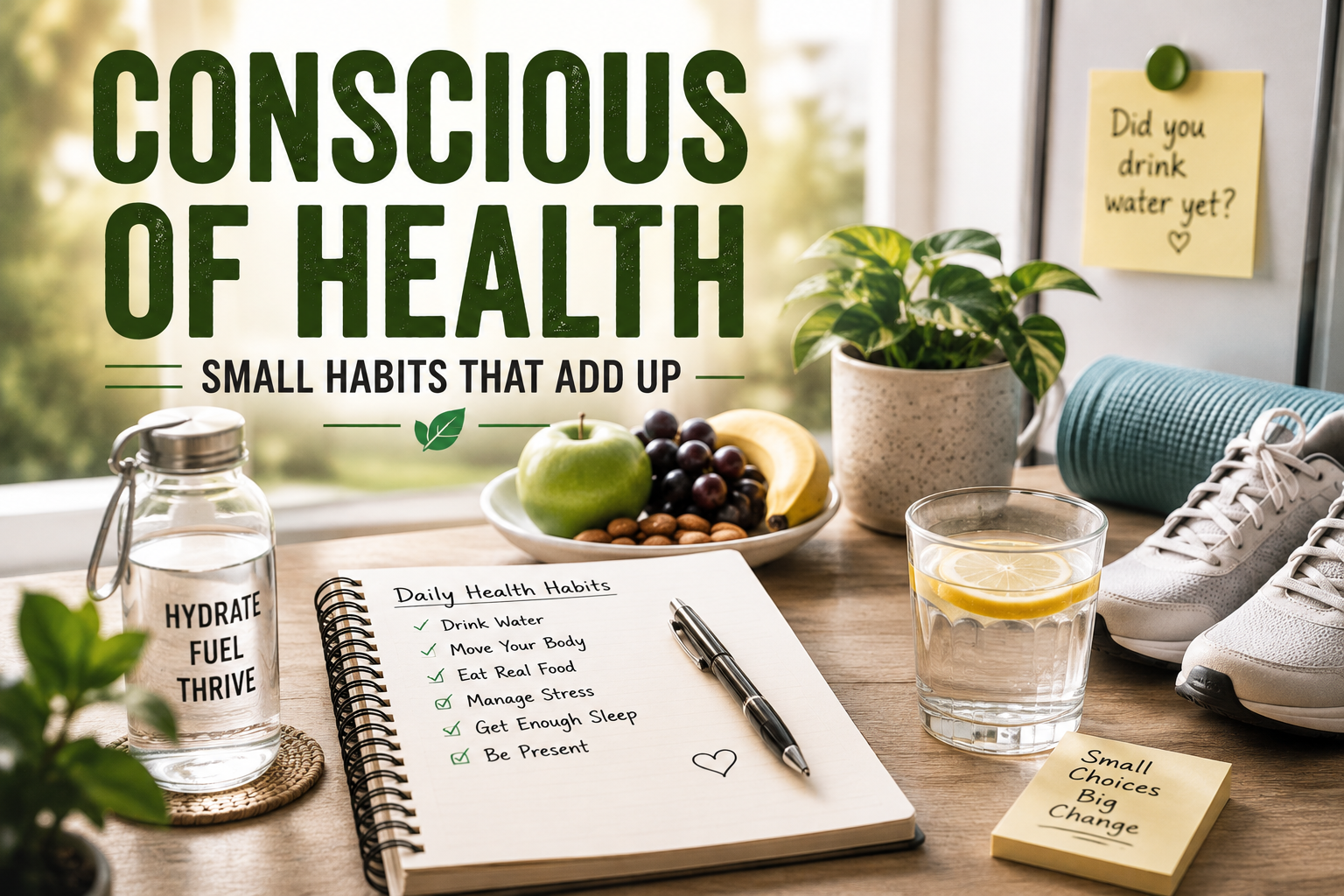
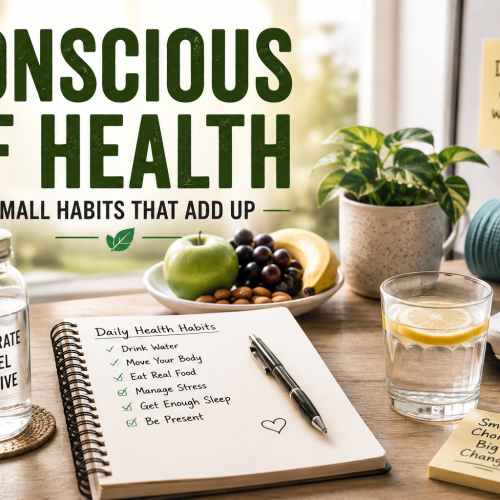
Conscious of Health: Small Habits That Add Up
My neighbor keeps a sticky note on her fridge that just says, “Did you drink water yet?” She’s had it there for maybe two years now. I used to think it was a little much. Then I noticed I go entire mornings running on coffee fumes and don’t clock it until my head starts pounding around 11am. That’s basically what being conscious of health comes down to. Not a diet plan. Not a gym contract you feel guilty about. Just actually noticing what your body’s doing before it has to shout at you. What Does Being Conscious of Health Really Mean? Being aware of your own well-being entails making choices that aren’t automatic. Lunch at your desk while replying to emails is automatic. The latter is eating and enjoying the meal. Here is an experiment for you. Every time you go for your third coffee, pause for two seconds. Are you really feeling sleepy, or are you merely bored? Maybe even thirsty? Not many do this; they simply have their coffee. All this doesn’t come overnight, mind you. You realize one thing (you get irritable with your children because of lack of sleep), then you realize another (it’s good for you to take a stroll after your dinner), and it gradually adds up. What Does a Health-Conscious Lifestyle Look Like? You’ve probably already got some habits going without realizing it. Checking a label before buying something new at the store. Standing up to stretch mid-scroll because your neck started aching. Turning down seconds at dinner because you’re full, not because some app told you to. That’s health consciousness in practice. Messy, inconsistent, and mostly unconscious of itself. Nobody nails this every day, and honestly, trying would probably backfire. There’s a version of this that shows up at work too, which people don’t talk about as much. Eating lunch away from your computer rather than at your desk. Refusing a fourth meeting added to your calendar when you’re already suffering from the previous three. That’s still being conscious of health, even though it has nothing to do with food or exercise on the surface. Stress runs through the same body as everything else. A Few Things to Try This Week As far as suggestions go, start your day with a glass of water before the morning coffee; since the body gets dehydrated at night, you will start the day in deficit already. A quick five-minute walk post-lunch is much better than going back to work; not only will it improve digestion, but it will help shake off that sleepy feeling that creeps in at around 2pm. Bedtime preparation is another one. It’s not “go to bed an hour earlier”; those don’t really work anyway. So try for fifteen minutes. Fifteen minutes is about right; it’s small enough that a rough week won’t mess up your progress. It’s much harder to streamline food habits; here’s one option: swap out one processed snack each day for something made from real stuff that you can identify the ingredients in. Not all of the snacks. One.A mom folding laundry in Sacramento can run through this mid-sock-sorting. A warehouse worker in Ohio can do it on a fifteen-minute break. No app needed, just an honest answer. There’s also the sleep environment thing, which almost nobody thinks about until it’s pointed out. A cold room, a dark room, no phone glowing six inches from your face. None of that is groundbreaking advice, I know. But most people who complain about “bad sleep” have a phone charging on the nightstand and a room that’s basically the same temperature as their living room.If you’re genuinely trying to be more conscious of health, fix the temperature before you buy a $200 sleep tracker. That’s the order to do it in. How Can You Become More Health-Conscious Without Changing Your Whole Life? How to become more health-conscious without upending your entire life? It doesn’t have to be done.What changes is what you choose to focus on. Instead of dinner in front of the TV every night, choose at least two dinners without the screen. Always keep a banana with you so that your breakfast is not “nothing.” According to the CDC, even small amounts of activity spread throughout your day contribute to both heart health and good mood exercise does not have to be a proper workout to work. This point usually surprises people the most. For some reason, at one point, “exercise” became synonymous with fitness club membership and sports outfits, and many people stopped exercising without even realizing it. However, taking the stairs instead of the elevator does matter. Going up to carry groceries in one go instead of three times matters. This might not be glamorous and is not being captured on social media, but our bodies do not distinguish between “exercise” and “moving around more than before.” Being conscious of health in these small pieces tends to hold up longer than an all-or-nothing New Year’s resolution that quietly dies by February. It usually does, doesn’t it? Does It Actually Stick, Though True health and well-being don’t come about during the course of one weekend. Instead, they work in much the same way that you learn to look at your mirrors when switching lanes awkwardly at first, and one day you’re simply doing it automatically. In this case, consistency rules above all. Even if you don’t have an extra hour for an exercise routine, it’s better to go for a short stroll every day than to subject yourself to one intense workout a month that keeps you bedridden for a week afterward. Oh, and my neighbor? She’s still got her sticky note on the fridge. It stopped being a reminder and turned into just something she does. So start with one change. Not five. Give it about a week, see how it actually feels, then decide whether to stay conscious of health with just that one habit a little longer or add a second. There’s no wrong
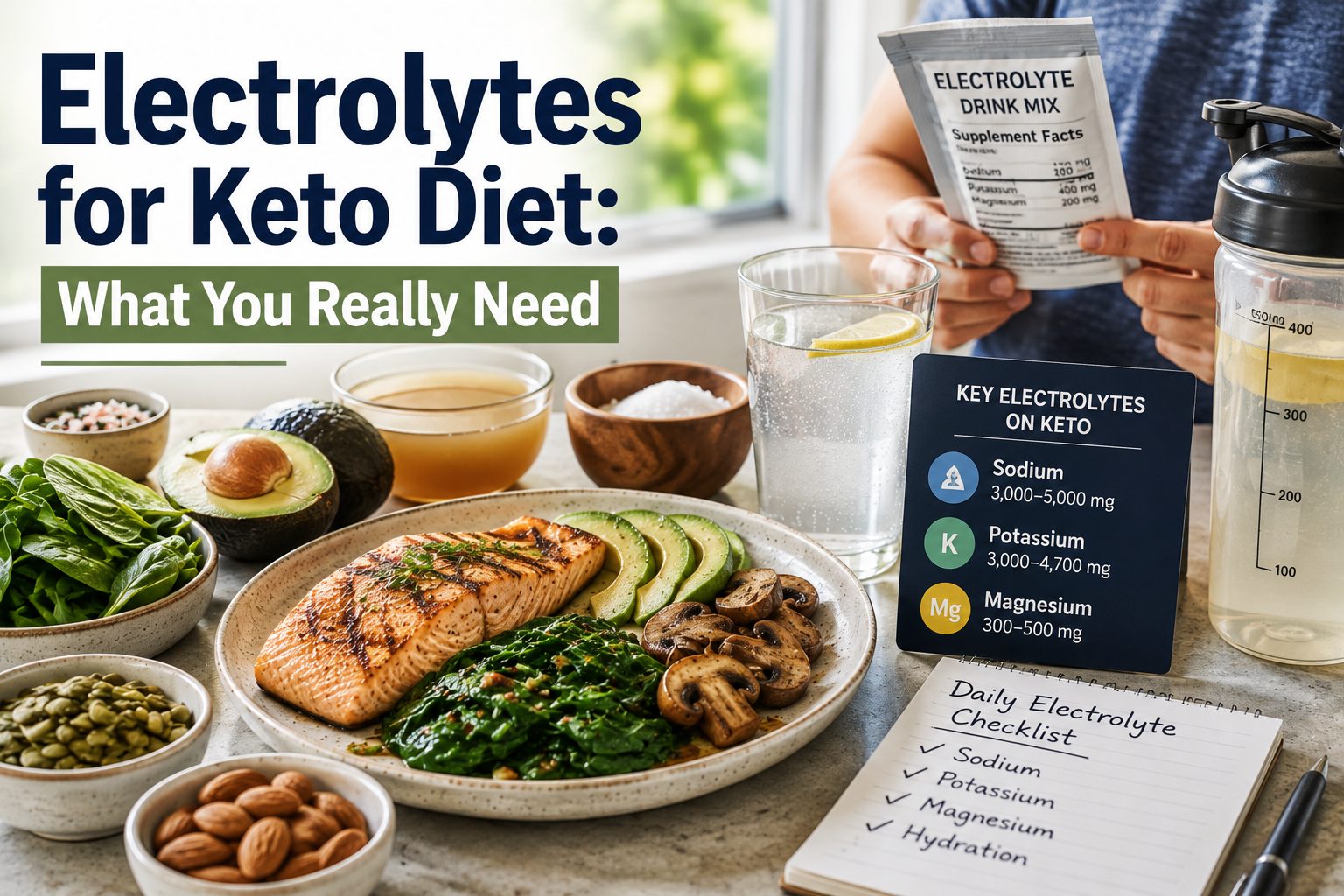
Electrolytes for Keto Diet: What You Really Need
Day three of keto. Head pounding. Calf seizes up at 2 a.m. for absolutely no reason. Eight hours of sleep and you still feel like you After eight hours of sleep, you still feel like a truck hit you. by a truck. Most people blame the fat. Alternatively, some people may decide that keto isn’t suitable for them and choose to quit. It’s almost never either one. It’s electrolytes for keto diet eaters who burn through way faster than anyone tells them, and the warning usually shows up after the headache, not before. Cutting carbs drops your insulin. Insulin’s job, among other things, is telling your kidneys to hang onto sodium. Take that signal away, and your kidneys just let it go, and water goes right along with it. Sodium doesn’t leave quietly either. It drags potassium and magnesium out the door with it. A few days of that and you’re running a deficit before you’ve even noticed anything’s wrong. Why keto messes with your electrolytes Normally, your kidneys are frugal with sodium. Carbs maintain insulin level high and insulin signals the kidneys to retain. Once the carbs are pulled, the signal goes off almost immediately. Sodium, water, potassium, and magnesium all start draining out faster than most people think to replace. I’ve talked to many people who gave up on keto in week one, convinced their body “just doesn’t do well” with it. Almost every time, that wasn’t it. It was electrolytes for keto diet needs quietly doubling overnight, with nobody around to mention it. Keto flu symptoms: what it actually feels like “Keto flu” is a strange name for it.There is no virus and therefore no contagion either. Symptoms are: the sudden onset of a headache; leg cramps which can wake a person out of a sleep; dizziness when rising from the sitting position; and fatigue which caffeine cannot help. In some cases irritability is enough to draw family attention. Two or three of those at once, first week in? That’s low electrolytes almost every time. It usually clears up in a few days once intake catches up. How much sodium, potassium, and magnesium you actually need Most beginners get this exactly backwards. Cut the sugar, and cut the salt too; that’s the instinct. It’s the opposite. Less carbohydrates will mean increased sodium requirement. The required sodium intake varies from 3,000 to 5,000 mg per day. Although that may sound like too much compared to the “eat less salt” recommendations, it is far from being so scary. After all, your body is already excreting that much and no excess is supplied; you are only replacing what is gone. Potassium requirement is between 3000 and 4700 mg per day, and magnesium is a smaller quantity, 300-500 mg. Low magnesium levels manifest as muscle and nerve activity, which is why they are more likely to be seen as twitches and cramps than as a general feeling of ‘tiredness’. None of these are figures to be pursued to the milligram.Think range, not scoreboard. Natural electrolyte sources that actually work You don’t need a tub of powder for this. Real food does most of the job, and it comes with actual nutrients attached instead of minerals dumped into a scoop. Sodium’s the easy part. Salt your food. Eggs, meat, vegetables, whatever’s already on the plate. Bone broth in the afternoon works too, and honestly it’s just good on a cold day, not some chore. Potassium: Avocado is about as keto as food gets, plus spinach, Swiss chard, salmon, and mushrooms. Magnesium: pumpkin seeds do more work than people expect. Almonds, spinach again, and dark chocolate too, if you’re into that.Want a full week of meals built around this instead of guessing plate by plate? Our meal planning guide walks through it day by day. When a supplement actually makes sense Food first, always. But it’s not always enough. Sweating through a workout, or stuck in that rough first week, and the best electrolyte drink for keto earns its spot. Look for sodium, potassium, and magnesium together; no added sugar. Half the “hydration” drinks on the shelf are basically flavored sugar water with a token pinch of sodium, which kind of defeats the whole point on keto. Unflavored powders you mix yourself are usually cheaper anyway, and you control the dose instead of trusting whatever ratio some brand landed on. Our hydration checklist covers what’s actually worth checking on a label. Signs you’ve overdone it More isn’t automatically better here. The symptoms of electrolyte imbalance are as likely to be caused by over-intake as by under-intake: nausea, a metallic taste and swelling of hands and feet. If this occurs, step back and consult with your physician, particularly if you have any kidney or hypertension problems. Your safe range might not match the general numbers above. Where does this leave you? Salt your food more than habit tells you to.Foods rich in potassium and magnesium should also be enjoyed together with proteins and fats. If pain persists after week one, consider using an unsweetened electrolyte mix in order to help your body adapt.Wait for a week and see how you feel. You will be surprised at how quickly that comes around. Frequently Asked Questions Is there any need for more salt when on keto? Yes, and it confuses many people. With low insulin levels, you lose more sodium from the kidneys, hence the higher need for salt. How long does keto flu usually last? Most people will experience 3-7 days, which will then ease as intake meets losses. For the past two weeks, something else has probably been going on, worth a doctor visit. Are sufficient electrolytes available in food? Often, yes. The rest is done by salty meals, leafy greens, avocado and nuts. A person who had recently joined keto or the athlete may consider taking a supplement during the first week. Is it safe to take electrolyte supplements regularly? Yes, provided the instructions on the label are followed by any

How to Self-Care: A Simple Guide That Actually Helps
For years, self-care meant a spa day to me. Something big, something planned, something I never actually had time for. So I just didn’t do it. But in retrospect, this may have been my entire issue. I avoided what I needed because I imagined the wrong version of it. So if you’re wondering how to self-care yourself without making it just another thing to check off your endless list of to-do’s, here’s the quick answer. What Self-Care Actually Means Caring for one’s body, mind, and emotions intentionally rather than accidentally is self-care. This is the entire definition of self-care. There will be no candles involved although you should keep doing it even if you love candles. It evokes images of bubble baths and fancy skin care collections. It might be true sometimes but mostly it will be sleeping at the right time. Drinking water even before getting thirsty. Telling your friends you can’t hang out tonight since you are all drained out. The fancy version gets the photos. The boring version does most of the actual work, and nobody posts about that part. Self-Care Ideas for Beginners Don’t try to build a whole routine overnight if you’re just starting. Pick one small thing. Do it for a week. See how that feels before you add anything else on top. A glass of water before coffee. A short walk outside doesn’t matter where. Writing down three things that went okay that day, even boring ones.Five quiet minutes on your phone, but somewhere else in the house. No need to worry, as none of these ideas will take more than ten minutes, and none of these ideas will cost you a penny. Need more choices? Here is t Here’s our starter self-care checklist,we recommend you try before waiting for some calm week in your life. How to Build a Daily Self-Care Routine Routine works better than performing the act once, because your brain gets used to the activity, just as it does with eating lunch at noon. One idea for the morning and one for the night. Make sure that the activities you choose are not big enough for a “failure” when you don’t do it for a day. Morning could be two minutes of stretching before you check your phone, or one sentence about how you’re actually feeling, written down somewhere nobody else reads. Evening could be leaving your phone in another room half an hour before bed, or tea instead of another episode you weren’t even that into. The goal was never a flawless routine. It’s one you’ll keep doing on the days that fall apart, and some days will fall apart. That’s not a failure; that’s just how weeks go. Self-Care for Mental Health Self-care and mental health are more tangled together than people give them credit for. Stress doesn’t announce itself. It just quietly stacks up in the background until one random Tuesday you’re crying at a commercial for reasons that have nothing to do with the commercial. Journaling helps a lot of people get feelings out of their head and onto paper, where they’re easier to actually look at instead of just feel. Talking to a friend does something similar. So does saying what you’re feeling out loud, even if it’s just to yourself, alone, in a room where nobody’s listening, which sounds strange until you try it.Indeed, as indicated by the National Institute of Mental Health, factors such as maintaining social relationships and sufficient sleep are legitimate determinants of good mental health and not just afterthoughts. However, should the issues become overwhelming to the point where several simple habits won’t suffice, then that should be discussed with a professional therapist or doctor. Self-care is incredibly beneficial; however, it has never been intended to substitute professional help when needed. The Different Types of Self-Care Self-care isn’t one thing, which is probably part of why it feels confusing. There are a few different types, and most people are decent at one or two while quietly ignoring the rest. Self-care in terms of physical health is sleep, exercise, and nutrition—these are the three essentials which fuel our body. Self-care when it comes to emotional health is the way how you deal with your emotions, instead of locking them away. Self-care related to social life is maintaining healthy relationships, rather than simply posting a “like” on a picture someone posted on Instagram. Spiritual self-care is anything that allows us to feel that we belong to something greater than our email box. Not sure which one you’re neglecting? Take a look at our self-care-type breakdown to see where you’re already doing fine and where you’re running on empty without noticing. Self-Care When You’re Busy Busy is the excuse everyone reaches for first, and honestly it’s usually a fair one. There is nobody who can find three hours of leisure time to spend at the spa amid all these commitments and tasks one has to perform throughout the week. The key here lies in reducing self-care, not in excluding it. Five minutes counts. A short walk on your lunch break counts. One song you genuinely love while you’re making dinner counts, even if you’re also half-listening for the oven timer. Self-care at home doesn’t need special gear either. A hot shower you don’t rush through, a good stretch, and ten quiet minutes with the door shut can reset a rough day more than people expect. Need something for the days you truly can’t spare more than a few minutes? Check out our five-minute self-care ideas, built for exactly those packed, no-room-to-breathe kind of weeks. Frequently Asked Questions What are some free self-care ideas? A walk. Stretching. Journaling. Calling a friend. Sitting somewhere quiet for ten minutes with your phone in another room. Most of what actually helps costs nothing. The pricey version is mostly packaging. What’s the best time of day for self-care? Whichever one you’ll actually protect. Some people do better in the morning, before the day’s had a chance
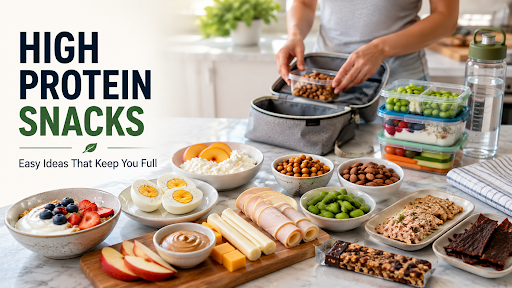
High Protein Snacks: Easy Ideas That Keep You Full
It’s 3pm. You had lunch, but somehow you’re already digging through the pantry, and everything in there is a cracker or a cookie. Three handfuls later, you’re still hungry. Sound familiar? That’s usually a protein problem, not a willpower problem. Carbs and sugar spike your blood sugar and drop it just as fast, which is exactly why you’re back in that pantry by 3:20. High-protein snacks work differently, they stick around longer, and honestly, they actually do something for you besides just filling time. What Actually Counts as a High Protein Snack Not everything that markets itself as “protein-packed” deserves the shelf space. A granola bar with 5 grams of protein and 18 grams of sugar isn’t really a protein snack. It’s a candy bar with a better publicist. A decent target is somewhere between 10 and 20 grams of protein per snack. That’s enough to actually curb hunger, not just take the edge off for ten minutes before you’re right back where you started. Greek yogurt gets you there. So does a couple of hard-boiled eggs, a handful of edamame, or cottage cheese with some fruit thrown in. For a rough sense of how much protein you need in a day, the USDA’s protein foods guidance is a decent place to start, though your actual number depends on your size and how active you are. Easy High Protein Snacks You Probably Already Have Check your fridge before you go buy anything new. It’s quite likely that you have everything you need at hand. None of these take more than five minutes. Half of them take zero. I keep hard-boiled eggs around at all times for exactly this reason. The version of me at 3pm has made bad decisions before, and honestly, will again if given half a chance. Want a full week of these mapped out so you’re not improvising every afternoon? Here’s our easy high-protein snack list, built around stuff most people already have in the kitchen. High Protein Snacks On the Go Working from a desk is one thing. Running between errands, school pickup, and a gym bag is a different problem entirely, and a lot of the fridge-based ideas above just don’t survive that kind of day.Beef jerky travels well and packs around 9 to 12 grams of protein per ounce, though it’s worth checking the sodium if that’s something you watch too. Roasted chickpeas hold up fine in a bag for days. Protein bars work in a pinch, but read the label first, because plenty of them are dessert wearing a gym shirt. Individual nut butter packets with an apple are easy to toss in a bag and forget about until you actually need them. No Cook: High-Protein Snacks for Busy Days Some days, cooking anything, even boiling an egg, feels like too much to ask. These need zero heat and barely any effort. Deli turkey rolled around a slice of cheese. Canned tuna straight from the pouch with a fork, no plate required. Plain Greek yogurt with berries dumped on top. A bag of edamame you microwave for two minutes, if you’re generous enough to call that cooking, which I’m honestly not. None of these are sexy. They’re also the ones that people actually eat regularly and that’s more important than the recipe that sounds great but ends up sitting in the fridge for a week. High Protein Snacks for Weight Loss Protein does something most other nutrients can’t: it triggers hormones that tell your brain you’re actually full. A high-protein snack can genuinely cut down how much you eat later instead of just stacking calories on top of what you were going to eat anyway. The catch is portion size. Nuts make a good snack. This half bag is not just a snack anymore, it’s a second lunch and your body doesn’t care how healthy the ingredients are. It’s not just almond butter-and-a-half, either; a combination of protein and fiber, such as an apple and almond butter, can leave you feeling fuller longer without additional calories. Want to find a printable list to post on the fridge?, our guide to high-protein snacks for weight loss here to avoid a lunch packing struggle! High Protein Snacks for Kids Kids need protein too, and getting them to eat it without a negotiation is a project all its own. Cheese cubes with a few crackers work for most kids. Yogurt tubes seem built for small hands and short attention spans, honestly. Apple slices with a thin layer of peanut butter hit that sweet spot between “kid food” and “actually has protein in it.” Skip anything leaning hard on added sugar just because the label screams “protein.” Read it the same way you’d read your own. Kids’ snacks get away with marketing that adults would catch in about two seconds. Looking for a printable list to stick on the fridge? Grab our kid-friendly snack list here so packing lunches doesn’t turn into a daily standoff. Frequently Asked Questions How much protein should be in a snack? 10 to 20 grams. Go lower and you’re just delaying the pantry trip by twenty minutes Are protein bars actually healthy? Some are, most aren’t. Flip it over before you get excited about the protein number. 15 grams of protein next to 20 grams of sugar is a dessert with a gym membership. What are good no-cook snacks with protein? Tuna straight from the can. Cottage cheese. Edamame you microwave for two minutes, if that even counts as cooking. What’s a good high-protein snack for the office? String cheese. An egg you boiled last night. Tuna in a pouch, because nobody’s judging you at your desk. Are protein shakes better than real food snacks? Shakes are faster. Whole food usually wins on everything else: fiber, vitamins, and actually chewing something.