Day three of keto. Head pounding. Calf seizes up at 2 a.m. for absolutely no reason. Eight hours of sleep and you still feel like you After eight hours of sleep, you still feel like a truck hit you. by a truck.
Most people blame the fat. Alternatively, some people may decide that keto isn’t suitable for them and choose to quit. It’s almost never either one. It’s electrolytes for keto diet eaters who burn through way faster than anyone tells them, and the warning usually shows up after the headache, not before.
Cutting carbs drops your insulin. Insulin’s job, among other things, is telling your kidneys to hang onto sodium. Take that signal away, and your kidneys just let it go, and water goes right along with it. Sodium doesn’t leave quietly either. It drags potassium and magnesium out the door with it. A few days of that and you’re running a deficit before you’ve even noticed anything’s wrong.
Why keto messes with your electrolytes
Normally, your kidneys are frugal with sodium. Carbs maintain insulin level high and insulin signals the kidneys to retain. Once the carbs are pulled, the signal goes off almost immediately. Sodium, water, potassium, and magnesium all start draining out faster than most people think to replace.
I’ve talked to many people who gave up on keto in week one, convinced their body “just doesn’t do well” with it. Almost every time, that wasn’t it. It was electrolytes for keto diet needs quietly doubling overnight, with nobody around to mention it.
Keto flu symptoms: what it actually feels like
“Keto flu” is a strange name for it.There is no virus and therefore no contagion either. Symptoms are: the sudden onset of a headache; leg cramps which can wake a person out of a sleep; dizziness when rising from the sitting position; and fatigue which caffeine cannot help. In some cases irritability is enough to draw family attention.
Two or three of those at once, first week in? That’s low electrolytes almost every time. It usually clears up in a few days once intake catches up.
How much sodium, potassium, and magnesium you actually need
Most beginners get this exactly backwards. Cut the sugar, and cut the salt too; that’s the instinct. It’s the opposite. Less carbohydrates will mean increased sodium requirement.
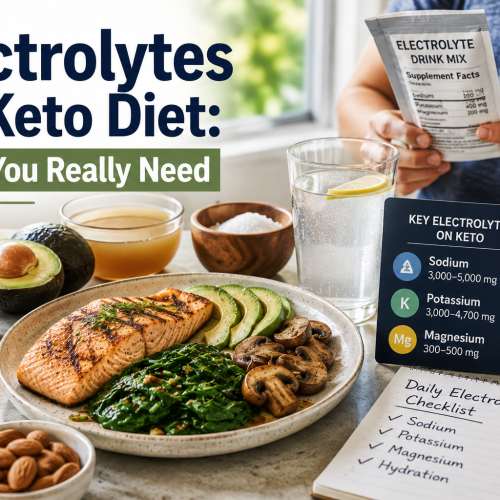
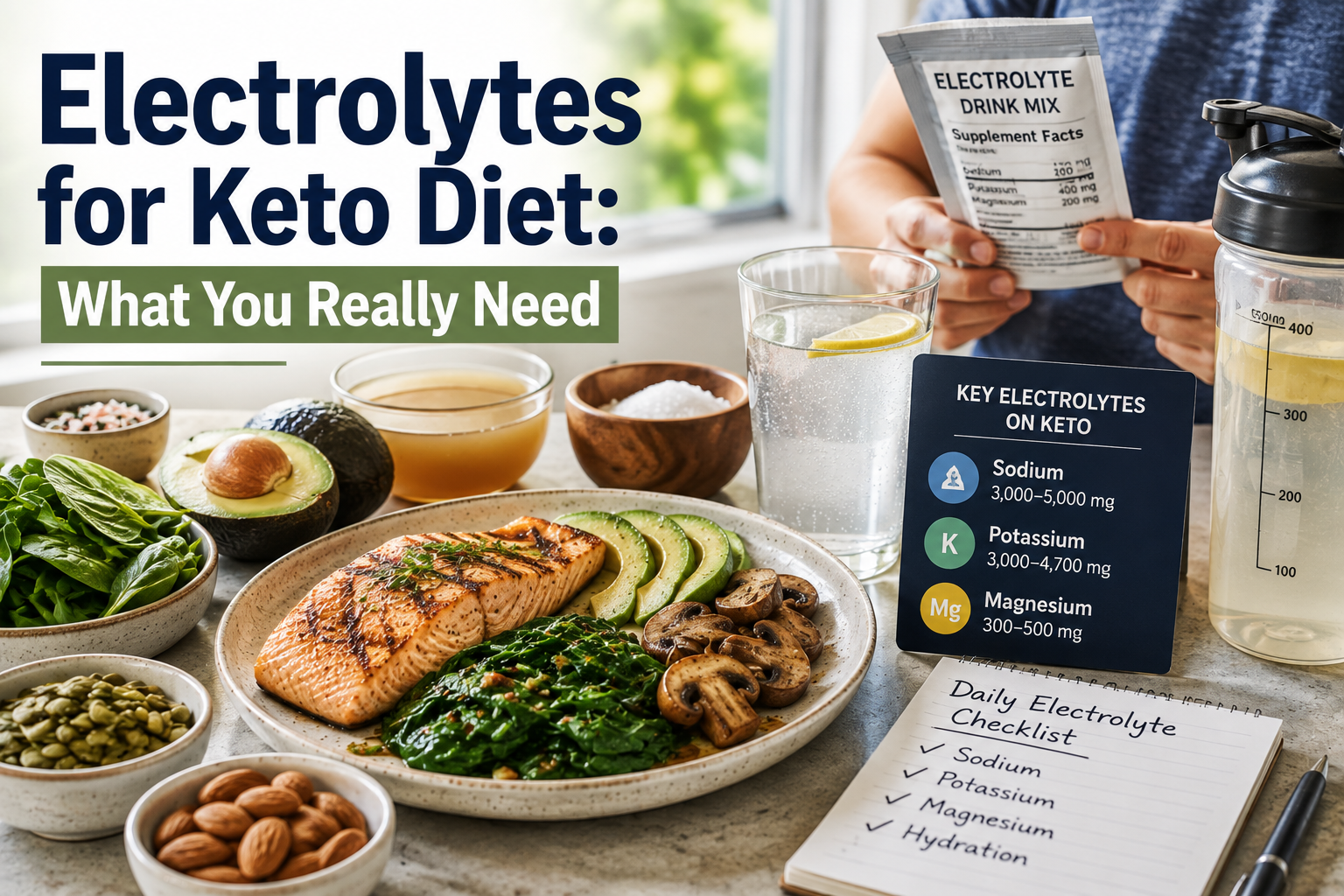
The required sodium intake varies from 3,000 to 5,000 mg per day. Although that may sound like too much compared to the “eat less salt” recommendations, it is far from being so scary. After all, your body is already excreting that much and no excess is supplied; you are only replacing what is gone.
Potassium requirement is between 3000 and 4700 mg per day, and magnesium is a smaller quantity, 300-500 mg. Low magnesium levels manifest as muscle and nerve activity, which is why they are more likely to be seen as twitches and cramps than as a general feeling of ‘tiredness’.
None of these are figures to be pursued to the milligram.Think range, not scoreboard.
Natural electrolyte sources that actually work
You don’t need a tub of powder for this. Real food does most of the job, and it comes with actual nutrients attached instead of minerals dumped into a scoop.
Sodium’s the easy part. Salt your food. Eggs, meat, vegetables, whatever’s already on the plate. Bone broth in the afternoon works too, and honestly it’s just good on a cold day, not some chore.
Potassium: Avocado is about as keto as food gets, plus spinach, Swiss chard, salmon, and mushrooms. Magnesium: pumpkin seeds do more work than people expect. Almonds, spinach again, and dark chocolate too, if you’re into that.Want a full week of meals built around this instead of guessing plate by plate? Our meal planning guide walks through it day by day.
When a supplement actually makes sense
Food first, always. But it’s not always enough. Sweating through a workout, or stuck in that rough first week, and the best electrolyte drink for keto earns its spot.
Look for sodium, potassium, and magnesium together; no added sugar. Half the “hydration” drinks on the shelf are basically flavored sugar water with a token pinch of sodium, which kind of defeats the whole point on keto. Unflavored powders you mix yourself are usually cheaper anyway, and you control the dose instead of trusting whatever ratio some brand landed on. Our hydration checklist covers what’s actually worth checking on a label.
Signs you’ve overdone it
More isn’t automatically better here. The symptoms of electrolyte imbalance are as likely to be caused by over-intake as by under-intake: nausea, a metallic taste and swelling of hands and feet. If this occurs, step back and consult with your physician, particularly if you have any kidney or hypertension problems. Your safe range might not match the general numbers above.
Where does this leave you?
Salt your food more than habit tells you to.Foods rich in potassium and magnesium should also be enjoyed together with proteins and fats. If pain persists after week one, consider using an unsweetened electrolyte mix in order to help your body adapt.Wait for a week and see how you feel. You will be surprised at how quickly that comes around.
Frequently Asked Questions
Is there any need for more salt when on keto?
Yes, and it confuses many people. With low insulin levels, you lose more sodium from the kidneys, hence the higher need for salt.
How long does keto flu usually last?
Most people will experience 3-7 days, which will then ease as intake meets losses. For the past two weeks, something else has probably been going on, worth a doctor visit.
Are sufficient electrolytes available in food?
Often, yes. The rest is done by salty meals, leafy greens, avocado and nuts. A person who had recently joined keto or the athlete may consider taking a supplement during the first week.
Is it safe to take electrolyte supplements regularly?
Yes, provided the instructions on the label are followed by any healthy adult.
How can the issue of keto flu be resolved immediately?
Sodium intake has always yielded expected results. A hot cup of salty broth or a mere pinch of salt in water provides relief from a headache and fatigue.