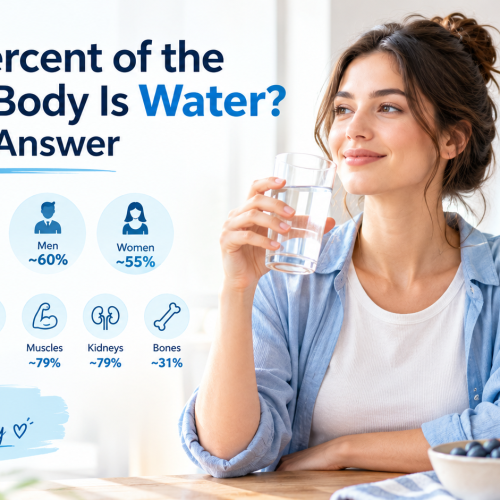
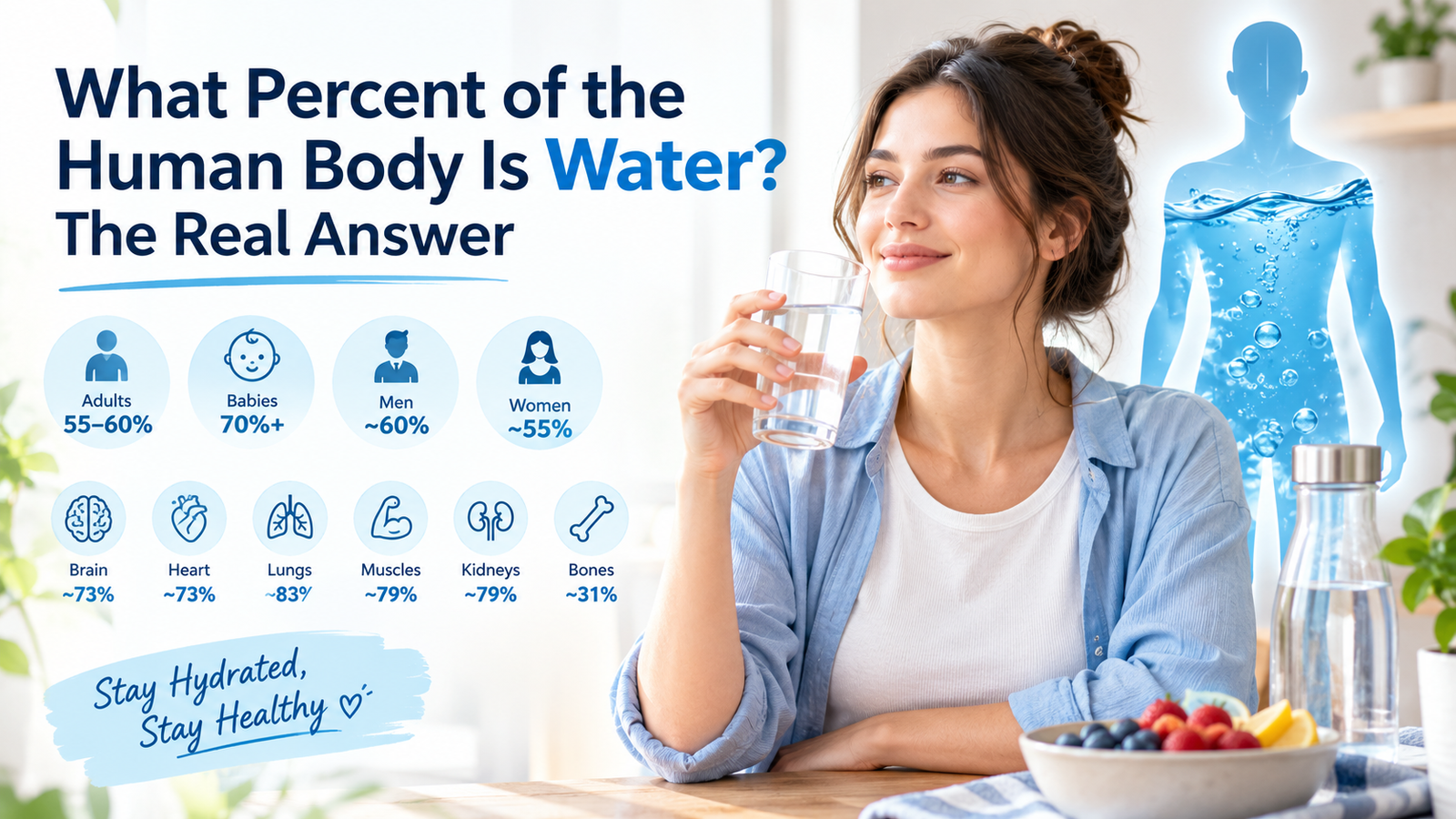
Quick quiz: what percent of the human body is water? If you said 70, you’re in good company, because that’s the number a lot of us got taught and never questioned. I said 70 for years. It turns out to be a bit high for grown-ups. For most adults the real answer sits around 55 to 60 percent, with men near the top of that range and women near the bottom. Babies are the ones up around 70 and beyond. The rest of this post covers who has more, who has less, what your organs are made of, and what all of it means for how much you should drink. What Percent of the Human Body Is Water on Average? The U.S. Geological Survey says up to 60 percent of an adult’s body is water. Other sources say 50 to 65, and honestly they’re all describing the same thing, since your exact number depends on your muscle, your fat, and even what kind of day you’re having. Let us visualize this concept. For example, a man who weighs 150 pounds has 60 percent of water in his body, meaning he has approximately 90 pounds of the fluid in him. That is equal to approximately 11 gallons of water. Think about having 11 gallons of milk in your kitchen. The same logic can be applied to understand how difficult training in hot weather causes a person to feel exhausted because he might lose a number of pounds while sweating. Human Body Water Percentage by Age Babies win. A newborn is about 78 percent water, and by the first birthday, that’s down to around 65. After that it tends to keep sliding, slowly, for the rest of your life. I suspect that’s where the 70 percent myth comes from. It’s close to the baby and little kid number, and somewhere along the way people started applying it to everybody. Mayo Clinic has pointed out that older adults can feel less thirsty than they used to. If that’s you, or someone you look after, drinking on a schedule beats waiting for your body to complain. Body Water Percentage in Men vs. Women Men average around 60 percent, and women around 55. Before anyone gets the wrong idea, this has nothing to do with who drinks more water. It’s about body makeup.Muscle is wet, while fat is relatively dry, and females tend to have higher body fat than males. That same reasoning accounts for how two individuals with the same body weight may end up with different results and how an extremely muscular individual might score above average. Water Percentage in the Brain, Heart, and Other Organs This part is my favorite because the numbers are strange. The USGS points to a 1945 study that put the lungs at about 83 percent water, muscles and kidneys at about 79, the brain and heart at about 73, and skin at about 64. Bones, which feel like the driest thing in you, are around 31 percent. So roughly three quarters of your brain is water. I’m not saying that’s why you can’t think straight after skipping your morning glass, but I wouldn’t rule it out.You can find more everyday body facts, including what percent of the human body is water breakdown, on Calm Health Tips. Why Your Body Needs So Much Water It is not just lying there. Water distributes nutrients in your blood, helps cool you off through sweating, protects your brain and spinal cord, lubricates your joints, and eliminates waste from your body.That’s the USGS list, and I’d add that most of us only think about water on a hot day or after a workout. But you lose it constantly, just by breathing and going to the bathroom, and Mayo Clinic says you have to keep replacing it with drinks and with foods that contain water. Signs of Dehydration You’ll usually feel thirsty first, though not always. I’d rather you catch it early than late, because tiredness and headaches are easy to blame on anything except water. A dry mouth, a headache, feeling wiped out or a little dizzy, and darker yellow urine are other common signs. The urine check is the easy one.According to Mayo Clinic, when you don’t feel thirsty often and your urine is light yellow or colorless, chances are that you are fine. Heat, strenuous exercise, and illnesses like fever, vomiting, and diarrhea all make you dehydrated quickly; therefore, it’s when you should take water purposely. Minor cases will improve by taking fluids. When confusion, fainting, fast heart rate, or difficulty urinating, seek help immediately. How Much Water Should I Drink a Day? This is where people expect one clean number, and there isn’t one. According to the USGS, 3 liters of fluid intake daily is needed for men and 2.2 liters for women, taking into account food products. The Mayo Clinic states that your individual water needs depend on your state of health, activity, and location. An individual working out in the open air in July in Phoenix has other water needs than a person who stays in an office in Seattle in March. Don’t forget food. A soup bowl, some grapes, or cucumber slices all have water content. Your cup of water does not satisfy your needs in respect to water. Eight glasses a day of drinking water is a sensible figure, but not an obligation. Tea, milk, soup, fruits and veggies all contain water. To make things easier, drink a glass whenever you eat and sweat. Though, in some cases, an excessive water intake may turn out problematic, this is very unlikely for a healthy person. Consult your doctor about water amount in case of kidney or heart issues. Your Next Step So, what percent of the human body is water? Roughly 60 for most adult men, 55 for most women, and a lot more for babies. I wouldn’t obsess over the exact number. Try this instead: put a bottle where you’ll see it, and peek
Whey Protein Isolate: What It Is and How to Use It
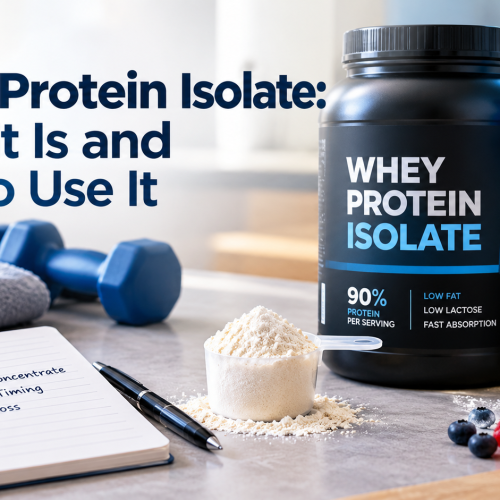
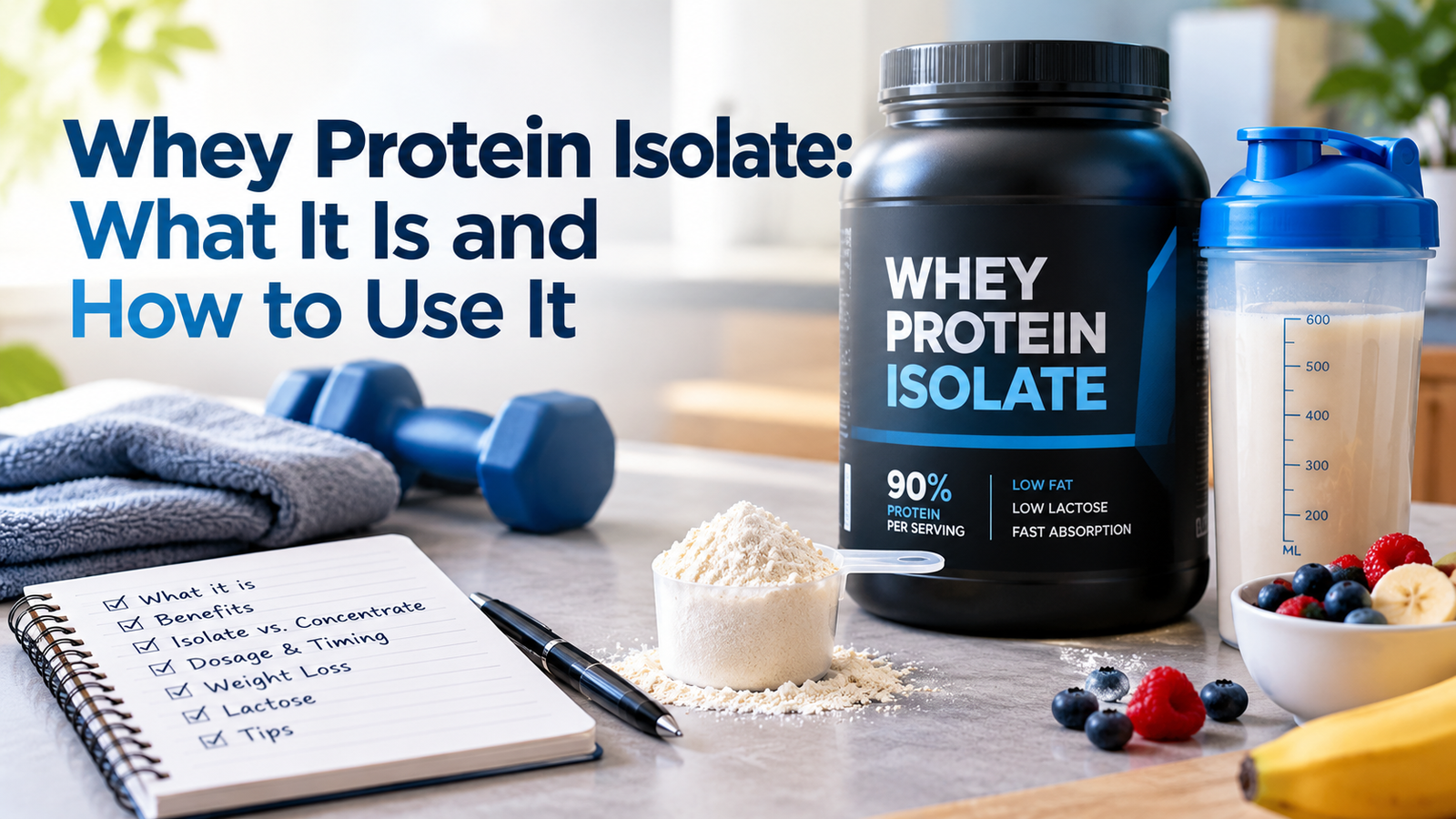
Okay, quick confession. Most protein tubs look the same to me. Big letters, a dude with giant arms, and a flavor called “cookie dough.” Then you squint at the fine print, and one of them says “whey protein isolate.” Dymatize and Isopure, for example, sell whole lines of it. Is it better? Kind of. Worth the money? That depends on you, and I’ll walk through how to decide. What Is Whey Protein Isolate? Begin with cheese since it is from here that everything starts. When milk is separated, there are solid particles known as curds and a liquid. The curds are transformed into cheese while the liquid is known as whey, which contains protein although it consists mainly of water. Many dairy farms have been known to regard whey as waste material, but now they sell it. Filter this liquid using heavy filters, and what will result is whey protein isolate. There is no fat left. Most of the lactose too. The American Dairy Products Institute sets the bar at 90% protein for the dried powder. You’ll see it shortened to WPI, which always sounds like a government agency to me. How Is Whey Protein Isolate Made? Filters, mostly. Imagine a strainer so fine that water and milk sugar slip right through while the protein gets stuck. Some makers go with ion exchange instead, which sorts protein by electric charge (my eyes glaze over at this part, sorry). A lot of brands do both and then dry everything into powder. Labels love the words “cold-processed” and “ultra-filtered.” I roll my eyes a little. Those words only describe how the whey was handled, and every brand uses them differently. Look at the protein per scoop instead. That number is hard to fake. Whey Protein Isolate vs. Concentrate Same way, different amount of filtering. Concentrate gets less, so a bit of fat and lactose hangs around, and each scoop carries a smaller share of protein. Isolate gets the full treatment. More protein per scoop, less of the rest, and a higher price tag, naturally. My take? If dairy sits fine with you and cash is tight, buy concentrate and don’t feel bad about it. Lots of people do great on it. But if milk ever makes your stomach complain, or you’re watching calories closely, whey protein isolate is usually worth the extra few dollars. Whey Protein Isolate Benefits Muscles rebuild with protein, and that part’s simple. Whey is a complete source of all the nine essential amino acids (those that your body cannot produce by itself), and it is highly digestible. Take a look at any whey protein isolate tub, and you will see that one serving contains about 20 to 25 grams of protein.Now the part brands won’t shout about: you don’t need it. A chicken breast does the same job, and so do eggs and Greek yogurt. Powder wins on speed, that’s all. Late for work with an empty stomach? Shake, drink, go. And rinse the shaker bottle. A forgotten one in a gym bag is basically a crime scene.) Is Whey Protein Isolate Good for Weight Loss? A little, yeah. Protein fills you up, and isolate doesn’t add many calories, so a shake might be what keeps you out of the pantry at 3 p.m. It won’t burn fat on its own, though. Nothing in a tub does. You still need to eat fewer calories than you burn. If I had to pick one good use, it’d be trading a sugary snack for a shake, which beats most of the “fat burner” stuff out there. Whey Protein Isolate and Lactose Lactose is milk sugar, and plenty of people can’t handle much of it. Gas. Bloating. A stomach that sounds like a washing machine. Isolate has far less than concentrate, so some people with mild trouble do okay with it. Less, though. Not one. If you’re curious about the basics, MedlinePlus has a clear page on lactose intolerance.A milk allergy is another thing entirely. Since whey is an extract of milk, when you are allergic to milk, you shouldn’t take whey. Also, if you don’t know if you are allergic or lactose intolerant, consult a physician before purchasing a large quantity of whey. How Much Whey Protein Isolate Per Day? There is no magic number that can be provided to you. However, there is a place to start from. As per the United States Recommended Dietary Allowance, an individual should have 0.8 grams of protein per kg of body weight, per day. Most of that should come from meals, with powder filling in whatever’s left over. One scoop a day covers plenty of people. Heavy trainers may want more, and a dietitian is worth paying for at that point. Kidney trouble? Check with your doctor first. Extra protein makes your kidneys work harder. Best Time to Take Whey Protein Isolate Whenever you’ll actually remember to drink it. After the gym is fine, and so is breakfast. Your total protein across the whole day counts more than the clock. If breakfast is mostly toast, a morning shake can even things out. If dinner is your big protein meal, you can probably skip the evening one. How to Pick a Good Product Not all whey protein isolate is equal, and some tubs are mostly marketing. Flip it around and read the back. Protein per serving, sugar, and ingredients. If the list looks like a chemistry quiz, I’d pass. NSF Certified for Sport is one seal worth looking for, since it means an outside group tested the product. And if the front of the tub screams “melts fat,” put it back on the shelf.Start with a small tub. Taste matters more than people admit, and some folks find isolate a bit thinner than concentrate. Some also get mild bloating early on. If that’s you, use less, or stop and talk to your doctor. Small mixing tip. Pour the liquid first and then the powder or else you will waste a minute chasing
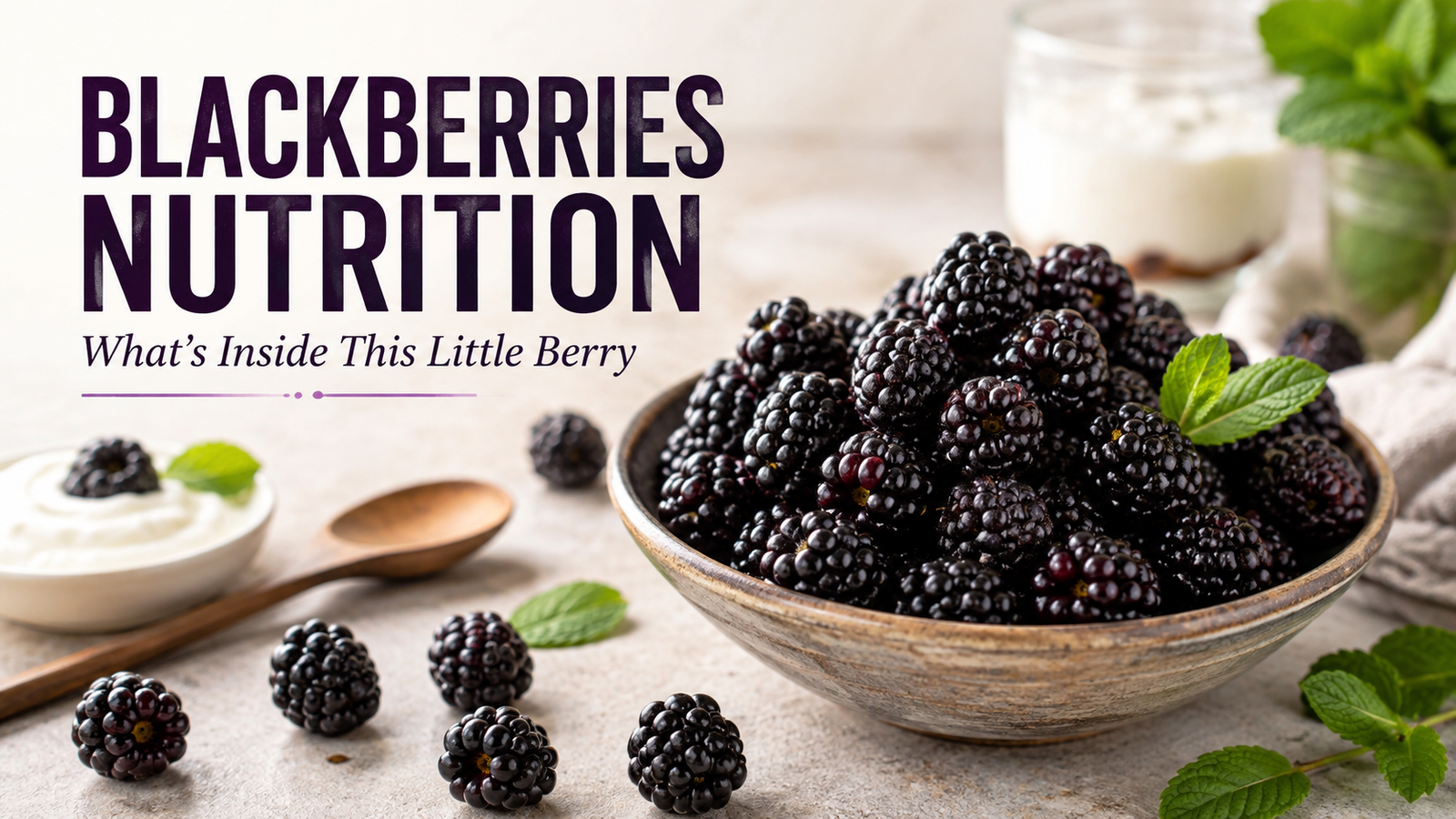
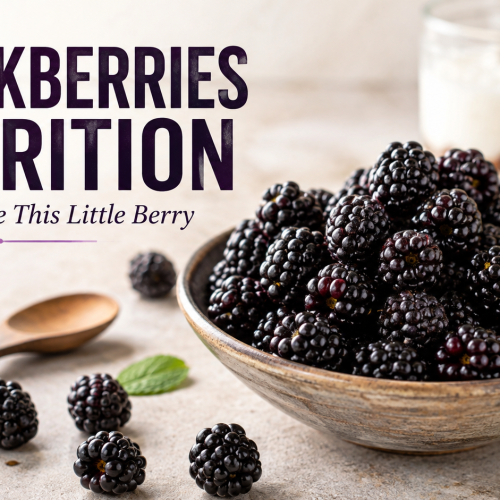
Blackberries Nutrition: What’s Inside This Little Berry
Never used to buy them because they looked so messy and a little expensive for what you were getting considering they sat in the same place as a neat little bag of apples. One day in the line waiting and bored, I finally saw the nutritional facts for the berries. Sixty-something calories per cup. Eight grams of fiber. They had more vitamin C content than I thought they did for how small and ugly the berries look, honestly. And so that was the day when Blackberries Nutrition became important to me. Now here is what the berries have got, what does it mean and how to eat them without making your house a wellness resort? What’s in a Cup? Uncooked, they weigh 144 grams with approximately 62 calories per cup. Two grams of protein. Less than a gram of fat. Fourteen grams of carbohydrates, eight of them are fiber. It is a very unusual fiber content for such a sweet berry. One cup of grapes has a little less than 100 calories and no fiber in them. I do not say grapes are bad; they’re okay, but they’re not doing the same thing. They’re just calories, fiber, sugar, and blackberriesCalories, fiber, sugar, and blackberries win most of those without really trying. Curious how other fruits compare? We put together a fruit comparison guide over at Calm Health Tips that covers about a dozen more. Vitamin C, More Than You’d Guess Just one cup can give you nearly 30 milligrams, which is more than one-third of the amount required by most adults per day. It helps heal wounds, aids in iron absorption, and keeps your immune system strong enough to withstand all that coughing on the subway. None of that is earth shattering news.. It’s still easy to forget that something this small carries that much. One thing worth knowing: vitamin C breaks down with heat. Bake it into a pie, and some of it’s just gone. Eat it raw or frozen if that part matters to you. Fiber, Doing More Than It Gets Credit For Many Americans have low fiber levels in their diets. This silent deficiency has manifested in bloatedness, slow digestive processes, and fluctuating blood sugar levels. 8g per cup. Nearly a third of your daily recommended amount at once, from a fruit source. Fiber helps with digestion, makes you feel full and also nourishes the gut bacteria that we may have underrated for years now.A bowl of these at breakfast probably beats the fiber gummies at the pharmacy. Cheaper too, for what it’s worth. Vitamin K, Manganese, and That Purple Color Solid dose of vitamin K in here as well, close to a quarter of the daily value per cup. Helps blood clot, keeps bones strong. If you’re on blood thinners, it’s worth a quick chat with your doctor about how much vitamin K you’re taking in day to day, since foods like this can interact with the medication. The National Institutes of Health has more on the specifics if you want to dig in. Manganese is the quiet overachiever here. Almost half your daily value in one cup, and not many fruits even get close. Supports bone growth and helps your body process carbs and amino acids. And then there is the color. The purple is produced by anthocyanins, which are antioxidants found in plants that help reduce damage to cells as they live out their lives.Early research also ties them to lower inflammation and maybe better brain function down the road, though that part’s still getting sorted out by scientists who presumably eat a lot of berries. Does It Actually Help Your Brain? Growing stack of research linking berries, blackberries included, to slower memory decline as people age. The idea here is that anthocyanins reduce oxidative stress in the brain. There were a few studies where people consuming berries regularly scored higher in memory tests compared to those that consumed little fruit. I want to be honest here. One bowl isn’t sharpening anything overnight. This is slow, kind of boring, long-haul stuff, the sort that matters over years and not weeks. But enough has piled up that several major health groups list berries among their go-to brain foods now. Take that for whatever it’s worth to you. I find it more convincing than most supplement marketing, for what that’s worth. What About Diabetes? Blackberries sit low on the glycemic index. Just a scale for how fast a food spikes blood sugar. Low number, slow rise. Add the fiber, which slows sugar absorption further, and you get a fruit a lot of research links to better insulin sensitivity. Don’t make it medicine. Just makes it smarter than juice, dried fruit, or anything with sugar dumped into it.Half to one full cup will suit nicely into any diabetic meal plan, according to guidelines by the USDA. Accompanying it with some protein, some Greek yogurt, and almonds helps in slowing the process of sugar absorption even further. How I Actually Eat These No recipe needed, really. Handful into plain yogurt. Use them in place of dried cranberries in your salad because they have much more sugar than what you would think. Blend with some spinach in your smoothie if you are looking to include some veggies in your meal without an argument. Just simply eat them from the jar while you are standing at the counter, which is how I usually eat mine. Fresh ones last about a week in the fridge, so don’t overbuy. Frozen holds the nutrition just fine and costs less outside peak season, June through August, around here. Something that took me quite some time to realize about this fruit is to wash them right before consumption, not when they first come out of the fridge as moisture accelerates the development of mold. Also, it’s better not to keep them piled up in a large container, as the lower layer will always become squished and mushed. Bottom Line This particular superfood contains quite
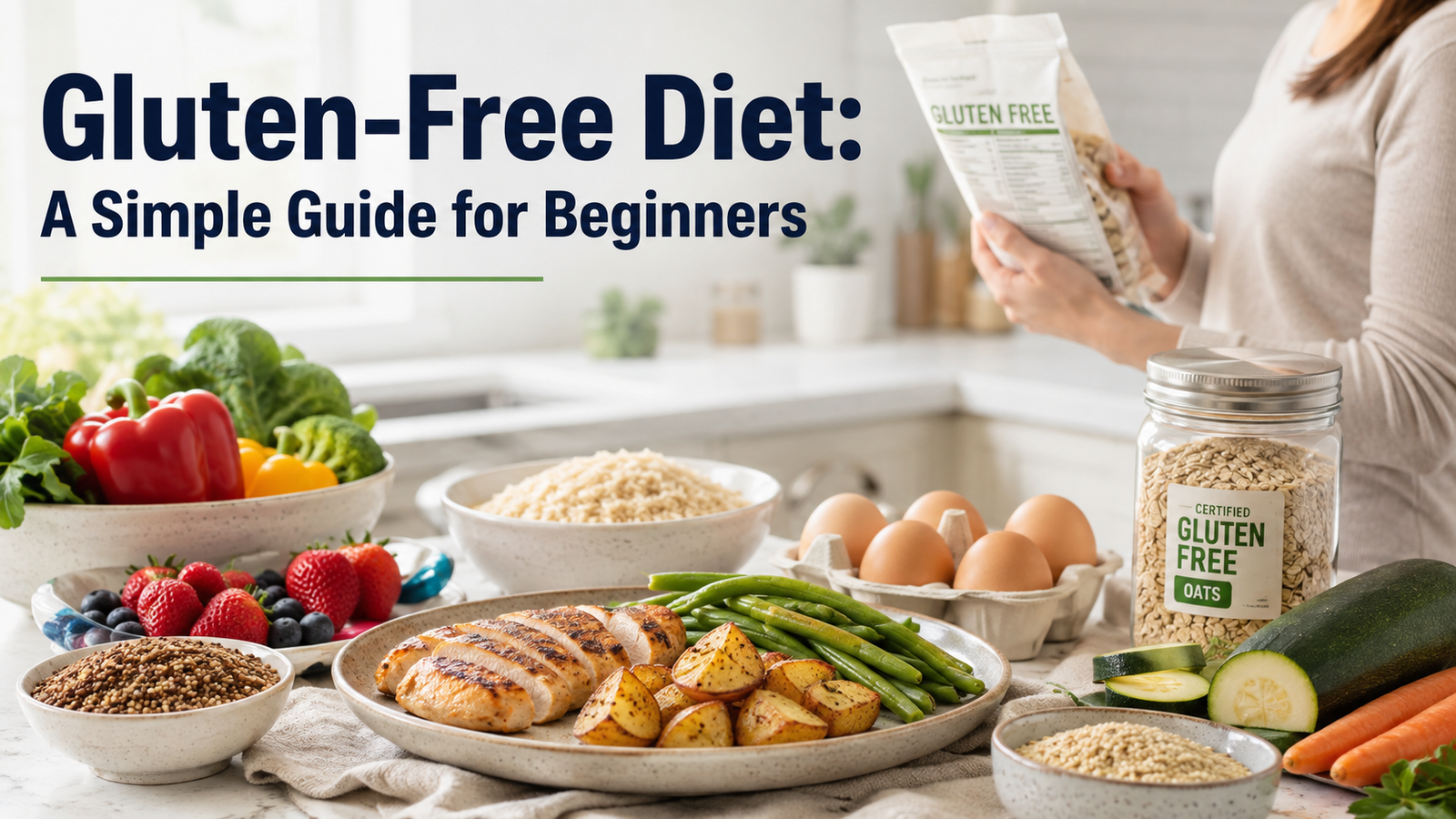
Gluten-Free Diet: A Simple Guide for Beginners
Last week, Maria spent ten minutes in the cereal section. She did not understand the labels. The doctor advised her to change to a gluten-free diet. That was the whole talk. No follow-up. No starter kit. Just a phrase and a shrug on the way out the door. If that’s you too, here’s what nobody tells you at the doctor’s office: it’s hard for about two weeks. Then it isn’t. What is a gluten-free diet? When you avoid wheat, barley, and rye, it means you have to avoid most breads, pastas, cereals, and baked goods, unless the label indicates that the food is gluten-free. This is straightforward, and very much that’s what it is. The reason for people’s decision to go gluten-free can be very different. Celiac disease is one reason. A different reason can be some kind of sensitivity that can’t be explained. The third reason can be a friend’s recommendation.No test needed. One thing worth saying up front: for people with celiac disease, this isn’t a fad. It’s the treatment. There’s no pill for it. The food is doing the job, medicine can’t. What is gluten, exactly? Gluten is a protein. It’s what makes bread chewy. It’s what lets dough stretch without falling apart. Wheat, barley, and rye all have it. So does anything made from them: flour, most beer, and soy sauce made the old way. The annoying part is where it hides. Soup bases. Salad dressings. Even some medicine. You don’t expect to check the label on cough syrup. But here we are. That’s the real trick with this diet. It’s not about memorizing a list.It’s about learning to look at things in new ways. Gluten-free diet for beginners: where to start Don’t attempt to clean up your entire kitchen in one afternoon. The quickest way to leave by day three, and to eat cereal over the sink for spite. Do less than you think you should. Remove all items that contain wheat, barley or rye. Set it in a box. Do not throw it out just yet, if another member of the household continues to consume gluten. You’ll be glad you did when you aren’t having to purchase the same pasta again. Here’s a fact to know. The FDA gluten-free labelling directive mandates that gluten-free labelling in the USA be used for products that contain less than 20 ppm gluten. That number is significant if celiac disease is involved. A mere speck can be harmful. This isn’t a label game. Then, rely on whole foods. Meat, eggs, vegetables, fruit, rice and plain dairy. There is no need for a special aisle. It’s just a different way to shop the same aisles as before. If you need more detail, check out Calm Health Tips‘ starter checklist. Gluten-free foods list: what you can eat This is where people feel comfortable when it is written down. The gluten free foods list is not as short as all the panic claims. Fresh meat, poultry and fish are OK. Simply avoid anything that’s been breaded or dipped in soy. Eggs and plain milk and most cheeses are okay as well. Fruit and vegetables in their natural form (fresh, frozen or canned without sauce packet) are never an issue. Grain is a bit more demanding. Rice, corn, quinoa and buckwheat are gluten-free. Oats are trickier. Again, you will need those certified gluten-free, as explained below. Potatoes can be eaten in almost any form—mashed, baked, or plain chips. (It’s the seasoning powder on flavored chips that goes wrong.) Lentils, chickpeas and beans complete the picture. Not only that, they are affordable as well, which is important once you’re at the check-out line and are getting all the special gluten-free food items. Foods to avoid on a gluten-free diet The obvious ones: wheat bread, regular pasta, most cereal and regular beer. Gluten-free beer is easy to find now, for what it’s worth. The sneaky ones are what actually trip people up. Soy sauce. Malt vinegar. Some salad dressings. Imitation crab. Restaurant food fried in shared oil is a minefield too, and the menu won’t warn you. A dish can look totally safe and still have hit the same fryer as breaded chicken ten minutes before. This is where cross-contamination becomes the real challenge, more than any list of foods to avoid on a gluten-free diet. A toaster that’s toasted regular bread leaves crumbs behind. A cutting board that touches pasta needs a real wash, not a rinse. Small stuff. But it’s the small stuff that gets people, not the obvious slice of pizza. Celiac disease diet: why some people have no choice Celiac disease is an autoimmune condition. Eat gluten, and the immune system attacks the lining of the small intestine. That sounds abstract until you see what it actually does. It makes it harder to absorb nutrients. Later that shows up as tiredness, bone pain, and other things that don’t seem connected to food at all. So for this group, a celiac disease diet isn’t optional. It’s the whole treatment. Even a trace from cross-contamination can set off a reaction. That’s why the label-reading and the separate cutting board aren’t overkill. They’re the actual medicine.Should you wish to obtain additional information, Mayo Clinic goes into details on the subject matter. Gluten-free meal plan: a simple day of eating No charting necessary. Breakfast can consist of scrambled eggs together with some berries, or gluten-free oatmeal with added peanut butter. Lunch is only a big salad with grilled chicken, rice, and olive oil, or any leftover soup not thickened with flour. Dinner may be salmon with roasted potatoes and green beans, or tacos made of corn tortillas as gluten-free as possible without any attempt to mislead anyone. Keep in mind to have apart from lunch such snacks as nuts, cheese, or rice cakes plus cut vegetables. . That way you’re not stuck staring at wheat crackers at 3pm with nothing else around. That’s really the whole trick behind any gluten-free meal plan. Nobody’s
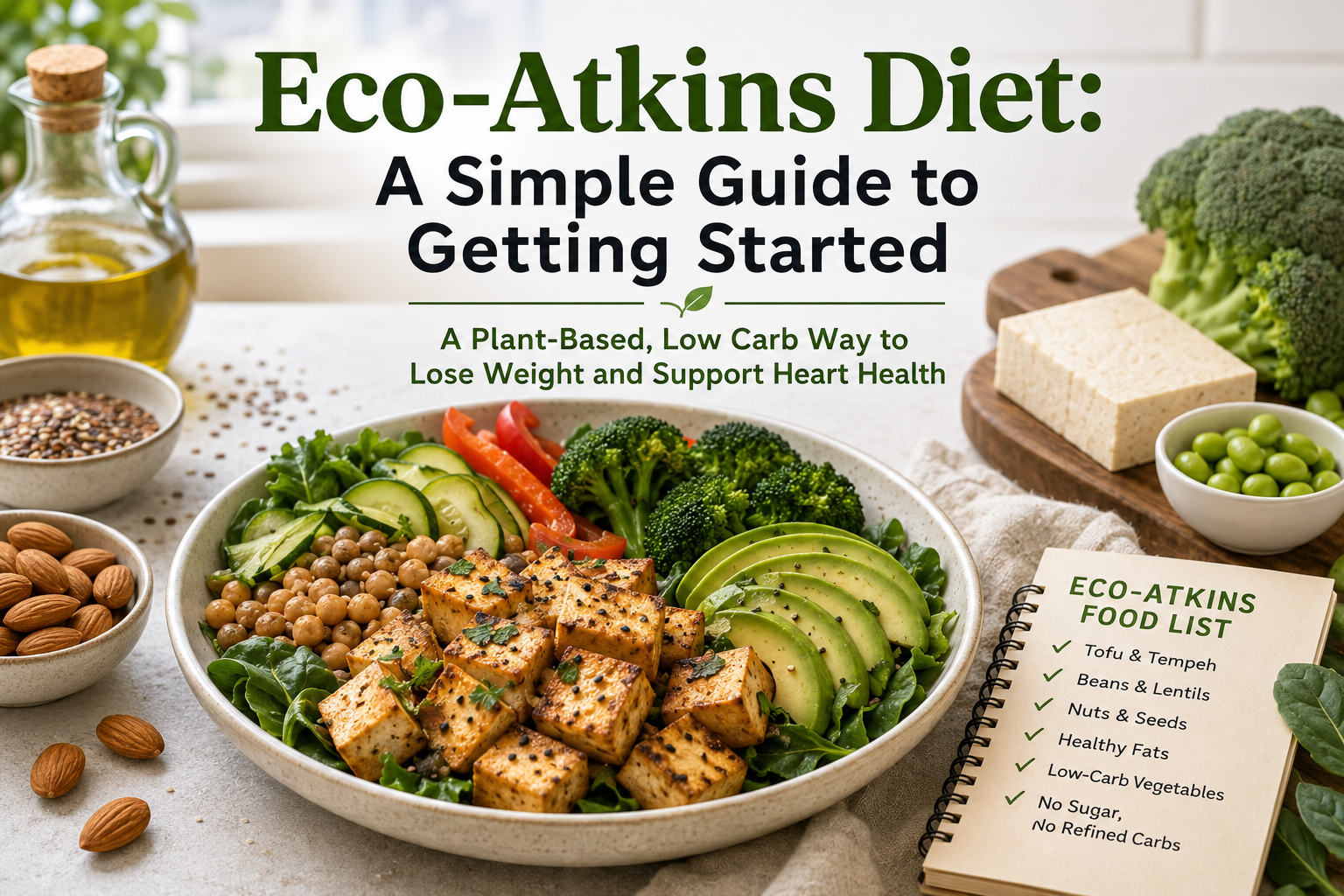
Eco-Atkins Diet: A Simple Guide to Getting Started
My neighbor did Atkins for about four months last year. She’s been vegetarian since college, so every “just eat bacon and eggs” morning felt like she was cheating on her own rules to squeeze into last summer’s jeans. She lost weight. She also texted me twice asking if there was a version of this that didn’t involve meat. There is. It’s called the eco-atkins diet, and once I actually looked into it, I got a little annoyed that nobody had told either of us about it sooner. Same basic idea as regular Atkins. High protein, low carb. The twist is that none of the protein comes from an animal. Tofu, beans, nuts, and soy. That’s the whole swap. It was doctors working at St. Michael’s Hospital who conducted this experiment, which was aimed at answering the specific question of whether it is possible to replicate Atkins-level weight loss without having to deal with the cholesterol inherent in animal meat. Therefore, they used the same proportions but replaced all animal food components with plant ones. Then they watched what happened. Weight loss ended up about the same between people doing regular Atkins and people doing the plant version. Cholesterol didn’t. A study from the University of Toronto found that this kind of diet may lower the risk of heart disease by 10 percent over ten years. That’s the number that made me stop scrolling past this diet as “just another Atkins spinoff.” Eco-atkins vs. Atkins diet:Food compositions of both diets differ not much; both consist of approximately the same percentage of protein (30%), fat (40%), and carbohydrates (30%). Regular Atkins uses beef, bacon, cheese, and eggs as major sources of protein, while Eco-Atkins uses soy products, beans, lentils, and nuts.. Bread and rice and sugar are off the table either way. You’re still full. You’re just full of different things. Here’s the part nobody warns you about going in. You will miss bacon. For about a week, maybe ten days. Then avocado and good olive oil start pulling enough weight that you stop thinking about it, which honestly surprised me the first time I tried this myself. What actually goes on the plate Once you’ve seen the eco-atkins diet food list, it’s not too hard to comprehend what comes under it- tofu, tempeh, edamame, lentils, chickpeas, black beans, almonds, walnuts, chia, flax, hemp seeds, avocado, olive oil, and low-starch vegetables such as spinach, broccoli, zucchini, and peppers. What’s not there: white bread, white rice, potatoes, anything with added sugar, and those higher-carb fruits such as bananas and mango. For anyone who usually has pasta three or four times a week, a change is coming. It won’t be severe, but it will be a transition, and it may take about two weeks before transitioning no longer feels like a chore. It’s about eating differently. That distinction matters more than people expect. What can a day be like? Scrambled tofu with spinach can be eaten for breakfast; if you are still hungry after an hour or so, enjoy some almonds. The lunch is typically a large salad with chickpeas, some olive oil and avocado.The afternoon is the perfect time to have celery and almond butter.Dinner tends to be a lentil and vegetable stir-fry in sesame oil over cauliflower rice, which sounds like a compromise until you actually taste it done well. Most nights it’s beans, a vegetable, and a good fat, all on one plate. That’s genuinely most of the diet, once you strip away the science. Why people actually stick with it Weight loss gets people through the door. That part’s well documented.However, what made researchers take notice was the information about cholesterol, rather than weight. Research published in the Archives of Internal Medicine examined the impact of substituting animal protein and fat with plant protein and fat on weight and blood lipids in people with high cholesterol.Both study groups dropped roughly the same weight. Only the plant-based group saw their cholesterol move in a meaningful way. We go deeper into those numbers over at calmhealthtips.com if you want the full study breakdown instead of my summary of it. There’s a fiber piece too, and it barely gets mentioned anywhere. Plant protein comes with fiber attached. Meat doesn’t come with any. You’ll probably notice the digestive difference before you notice anything on a scale. Who this is actually for (and who should skip it) Vegetarians and vegans curious about low carb but with zero interest in bringing meat back—this is basically built for that person. Same goes for anyone with high cholesterol chasing Atkins-style results without the saturated fat baggage. This plan is less suited to those who train vigorously and require quick carbohydrates during their workouts or aren’t able to meal prep accurately and efficiently. I don’t want to mislead you into thinking this diet is one to which you can have a quick bite on your way home, it requires quite a lot of planning. It’s totally acceptable to postpone it if it doesn’t meet your current needs. Actually starting Don’t flip your whole diet in one day. Begin by making the switch for breakfast since scrambled tofu is a good substitute for eggs and many people don’t even notice. Do this for a few days before moving on to lunch and then on to dinner meals. Make sure you have canned beans, frozen edamame, and a couple of jars of nut butter. The hardest part about the diet is actually the logistics rather than self-control and making sure that the pantry has everything needed makes the whole process much easier before any problems arise.If you want a full week mapped out with a grocery list attached, our meal planning guide at calmhealthtips.com does exactly that. Give it two weeks before deciding anything. Most people notice their energy shift somewhere around day ten. My neighbor, for what it’s worth, made it to day twelve before texting me that she finally stopped thinking about bacon. FAQ Is the eco-atkins diet
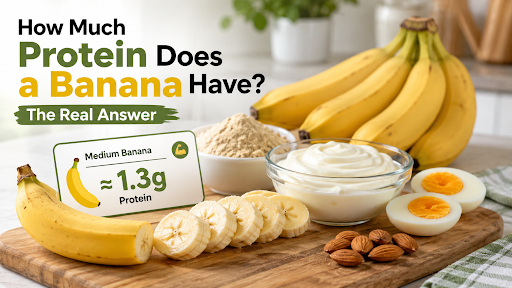
How Much Protein Does a Banana Have? The Real Answer
I used to toss a banana in my gym bag and feel pretty proud of myself. Healthy snack, packed and ready. I figured it was helping my protein intake too. It wasn’t, not really, and I didn’t find that out until years later. So here’s how much protein a banana has. A medium one has about 1.3 grams. A large banana gets you close to 1.5 grams. That’s it. A small number, I know. You’d have to eat five bananas just to match the protein in one chicken breast. Banana Nutrition Facts You Should Know A medium banana is about 110 calories. Virtually all of that is carbs at 28 grams or so, 3 grams of fiber and virtually no fat. It’s not really for the protein that you’re eating. It’s the potassium that’s the deal. It’s packed in bananas, which is why they’re credited with helping your heart along and easing cramps. Then sprinkle in a bit of B6 and a bit of a quick sugar rush and it makes sense why runners are grabbing one on the way to the start line. Curious about the rest of the nutrition profile, beyond just protein?Our full banana nutrition guide covers everything in one spot. Protein in a Large Banana vs. a Medium One Size does change the number a bit.The smaller banana has about 1 gram of protein. For a medium one, there is 1.3 grams. A large one gets close to 1.5 grams. None of this really changes much in real life, though. Eat three large bananas in one sitting, and you’d land around 4.5 grams of protein total. One single egg beats that number by itself. So size makes a small difference, but the big picture stays the same either way. Is a Banana a Good Source of Protein? No, not really. And that’s okay. A banana was never trying to be a protein food in the first place. It’s a carb food and a potassium food, and it does both of those jobs well. Put it next to a cup of Greek yogurt, which has 15 to 20 grams of protein, or two eggs at around 12 grams. The banana just isn’t playing that game. Expecting a banana to cover your protein for the day is a bit like expecting your morning coffee to also be breakfast. You drank something, sure. That’s about where it ends. A banana still earns its place, though. Blend it with protein powder, or add some peanut butter on top, and now you’ve got something worth eating for real fuel. Check out our high-protein smoothie ideas if you want the banana flavor without losing the protein. Banana vs. Other Fruits: Protein Compared Fruit isn’t where you go looking for protein, but bananas still hold up okay against other fruit.An orange has about 1.2 grams. Grapefruit’s a bit higher, around 1.6. Blueberries, cherries, apples all of them come in under a banana. That one surprised me, since apples get so much credit as the “healthy snack” fruit. If you’re picking fruit just to chase protein grams, you’re choosing between small numbers no matter what. Vegetables like spinach and edamame beat fruit here by a lot. A single cup of edamame has more protein than a dozen bananas combined. Can a Banana Help With Muscle Building? No, all by itself it is unlikely to be effective. According to most specialists, between 1.6 – 2.2 grams of protein should be consumed per day for each kilogram of bodyweight if one wants to build muscle. That’s more than 100 grams for a 150-pound person.That’s a lot of bananas just for one person. Where a banana actually helps is before your workout, not as protein but as fuel. The carbs give you quick energy. Potassium helps stop cramps while you train.Combine it with real protein, a shake, some Greek yogurt or a few almonds and now you have your two sides. A medium sized banana provides approximately 1 gram of protein, carbohydrates and potassium, according to the Harvard T.H. Chan School of Public Health.This is consistent with the figures provided by other resources too.Are you looking for an easy pre-workout combination that will help your body recover? Try our banana and protein pairing guide for a few ideas that take about two minutes to put together. The Bottom Line So, how much protein does a banana have? A little, but not enough to write home about. You’re looking at 1 to 1.5 grams per banana. That’s barely a dent in what your body needs in a day. That doesn’t make bananas useless, though. Here’s the smarter move: pair your banana with something that actually brings the protein. Swirl in some peanut butter. Toss it into a shake. Eat it alongside a couple of eggs. Check out our banana and protein pairing guide for a few combos that take barely any time to put together. Frequently Asked Questions How much protein does a small banana have? Around 1 gram, give or take. At that size it’s basically not a factor in your day, protein-wise. Can you build muscle by eating bananas? Not from the protein there’s almost none in there. Where they actually help is as fuel before you train. Is a banana a good source of protein? Not really, no. It was never trying to be, it’s doing carbs and potassium, and it does those fine. Can bananas help build muscle? No, not via protein. They are more useful as fuel before exercise due to the carbs and potassium. Real protein sources are still needed to build muscle.