My neighbor cornered me at a barbecue last summer to tell me canola oil was, and I quote, “basically poison.” I didn’t have a great comeback at the moment. Went home, actually looked into it, and that’s how I ended up down this whole seed oil-free diet rabbit hole.
So here’s what I found. Not a hot take, not a scary piece. Just what this diet actually involves, what’s backed by real research and what isn’t, and how you’d start one if you wanted to.
What Even Counts as a Seed Oil
Exactly as it implies.Vegetable oils are obtained from seeds, not from fruit. Oils obtained from vegetable seeds include canola oil, soybean oil, corn oil, sunflower oil, safflower oil, cotton seed oil, grape seed oil, and rice bran oil. Olive and avocado oils, on the other hand, are excluded from this category of oils since they are obtained from fruit.
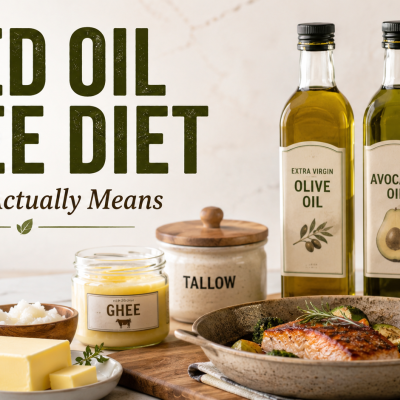
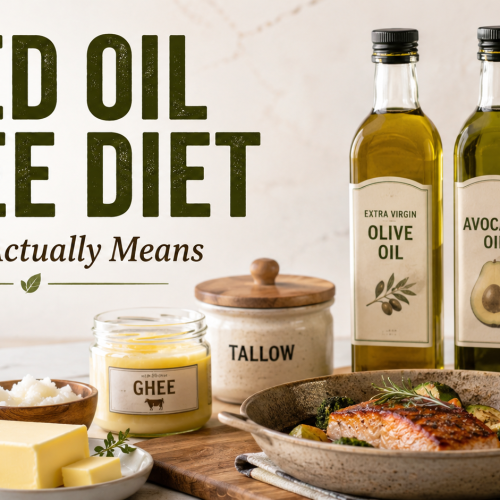
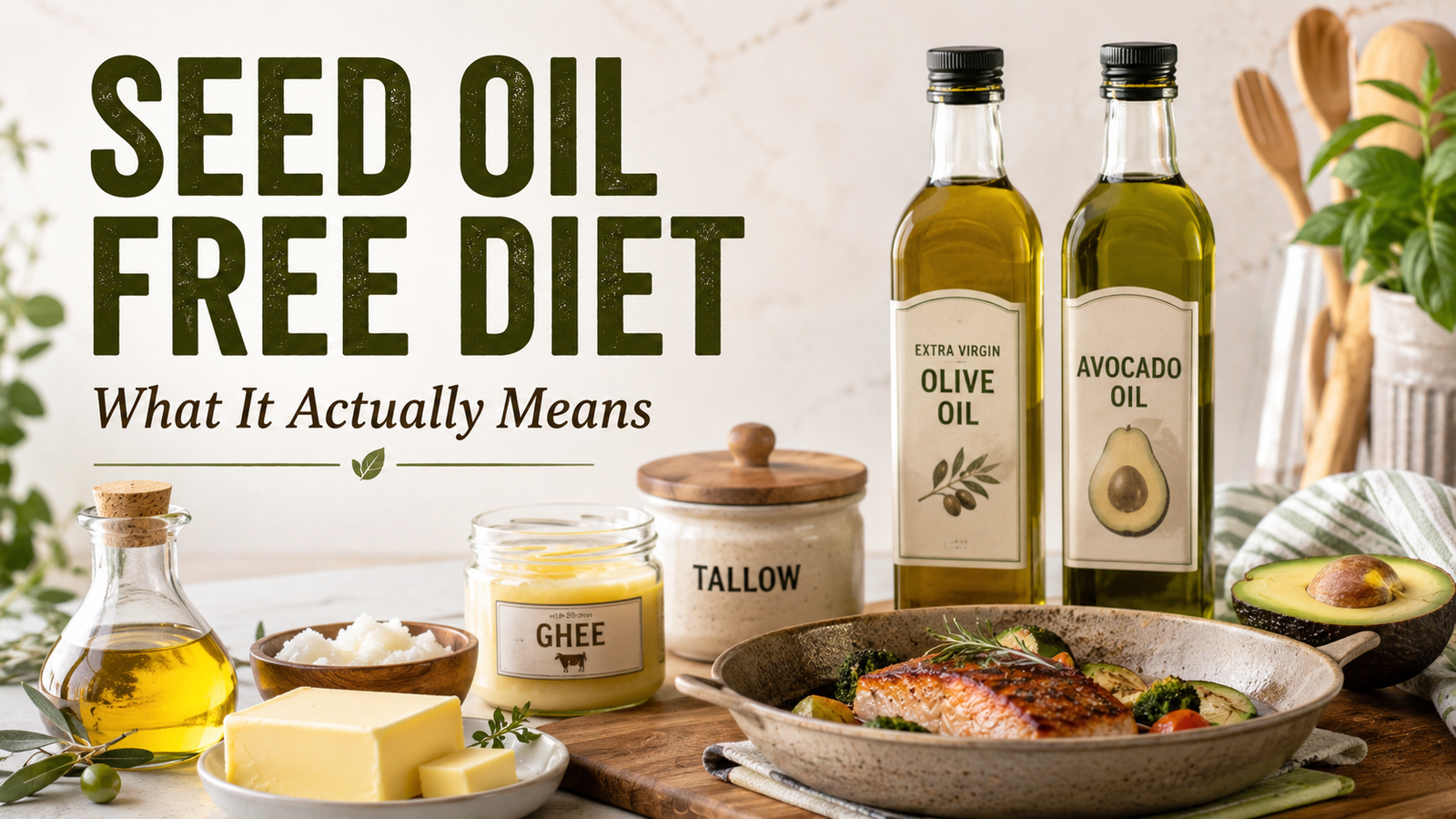
Alternative food products can be used as substitutes for oils obtained from seeds, including olive oil, avocado oil, butter, ghee, tallow, or coconut oil. Sounds easy on paper. It’s not, once you start looking, because seed oils are basically everywhere.
Why People Actually Try This
Ask around and you’ll hear the same story over and over. Less bloating, clearer skin, steadier energy. The thing is, a lot of that overlaps with something else entirely; cutting seed oils usually means cutting a ton of processed food at the same time, since that’s where most of it hides anyway.
Crackers, granola bars, salad dressing, anything fried, and most snacks in a bag. Loaded with soybean or canola oil. So someone doing a seed oil-free diet is often just eating more whole food by default. Hard to say which change is doing the actual work here.
What the Research Actually Says
This is the part that surprised me, honestly. The idea that seed oils cause inflammation and heart disease is everywhere online. Not what mainstream research shows, though. The American Heart Association has actually made arguments against this point, stating that omega-6 fatty acids found in seed oils can help to decrease bad cholesterol.. Not raise it.
A cardiologist over at Cleveland Clinic said it pretty plainly too: seed oils aren’t some hidden toxin; they’re just oils, and the real issue is usually the ultra-processed food they’re mixed into, according to the Cleveland Clinic. That distinction matters. It’s not really the oil doing damage. It’s the chips.
There’s some legitimate debate happening still, mostly around the omega-6 to omega-3 ratio in the average American diet, whether that ratio even matters as much as some people think. However, “Seed oils are toxic” seems like an exaggerated statement compared to what the scientific literature actually supports at the moment. According to a systematic review published in 2018, there was a negative association between a higher omega-6 intake and total cholesterol as well as myocardial infarction.
I get why the myth spreads so easily, though, if I’m being fair to it. Seed oils are heavily processed.Extraction at high temperatures, solvents, the entire process from planting to bottled product. Processing is not necessarily bad, but it certainly doesn’t sound good and is infinitely more headline-worthy than “moderate amounts of vegetable oil are probably okay.”
So Is This Diet Even Worth Doing?
It is not without merit, and I am certainly not here trying to discourage someone from it. The positive result of not using seed oils is actually that it encourages more cooking from home and less consumption of packaged foods, no matter what one may think about omega-6 fatty acids.Maybe just not for the exact reason they think it does.
Where I’d push back a little, gently, is on anyone insisting seed oils themselves are dangerous in normal amounts. Not according to science. Cook with what suits your cuisine, budget, and objectives. There is no need to have any feelings of guilt about a canister of canola oil stored away in the pantry.
How to Actually Do This
Begin with your pantry rather than overhauling everything. Substitute the oil that you use when you cook the most often – mostly likely canola or vegetable oil – with either olive or avocado oil. Butter, ghee, and tallow are good options for high heat cooking such as searing meat.
It’s reading labels that matters, not purchasing new items. Seed oils hide in salad dressings, mayo, crackers, granola bars, and even some bread. Soybean oil, canola oil, and “vegetable oil” on the ingredient list—that’s your sign. Honestly, most people find it easier to just cook more from scratch than chase down seed oil-free versions of everything.
Condiments trip people up more than anything else. Mayo, ranch, most bottled dressings, basically all soybean oil with flavor added. There are seed oil-free versions now, Primal Kitchen and a few others, but they cost more and taste a little different. Making amateur mayonnaise or dressing can take no more than five minutes after a couple of tries, this is all it takes to tackle the issue.
Things Worth Watching Out For
Some traditional fats, like tallow and coconut oil especially, run high in saturated fat. Not automatically bad, but if you’re replacing seed oils with a diet that’s heavy on saturated fat across the board, it’s worth a conversation with your doctor about cholesterol, especially if heart disease runs in your family.
Also, restaurants cook with seed oils almost across the board. If you’re being strict about this, eating out gets complicated fast. There’s a reason apps like Seed Oil Scout exist. Plenty of people run into that exact wall.
Bottom Line
However, the effectiveness of this diet is primarily based on the fact that this diet makes you consume whole foods instead of processed foods – the oil in question is not really dangerous, in spite of all the controversies. It is beneficial to your health just because it promotes healthier eating habits.
Start small. Swap your everyday cooking oil, check a few labels, and build from there. For more honest breakdowns of trending diets like this, check out our guide to the DASH diet or browse the full list of diet guides at Calm Health Tips.
FAQ
Are seed oils actually bad for you?
But most research, including the American Heart Association’s direct statement, does not contradict the safety of normal usage of seed oils. The real concern is the processed food seed oils that appear in, rather than the oil itself.
What oils are allowed on a seed oil-free diet?
Typically, you’ll use olive oil, avocado oil, coconut oil, butter, ghee, or tallow. These are of fruit or animal origin rather than seeds.
Is it hard to eat out on a seed oil-free diet?
Yes, most restaurants use seed oils as their base by default, and it is soon a challenge to be strict when you’re out. Other fats can be identified at locations using apps such as Seed Oil Scout.
Will a seed oil-free diet help me lose weight?
Not directly, but often as a side effect, eating fewer processed foods will aid weight loss. It’s typically a result of the change in overall diet, rather than the change in oil.