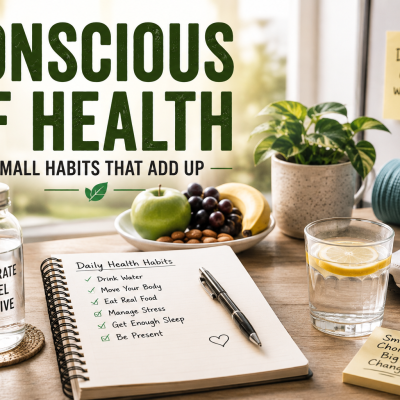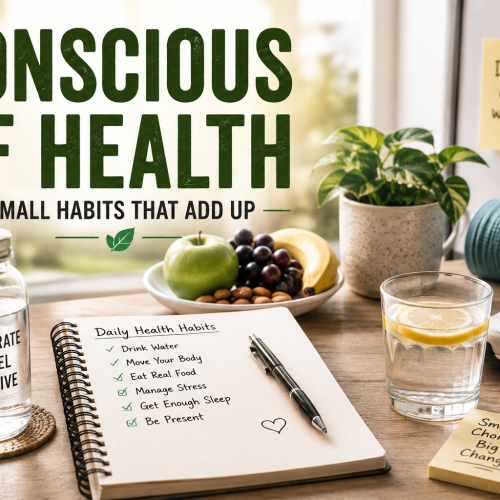
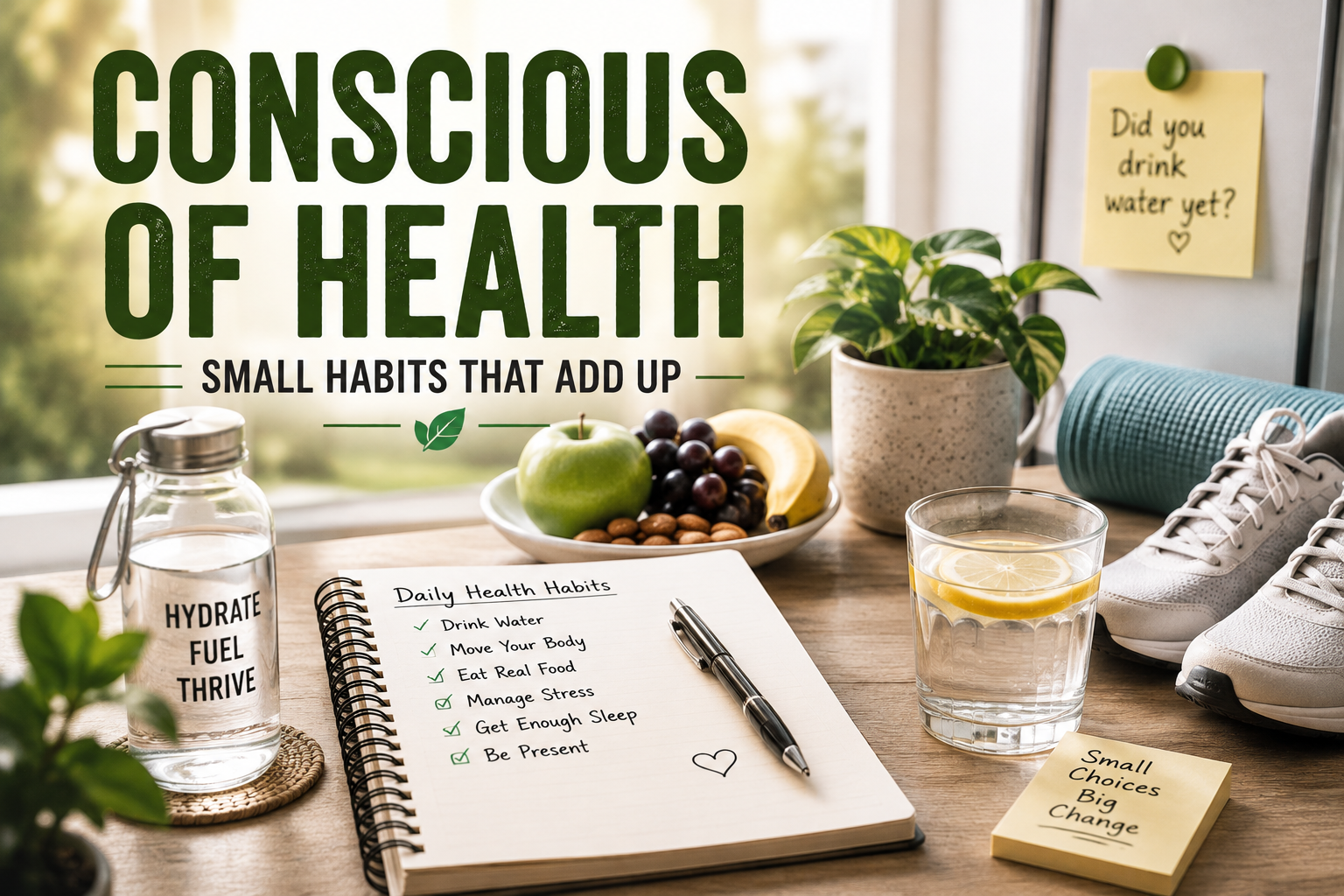
My neighbor keeps a sticky note on her fridge that just says, “Did you drink water yet?” She’s had it there for maybe two years now. I used to think it was a little much. Then I noticed I go entire mornings running on coffee fumes and don’t clock it until my head starts pounding around 11am.
That’s basically what being conscious of health comes down to. Not a diet plan. Not a gym contract you feel guilty about. Just actually noticing what your body’s doing before it has to shout at you.
What Does Being Conscious of Health Really Mean?
Being aware of your own well-being entails making choices that aren’t automatic. Lunch at your desk while replying to emails is automatic. The latter is eating and enjoying the meal. Here is an experiment for you. Every time you go for your third coffee, pause for two seconds. Are you really feeling sleepy, or are you merely bored? Maybe even thirsty? Not many do this; they simply have their coffee.
All this doesn’t come overnight, mind you. You realize one thing (you get irritable with your children because of lack of sleep), then you realize another (it’s good for you to take a stroll after your dinner), and it gradually adds up.
What Does a Health-Conscious Lifestyle Look Like?
You’ve probably already got some habits going without realizing it. Checking a label before buying something new at the store. Standing up to stretch mid-scroll because your neck started aching. Turning down seconds at dinner because you’re full, not because some app told you to.
That’s health consciousness in practice. Messy, inconsistent, and mostly unconscious of itself. Nobody nails this every day, and honestly, trying would probably backfire.
There’s a version of this that shows up at work too, which people don’t talk about as much. Eating lunch away from your computer rather than at your desk. Refusing a fourth meeting added to your calendar when you’re already suffering from the previous three. That’s still being conscious of health, even though it has nothing to do with food or exercise on the surface. Stress runs through the same body as everything else.
A Few Things to Try This Week
As far as suggestions go, start your day with a glass of water before the morning coffee; since the body gets dehydrated at night, you will start the day in deficit already. A quick five-minute walk post-lunch is much better than going back to work; not only will it improve digestion, but it will help shake off that sleepy feeling that creeps in at around 2pm.
Bedtime preparation is another one. It’s not “go to bed an hour earlier”; those don’t really work anyway. So try for fifteen minutes. Fifteen minutes is about right; it’s small enough that a rough week won’t mess up your progress.
It’s much harder to streamline food habits; here’s one option: swap out one processed snack each day for something made from real stuff that you can identify the ingredients in. Not all of the snacks. One.A mom folding laundry in Sacramento can run through this mid-sock-sorting. A warehouse worker in Ohio can do it on a fifteen-minute break. No app needed, just an honest answer.
There’s also the sleep environment thing, which almost nobody thinks about until it’s pointed out. A cold room, a dark room, no phone glowing six inches from your face. None of that is groundbreaking advice, I know. But most people who complain about “bad sleep” have a phone charging on the nightstand and a room that’s basically the same temperature as their living room.If you’re genuinely trying to be more conscious of health, fix the temperature before you buy a $200 sleep tracker. That’s the order to do it in.
How Can You Become More Health-Conscious Without Changing Your Whole Life?
How to become more health-conscious without upending your entire life? It doesn’t have to be done.What changes is what you choose to focus on. Instead of dinner in front of the TV every night, choose at least two dinners without the screen. Always keep a banana with you so that your breakfast is not “nothing.” According to the CDC, even small amounts of activity spread throughout your day contribute to both heart health and good mood exercise does not have to be a proper workout to work.
This point usually surprises people the most. For some reason, at one point, “exercise” became synonymous with fitness club membership and sports outfits, and many people stopped exercising without even realizing it.
However, taking the stairs instead of the elevator does matter. Going up to carry groceries in one go instead of three times matters. This might not be glamorous and is not being captured on social media, but our bodies do not distinguish between “exercise” and “moving around more than before.”
Being conscious of health in these small pieces tends to hold up longer than an all-or-nothing New Year’s resolution that quietly dies by February. It usually does, doesn’t it?
Does It Actually Stick, Though
True health and well-being don’t come about during the course of one weekend. Instead, they work in much the same way that you learn to look at your mirrors when switching lanes awkwardly at first, and one day you’re simply doing it automatically.
In this case, consistency rules above all. Even if you don’t have an extra hour for an exercise routine, it’s better to go for a short stroll every day than to subject yourself to one intense workout a month that keeps you bedridden for a week afterward. Oh, and my neighbor? She’s still got her sticky note on the fridge. It stopped being a reminder and turned into just something she does.
So start with one change. Not five. Give it about a week, see how it actually feels, then decide whether to stay conscious of health with just that one habit a little longer or add a second. There’s no wrong answer to this question.
I would like to give you a little warning, however. Don’t expect any major changes. Most of what you will be doing works in a rather quiet manner. You won’t suddenly feel like a different person when day eight comes. The changes that happen are quite subtle and go unnoticed. For example, you no longer notice your afternoon slump, or you haven’t taken antacids in a week. That’s usually the real signal it’s working, not some big moment, just the absence of a problem you’d gotten used to living with.
FAQ
What does being health conscious mean?
It simply means to consider how your daily choices, sleeping patterns, diet, and exercise regime affect your life.
What are some signs of health consciousness?
Checking food labels without thinking. Stretching out fully or asking your doctor a clarifying question. Pretty much anything small.
Do you need an app or tracker to stay conscious of health?
Not necessarily. There simply has to be a deliberation of whether one is hungry or fatigued. Although the tracker may be useful, many people find the same with a sticky note on the fridge.
What’s a simple first step toward being more conscious of health?
Just one healthy habit should be chosen. One has to choose something simple. It can be drinking a glass of water before the first cup of coffee or making a short walk after lunch.