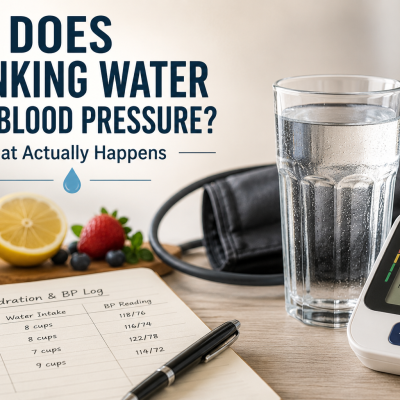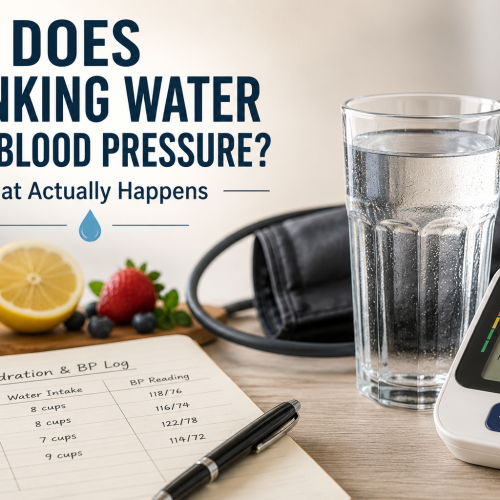
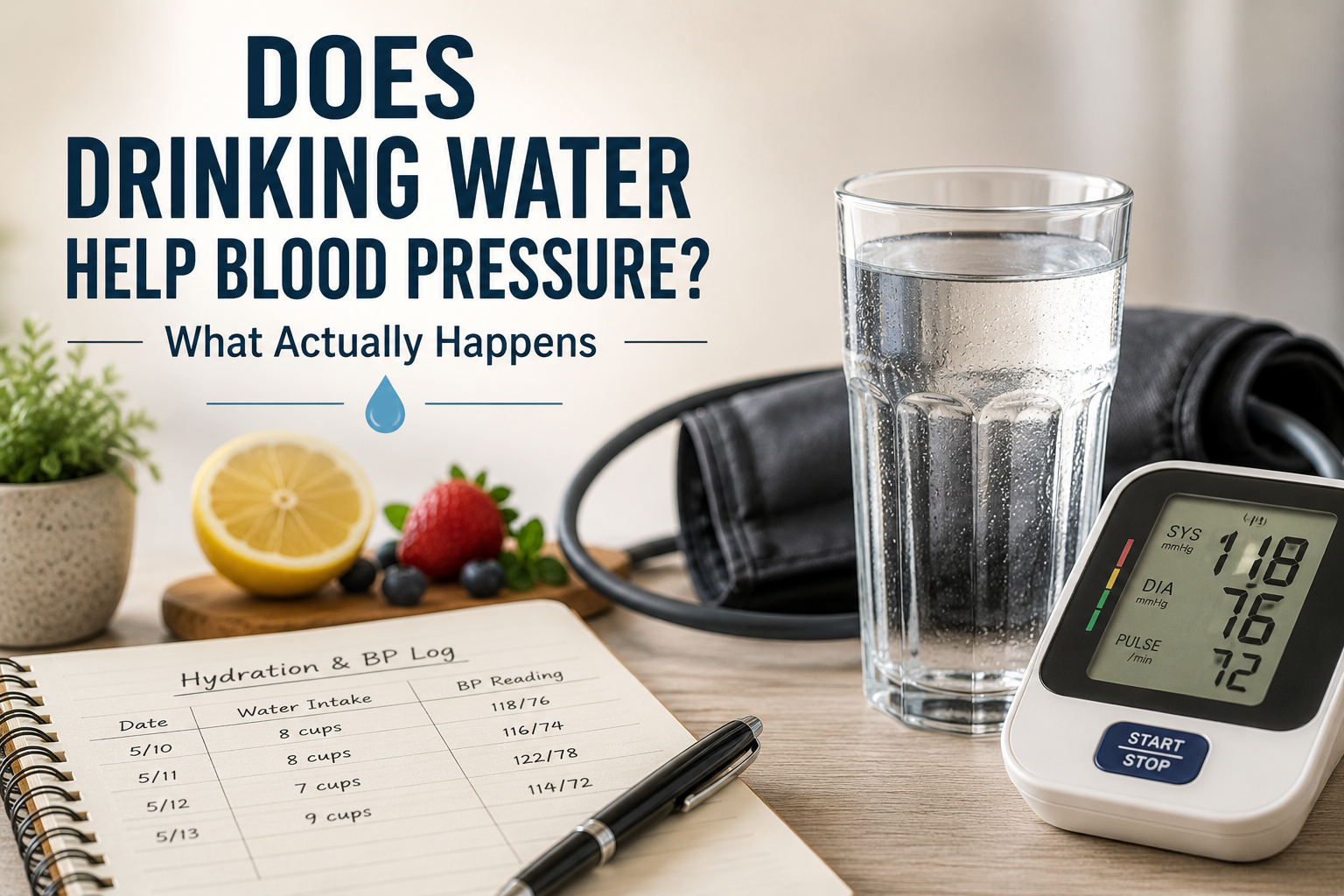
Last year, my uncle bought one of those blood pressure monitors for home use; I think that was during early spring when his physician alerted him of his high blood pressure reading during an examination. He uses it almost every morning while seated at the dining table, cup of coffee in one hand and blood pressure monitor in the other arm. On one particular occasion, he drank a lot of water before using it.His number went up instead. Called me, half convinced the thing was broken, and actually asked if he should return it.
It wasn’t broken. Does drinking water help blood pressure? It is one of those questions that sounds like it should have a simple yes or no, and it just doesn’t.
Kind of Yes, Kind of Depends
water helps mostly if you’re already running low on it. If you’re drinking enough already, an extra glass isn’t doing your numbers any favors either way. That’s really the whole answer to “Does drinking water help blood pressure?” just stretched out with the details people usually want.
The blood is mostly water, so when one does not consume enough water, the volume becomes lower, and the body responds by constricting blood vessels.That keeps pressure high enough for organs to still get what they need. Which is a weirdly clever system, honestly, even if the side effect is a number on your cuff you didn’t want to see.
Why Not Drinking Enough Backfires?
Is dehydration capable of causing hypertension? Typically, yes, but usually only for a temporary period of time. This is because your kidneys are going to feel that there is not enough fluid, and will start to retain sodium rather than expelling it.Add it all together, and the number on the cuff climbs.
Doctors ask about water intake for a reason when someone’s pressure is up for no clear cause. It’s not always the culprit. It’s just cheap and easy to rule out first, and a lot of people genuinely go entire workdays barely drinking anything.
Which sounds obviously written out like that. It is not so clear when it is already 3 p.m. on a Tuesday, and there are three meetings back to back.
There is a man who found out that he had gone for 8 hours a day without drinking anything other than coffee and wondered why he got a headache every day in the afternoon. Dehydration does not announce itself in any particular way – it is just a slow, cloudy feeling that can be attributed to tiredness and stress.
It’s a small enough fix that people skip past it without trying. My cousin actually got told by her doctor to just track her water for two weeks before they’d even discuss medication, and she rolled her eyes at the time. Turned out her pressure dropped enough on its own that the conversation about pills never happened.
So Why Did My Reading Spike Right After Drinking Water?
This trips up almost everyone the first time, my uncle included. Water and blood pressure have a strange short-term relationship that doesn’t match the long-term one. Drinking a glass can actually push your reading up slightly for a few minutes, especially if you weren’t dehydrated to start with. There’s a name for it, the pressor effect, and it usually fades within the hour.
Does water lower blood pressure fast, then? No, not really, and sometimes the opposite happens for a short stretch. The real payoff comes from staying hydrated across days and weeks. Chugging a glass right before your appointment or right before checking your cuff isn’t going to trick your numbers and honestly might do the reverse for that one reading.
How Much Water Actually Matters Here
No single number fits everyone, no matter what a headline promises. Your body size matters. So does how active you are, and honestly the weather changes things more than people expect too. Most doctors throw out eight cups a day as a rough starting point, but someone doing yard work in July needs a lot more than someone parked at a desk all day under AC.
How much water to drink for blood pressure specifically comes down to this: enough that you’re not running dry, not so much that you’re flooding the system. Overhydration is rare but real, and it can strain the heart too, though realistically almost nobody reading this needs to worry about drinking too much water. The opposite problem is the common one.
Urine color is a decent, unscientific gut check. Pale yellow, you’re probably fine. Dark yellow most of the day, drink more.
The Salt Connection Nobody Mentions Enough
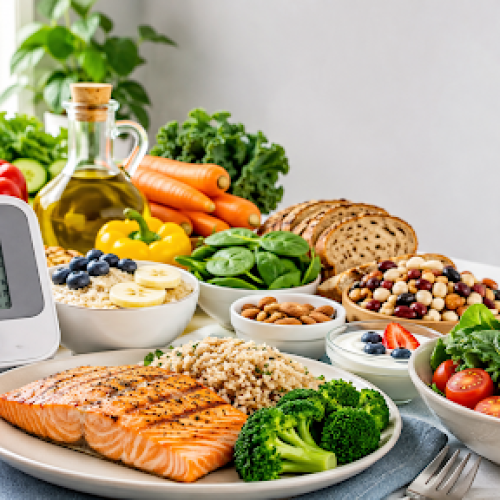
Sodium and water have more of a relationship than most people think. Consuming something that is salty causes the body to retain more fluid in order to dilute it, causing an increase in blood pressure. It’s a big reason the DASH diet puts so much weight on cutting salt while loading up on fruits and vegetables. The American Heart Association has pointed out that most Americans blow past the recommended daily sodium limit without meaning to, mostly from packaged food and restaurant meals rather than the salt shaker at home.
Staying hydrated doesn’t cancel out a high sodium plate. Both things matter. Neither one lets you off the hook for the other.
Making This a Habit Instead of a One-Off Glass
Hydration and blood pressure connect best over weeks, not a single glass before an appointment. A water bottle sitting on your desk beats waiting until you feel thirsty, since thirst usually shows up after you’re already behind on fluids.
MedlinePlus, which is run by the National Library of Medicine, lists adequate hydration right alongside physical activity and diet as part of managing blood pressure, whether or not medication is also involved in someone’s case. Nothing can replace a visit with your physician in case your numbers are still high. Water is one of many elements here, but certainly not the only solution to the problem.
A simple glass of water with your meal as opposed to having a soda has more of an effect than people imagine because it is just substitution of one unhealthy thing for another. The same applies to keeping the bottle where you will be seeing it anyway, like on your desk or on your car seat holder. The one thing not to do is chug a big glass right before a doctor’s visit, hoping it nudges your reading down. It won’t. Given the pressor effect, it might nudge it up for that one visit, which is the opposite of what anyone wants walking into an appointment.
Some people do better with a plain routine than any app buzzing at them. My uncle just fills a bottle in the morning and tries to have it gone before lunch, refills it once more sometime in the afternoon, and nothing is tracked, nothing is scheduled. He tried a hydration app for about a week first and quit on it pretty fast, then started leaving a big bottle on the kitchen counter where he’d walk past it constantly instead. That worked better than anything on his phone ever did, which says more about him than about apps in general probably.
They were reduced over a period of about six weeks. It had something to do with the water, but he also stopped drinking soda to a large extent and began walking most evenings after dinner, so it’s impossible to know how responsible the water alone is for this effect. In case you’re interested in seeing the real effects of staying how hydration affects blood pressure , just write down what you drink for a month and see for yourself.
FAQ
Does hydration impact blood pressure?
Primarily when your body already lacks fluids. When you have enough water in your system, additional hydration will not bring any further benefits – it’ll simply mean that you are well hydrated.
Can dehydration increase blood pressure?
Yes, quite frequently in the short term, at least. Lack of fluids causes your body to retain sodium and constrict blood vessels, both of which contribute to elevated blood pressure until you become adequately hydrated.
What could cause an increase in my blood pressure right after drinking water?
This pressor effect is what we are talking about, and it seems more scary than it actually is. Drinking a glass of water may increase the reading of the pressure temporarily for less than an hour, and it works best for people who were not dehydrated at all before this.
Does water lower blood pressure fast?
Not really, no. The benefit builds up from staying hydrated over days and weeks, not from downing a glass right before you check your cuff hoping for an instant drop.