My neighbor did Atkins for about four months last year. She’s been vegetarian since college, so every “just eat bacon and eggs” morning felt like she was cheating on her own rules to squeeze into last summer’s jeans. She lost weight. She also texted me twice asking if there was a version of this that didn’t involve meat. There is. It’s called the eco-atkins diet, and once I actually looked into it, I got a little annoyed that nobody had told either of us about it sooner.
Same basic idea as regular Atkins. High protein, low carb. The twist is that none of the protein comes from an animal. Tofu, beans, nuts, and soy. That’s the whole swap.
It was doctors working at St. Michael’s Hospital who conducted this experiment, which was aimed at answering the specific question of whether it is possible to replicate Atkins-level weight loss without having to deal with the cholesterol inherent in animal meat. Therefore, they used the same proportions but replaced all animal food components with plant ones. Then they watched what happened.
Weight loss ended up about the same between people doing regular Atkins and people doing the plant version. Cholesterol didn’t. A study from the University of Toronto found that this kind of diet may lower the risk of heart disease by 10 percent over ten years. That’s the number that made me stop scrolling past this diet as “just another Atkins spinoff.”
Eco-atkins vs. Atkins diet:Food compositions of both diets differ not much; both consist of approximately the same percentage of protein (30%), fat (40%), and carbohydrates (30%). Regular Atkins uses beef, bacon, cheese, and eggs as major sources of protein, while Eco-Atkins uses soy products, beans, lentils, and nuts.. Bread and rice and sugar are off the table either way. You’re still full. You’re just full of different things.
Here’s the part nobody warns you about going in. You will miss bacon. For about a week, maybe ten days. Then avocado and good olive oil start pulling enough weight that you stop thinking about it, which honestly surprised me the first time I tried this myself.
What actually goes on the plate
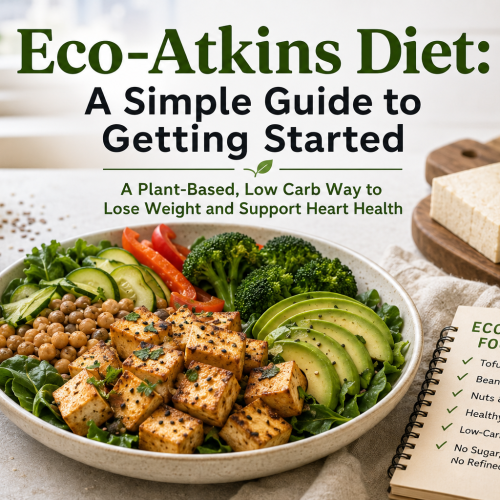
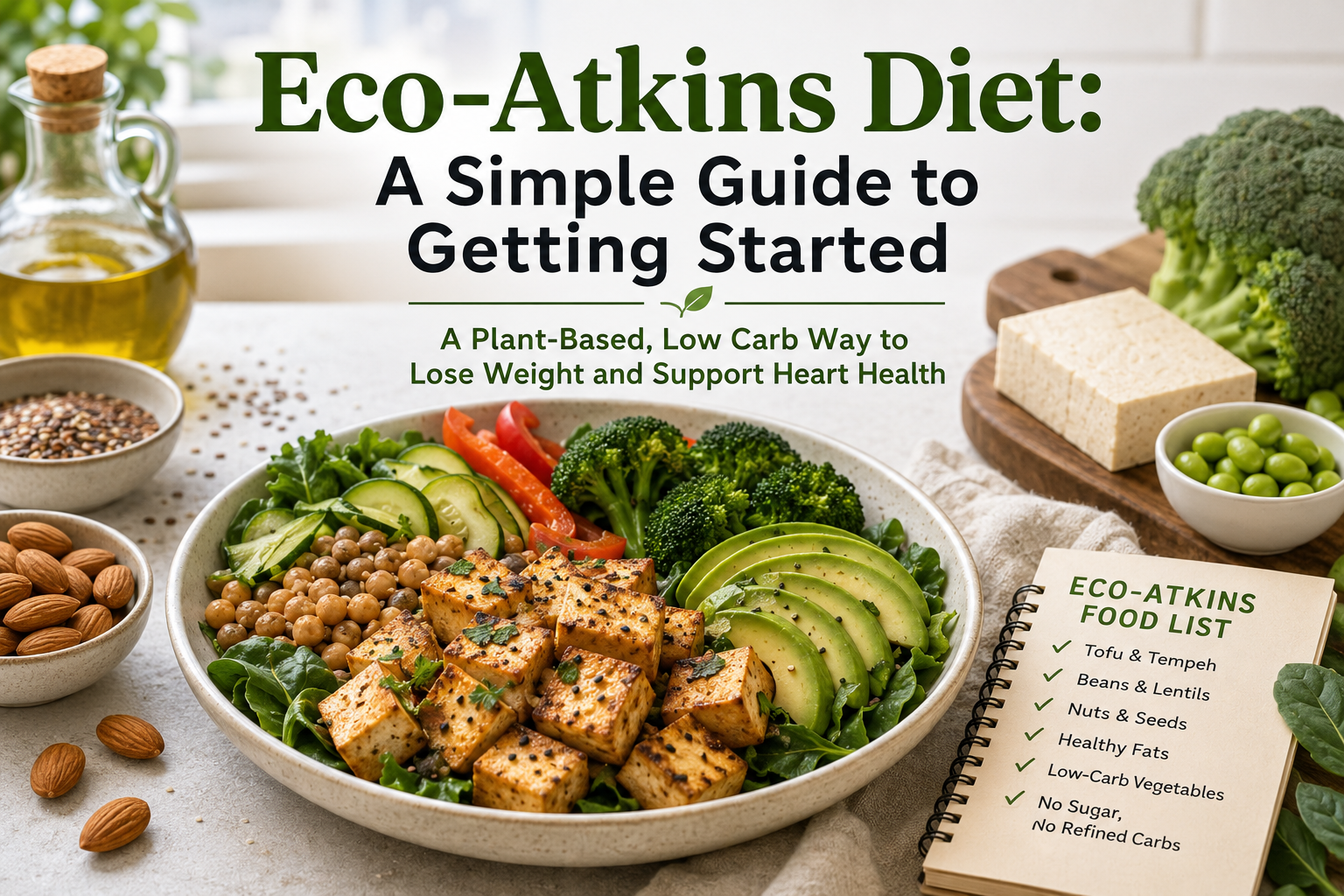
Once you’ve seen the eco-atkins diet food list, it’s not too hard to comprehend what comes under it- tofu, tempeh, edamame, lentils, chickpeas, black beans, almonds, walnuts, chia, flax, hemp seeds, avocado, olive oil, and low-starch vegetables such as spinach, broccoli, zucchini, and peppers.
What’s not there: white bread, white rice, potatoes, anything with added sugar, and those higher-carb fruits such as bananas and mango. For anyone who usually has pasta three or four times a week, a change is coming. It won’t be severe, but it will be a transition, and it may take about two weeks before transitioning no longer feels like a chore. It’s about eating differently. That distinction matters more than people expect.
What can a day be like? Scrambled tofu with spinach can be eaten for breakfast; if you are still hungry after an hour or so, enjoy some almonds. The lunch is typically a large salad with chickpeas, some olive oil and avocado.The afternoon is the perfect time to have celery and almond butter.Dinner tends to be a lentil and vegetable stir-fry in sesame oil over cauliflower rice, which sounds like a compromise until you actually taste it done well.
Most nights it’s beans, a vegetable, and a good fat, all on one plate. That’s genuinely most of the diet, once you strip away the science.
Why people actually stick with it
Weight loss gets people through the door. That part’s well documented.However, what made researchers take notice was the information about cholesterol, rather than weight.
Research published in the Archives of Internal Medicine examined the impact of substituting animal protein and fat with plant protein and fat on weight and blood lipids in people with high cholesterol.Both study groups dropped roughly the same weight. Only the plant-based group saw their cholesterol move in a meaningful way. We go deeper into those numbers over at calmhealthtips.com if you want the full study breakdown instead of my summary of it.
There’s a fiber piece too, and it barely gets mentioned anywhere. Plant protein comes with fiber attached. Meat doesn’t come with any. You’ll probably notice the digestive difference before you notice anything on a scale.
Who this is actually for (and who should skip it)
Vegetarians and vegans curious about low carb but with zero interest in bringing meat back—this is basically built for that person. Same goes for anyone with high cholesterol chasing Atkins-style results without the saturated fat baggage.
This plan is less suited to those who train vigorously and require quick carbohydrates during their workouts or aren’t able to meal prep accurately and efficiently. I don’t want to mislead you into thinking this diet is one to which you can have a quick bite on your way home, it requires quite a lot of planning. It’s totally acceptable to postpone it if it doesn’t meet your current needs.
Actually starting
Don’t flip your whole diet in one day. Begin by making the switch for breakfast since scrambled tofu is a good substitute for eggs and many people don’t even notice. Do this for a few days before moving on to lunch and then on to dinner meals.
Make sure you have canned beans, frozen edamame, and a couple of jars of nut butter. The hardest part about the diet is actually the logistics rather than self-control and making sure that the pantry has everything needed makes the whole process much easier before any problems arise.If you want a full week mapped out with a grocery list attached, our meal planning guide at calmhealthtips.com does exactly that.
Give it two weeks before deciding anything. Most people notice their energy shift somewhere around day ten. My neighbor, for what it’s worth, made it to day twelve before texting me that she finally stopped thinking about bacon.
FAQ
Is the eco-atkins diet the same as vegan Atkins?
Basically, yes. Same ratio of protein to carbs as regular Atkins. The only real change is that every animal food gets swapped for a plant one.
Can you actually lose weight on this?
Yeah. Research puts it close to regular Atkins numbers, usually around 8 to 9 pounds over four to six weeks, though that depends a lot on how many calories you’re eating overall.
What’s off limits?
The fruits which are high in carbohydrates such as banana or mango, bread, rice, potatoes and sugar. And of course meat, eggs and dairy – which is what the diet is all about.
Will it actually benefit your heart more than regular Atkins?
The research states, probably. As per the research carried out so far, LDL-cholesterol decreases more on a plant-based diet as compared to a traditional meat-rich one.
How long should it take people to remain on it?
However long it works for you, honestly. Some people run it for a few months and stop. Others just end up eating this way permanently once it stops feeling like a “diet.”